GK Update
 
  • Mobile Menu
HOME BUY MAGAZINEnew course icon
LOG IN SIGN UP

Sign-Up IcanDon't Have an Account?


SIGN UP


Login Icon

Have an Account?


LOG IN
 

or
By clicking on Register, you are agreeing to our Terms & Conditions.


or


GK Update

Fri 27 Mar, 2026

National News

Up to 82% Increase in Crop Production in Drylands
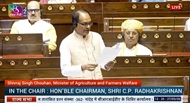
  • Shivraj Singh Chouhan, the Minister of Agriculture and Farmers Welfare, informed the Rajya Sabha that an increase of up to 82% has been recorded in crop production in dryland areas.
  • Drylands constitute 48 percent of the country's total agricultural land.
  • The Central Government is making rigorous efforts to enhance productivity in dryland regions—such as Marathwada—by adopting climate-resilient crop varieties and improved agricultural practices.

Drylands:

  • Drylands refer to regions characterized by severe water scarcity, where the rate of evaporation exceeds the rate of precipitation.
  • Based on the volume of rainfall, these areas are categorized into three types:
  • Dry Farming: Areas where annual rainfall is less than 750 mm. Here, crop cultivation relies entirely on moisture conservation.
  • Dryland Farming: Areas where rainfall ranges between 750 mm and 1150 mm. Farming is practiced in semi-arid regions under this category.
  • Rainfed Farming: Areas where rainfall exceeds 1150 mm.

International News

Nepal's 47th Prime Minister

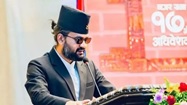
  • Former Mayor of Kathmandu, Balendra Shah, has taken the oath as Nepal's 47th—and youngest—Prime Minister.

Key Facts:

  • Assumption of Office: 35-year-old Balendra Shah, known as 'Balen', has become the youngest Prime Minister in Nepal's history.
  • Party: He serves as the leader of the parliamentary party of the Rastriya Swatantra Party (RSP).
  • Oath-taking: President Ramchandra Paudel administered the oath of office and secrecy to him at the President's Office (Sheetal Niwas) in Kathmandu.
  • Election: In the general elections held in March 2026, his RSP secured a massive majority with 182 seats in the 275-member parliament, thereby challenging the dominance of traditional political parties.
  • Background: He previously served as the 15th Mayor of Kathmandu (2022–2026) and is an engineer-turned-rapper who transitioned into politics.
  • Political Shift: His victory is being viewed as a major shift in traditional politics in Nepal, following the "Gen-Z protests" and a wave of anti-corruption sentiment.

Nepal:

  • Officially known as the Federal Democratic Republic of Nepal, it is a landlocked country situated in South Asia.
  • Capital: Kathmandu
  • Official Language: Nepali (in the Devanagari script)
  • Currency: Nepali Rupee (NPR)
  • National Flag: The world's only non-rectangular flag, featuring two triangular shapes.
  • Administrative Divisions: The country is divided into 7 provinces and 77 districts.
  • Parliament: A bicameral legislature comprising the House of Representatives (275 members) and the National Assembly (59 members).
  • Name of the Presidential Residence: Sheetal Niwas
  • World's Highest Peaks: Eight of the world's 14 highest peaks are located in Nepal, with Mount Everest (Sagarmatha) being the most prominent among them. Natural Divisions: Nepal is primarily divided into three regions: the Himalayas, the Hills, and the Terai.
  • Borders: It shares its northern border with China (Tibet), and its southern, eastern, and western borders with India.

Economy and Banking

India's GDP Growth Rate Projection: OECD
  • The Organisation for Economic Co-operation and Development (OECD) has projected India's GDP growth rate to be 7.6% for 2025-26, 6.1% for 2026-27, and 6.4% for 2027-28.

Related Facts:

  • Inflation: According to the OECD, inflation in India is projected to rise from 2% in 2025-26 to 5.1% in 2026-27, and stand at 4.1% in 2027-28. India's central bank is projected to temporarily raise policy rates in the second quarter of 2026 to help alleviate rising inflationary pressures.
  • Global GDP: The growth rate is projected to stabilize at approximately 2.9% in 2026, before rising to 3% in 2027.
  • China's Growth Rate: It is projected to decline from 5.0% in 2025 to 4.4% in 2026, and further to 4.3% in 2027.
  • In emerging market economies, the inflation rate is projected to rise from 4.1% in 2025 to 4.4% in 2026, before falling to 3.3% in 2027.

Organisation for Economic Co-operation and Development (OECD):

  • An intergovernmental economic organization comprising 38 developed countries.
  • Establishment: Founded on December 14, 1960, via a Convention; became operational in 1961.
  • Predecessor Organization: It replaced the Organisation for European Economic Co-operation (OEEC), established in 1948.
  • Headquarters: Paris, France (Château de la Muette).
  • Membership: 38 democratic nations (primarily high-income economies).
  • India and the OECD: India is not a member, but has been a Key Partner since 2007 and is a member of the OECD Development Centre.
  • 38th Member: Costa Rica, which joined on May 25, 2021.

Launch of the 'Griha Sugam Portal'

  • The National Housing Bank (NHB) has launched the 'Griha Sugam Portal'.
  • This is a pioneering digital initiative aimed at making the home loan process simple, transparent, and accessible—specifically for defense personnel and government employees.

Key Facts:

Primary Objectives:

  • Promotion of Affordable Housing: To strengthen a cost-effective housing finance ecosystem.
  • Financial Inclusion: To accelerate the pace of financial inclusion by adopting digital lending practices.
  • Convenient Access: To enable defense and government personnel posted in remote areas to avail of home loans directly from their respective places of posting.

Key Features of the Portal:

  • Defense personnel, members of paramilitary forces, and government employees (both State and Central) can apply for home loans digitally through their respective administrative departments. There is no need to visit banks or financial institutions for loan sanctioning or processing.
  • An integrated digital marketplace that facilitates market transparency and enables users to find the most suitable offers available.
  • Seamless digital integration with the NHB and lending institutions ensures ease of operations.
  • Enhanced efficiency in loan processing.
  • Grievance Redressal and Consumer Protection.
  • An online chat facility is available for quick issue resolution.

Defence News

'Operation Urja Suraksha'

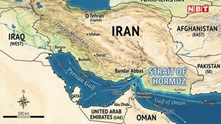
  • The Indian Navy has launched 'Operation Urja Suraksha' (Operation Energy Security) to safeguard oil and gas tankers traveling to India from the Strait of Hormuz and the Gulf of Oman.
  • This mission focuses specifically on the security of crude oil, LPG, and LNG tankers transiting through the Strait of Hormuz and the Gulf of Oman.
  • This mission is an extension of 'Operation Sankalp,' which commenced in 2019 and remains ongoing to ensure maritime security in the region.

Strait of Hormuz:

  • It is one of the world's most strategically and economically vital waterways.
  • Connectivity: It connects the Persian Gulf to the Gulf of Oman and the Arabian Sea.
  • Bordering Countries: Iran lies to its north, while Oman (Musandam Peninsula) and the United Arab Emirates (UAE) lie to its south.
  • Dimensions: It is approximately 167 km long. At its narrowest point, its width is merely 21 nautical miles (approximately 33–39 km).
  • Shipping Lanes: To minimize the risk of ship collisions, a 'Traffic Separation Scheme' (TSS) is employed here, comprising two lanes—each just 2 miles (3.2 km) wide—designated for inbound and outbound traffic.
  • Oil Lifeline: Approximately 25% of the world's total seaborne oil trade (roughly 20 million barrels per day) passes through this strait.
  • Gas Supply: About 20% of the global trade in Liquefied Natural Gas (LNG) transits through this route, with Qatar serving as the primary exporter.
  • Major Exporters: Countries such as Saudi Arabia, Iraq, Kuwait, the UAE, and Iran rely either wholly or partially on this route for their oil exports.

Strategic Significance for India:

  • Energy Security: Approximately 40–45% of India's crude oil imports and 54–60% of its LNG imports transit through this route.
  • Operation Urja Suraksha (2026): Amidst recent regional tensions, the Indian Navy has launched this mission in the region to ensure the safe passage of its tankers.
  • Alternative Routes: India currently lacks any effective, immediate alternative to this route; consequently, any disruption occurring here directly impacts domestic fuel prices and inflation.

DAC Approves Defence Procurement Proposals
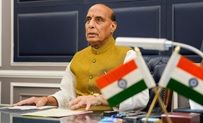
  • The Defence Acquisition Council (DAC), chaired by Defence Minister Rajnath Singh, granted 'Acceptance of Necessity' (AoN) to defence procurement proposals worth approximately ₹2.38 lakh crore.
  • This marked the final meeting of the financial year 2025-26, during which significant decisions were taken regarding the modernization of the Indian Army, Air Force, and Coast Guard.

Key Approvals and Equipment:

Indian Air Force (IAF):

  • Procurement of 60 Medium Transport Aircraft (MTA) to replace the aging AN-32 and IL-76 fleets
  • Five additional squadrons of the S-400 Long-Range Surface-to-Air Missile System from Russia
  • Procurement of Remotely Piloted Strike Aircraft (armed drones)
  • Overhaul of engine aggregates for Su-30 MKI fighter aircraft

Indian Army:

  • Dhanush Gun System, which will enhance the artillery's firepower
  • Air Defence Tracked Systems and High-Capacity Radio Relay Communication Systems
  • Armour-piercing tank ammunition for use against enemy tanks
  • Runway-Independent Aerial Surveillance System, enabling surveillance operations from any surface

Indian Coast Guard (ICG):

  • Approval for Heavy-Duty Air Cushion Vehicles (Hovercraft) to facilitate rapid maritime patrolling and search-and-rescue operations

FY 2025-26 Record:

  • In this financial year, the DAC has approved a total of 55 proposals, with a cumulative value of ₹6.73 lakh crore
  • During the current financial year, 503 capital procurement contracts worth ₹2.28 lakh crore were signed—the highest number recorded in any single financial year to date

Reports and Indices

IIED Food Security Index 2026

  • The International Institute for Environment and Development (IIED) has published the IIED Food Security Index, in which India's position has been identified as the most concerning.

According to the report:

  • This is a new global assessment covering 162 countries.
  • It evaluates the sensitivity of food systems to climate change based on four main pillars: Availability, Access, Utilization, and Stability.
  • Unlike previous indices, this assessment projects how food security will change under various global warming scenarios—1.5°C, 2.0°C, and 4.0°C.

Key Global Findings:

  • Global Average Score: 6.74 (out of 10)
  • Top-Performing Countries: Iceland (9.26), Denmark, Austria, Ireland, and Belgium
  • Worst-Performing Countries: Somalia (1.29), DR Congo, Haiti, Madagascar, and Afghanistan
  • Widespread Risk: Approximately 4.56 billion people (59% of the global population) currently live in countries with a food security score below the global average.
  • Climate Sensitivity: "Stability" and "Utilization" have been identified as the most climate-sensitive pillars. This implies that climate-related damage often manifests first in water, sanitation, and health systems, potentially leading to malnutrition even when food is physically available.

Key Insights:

  • Wealth is No Shield: Even high-income G7 nations are not immune to this risk, given the deep interconnectedness of global supply chains; a climate crisis in a single major producing region can trigger global price volatility and shortages. The "Injustice" Gap: Low-income countries—which have contributed the least to global emissions—face the most severe decline in food security as temperatures rise.
  • Economic Limits: This study indicates that GDP growth alone has a limited impact on food security; every $1,000 increase in per capita GDP improves a country's score by only approximately 0.2 points.

Science and Technology

Cauvery's Flow May Decrease

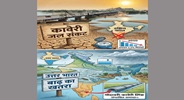
  • According to a study by IIT Gandhinagar, the flow of the Cauvery River could decrease by approximately 3.5% between 2026 and 2050.
  • Due to climate change, the flow in most other Indian rivers is expected to increase.

Relevant Facts:

  • Study Methodology: The researchers (Deepesh Singh Chufal and Professor Vimal Mishra) utilized 'Constrained Models,' which are based exclusively on those climate models that accurately depict the seasonal patterns of the Indian monsoon.
  • Historical Context: According to the study, a 28% decline in the water flow of the Cauvery River has already been observed between 1951 and 2012.

The Cauvery River:

  • The Cauvery is a major river in South India, often referred to as the "Ganga of the South" due to its sanctity.
  • Origin: It originates at Talakaveri, situated in the Brahmagiri Hills of the Western Ghats in the Kodagu (Coorg) district of Karnataka.
  • Total Length: Approximately 800 kilometers.
  • Basin Area: Its basin extends across Karnataka, Tamil Nadu, Kerala, and the Union Territory of Puducherry.
  • Flow Direction: Flowing from the northwest to the southeast, it empties into the Bay of Bengal.
  • Key Feature: It is a perennial river, as it receives rainfall from both the Southwest Monsoon and the Northeast Monsoon.

Tributaries:

  • Left-Bank Tributaries: Harangi, Hemavati, Shimsha, and Arkavati.
  • Right-Bank Tributaries: Lakshmana Tirtha, Kabini, Suvarnavati, Bhavani, Noyyal, and Amaravati.

Major Dams:

  • Krishnaraja Sagar (KRS) Dam – Karnataka
  • Mettur Dam – Tamil Nadu
  • Kabini Dam – Near the Karnataka/Kerala border

Waterfalls:

  • Shivanasamudra Falls (Karnataka) – The site where Asia's first hydroelectric power plant was established (in 1902).
  • Hogenakkal Falls (Tamil Nadu)

Appointments

Matt Brittin


  • Britain's public broadcaster, the BBC, has appointed Matt Brittin as its new Director-General.

Awards and Honors

Abel Prize 2026

  • Gerd Faltings has been honored with the Abel Prize 2026 for his contributions to arithmetic geometry.
  • This award is presented by the Norwegian Academy of Science.
  • Faltings introduced powerful new tools in the field of mathematics that resolved decades-old challenges.

The Abel Prize:

  • This award recognizes outstanding scientific achievements in mathematics.
  • It is presented and administered by the Norwegian Academy of Science and Letters on behalf of the Government of Norway.
  • It is named after the Norwegian mathematician Niels Henrik Abel (1802–1829).
  • The prize was established by the Parliament of Norway in 2002 to mark the bicentenary of Abel's birth.
  • The award was presented for the first time in 2003 and is considered equivalent to the Nobel Prize.
  • The prize consists of a monetary award of 7.5 million kroner (approximately 720,000 US dollars) and a glass plaque designed by the Norwegian artist Henrik Haugan.


Latest Courses