GK Update
 
  • Mobile Menu
HOME BUY MAGAZINEnew course icon
LOG IN SIGN UP

Sign-Up IcanDon't Have an Account?


SIGN UP


Login Icon

Have an Account?


LOG IN
 

or
By clicking on Register, you are agreeing to our Terms & Conditions.


or


GK Update

Fri 27 Mar, 2026

National News

External Affairs Minister on a Visit to France
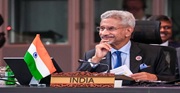
  • External Affairs Minister Dr. S. Jaishankar is on a visit to France from March 26–27, 2026, with the primary objective of participating in the G7 Foreign Ministers' Meeting alongside partner countries.
  • This visit is taking place in Paris at the invitation of France's Minister for Europe and Foreign Affairs, Jean-Noël Barrot.

G7 (Group of Seven):

  • First Meeting: 1975, France
  • Canada Joined: 1976
  • Russia Expelled: 2014
  • Current Members: Canada, France, Italy, Germany, Japan, United Kingdom, and the United States
  • Headquarters: No permanent headquarters
  • The Journey from G7 to G8: From 1997 to 2013, the group was known as the G8 due to Russia's inclusion; however, Russia was expelled in 2014 following the annexation of Crimea.

Projects Worth Over ₹1,200 Crore Approved
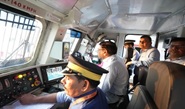
  • The Railways has approved projects worth over ₹1,200 crore with the objective of upgrading its communication infrastructure and expanding the 'Kavach' Automatic Train Protection System.

Key Facts:

  • The Ministry of Railways stated that the aim of these projects is to strengthen the railway network through advanced fiber communication systems and improved safety mechanisms.
  • Two major projects have been approved for the establishment of a robust dual-fiber communication network across all five divisions of Central Railway, at a cost exceeding ₹600 crore.
  • The indigenously developed 'Kavach 4.0' will be implemented on 548 kilometers of busy routes across Tamil Nadu, Kerala, and Karnataka, at a cost of over ₹300 crore.
  • Additionally, the construction of an optical fiber communication network in the Rajkot and Bhavnagar divisions of Gujarat will be completed at a cost exceeding ₹300 crore.

'Kavach':

  • It is India's indigenous, state-of-the-art Automatic Train Protection (ATP) system, developed by the RDSO.
  • Objective: To prevent collisions between trains (Collision Avoidance System) and to minimize human error in signaling.
  • Technology: It operates based on a combination of High-Speed ​​Radio Frequency (RFID) and Optical Fiber Cables (OFC).
  • It is an SIL-4 certified system that automatically applies brakes to prevent Signal Passing at Danger (SPAD)—i.e., passing a red signal—and head-on collisions.

Approval of NDCs to be Communicated to the UNFCCC
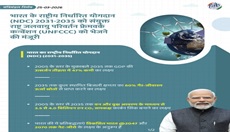
  • Led by Prime Minister Narendra Modi, the Union Cabinet has approved India's new Nationally Determined Contributions (NDCs) for the 2031–2035 period. This initiative entails a total expenditure of ₹28,840 crore.
  • This step further strengthens India's climate commitments under the Paris Agreement. These NDCs will soon be formally communicated to the United Nations Framework Convention on Climate Change (UNFCCC).
  • Following the 2022 update, targets for the 2031–2035 period have now been announced. These represent significant strides toward the overarching goal of achieving Net Zero emissions by 2070.

India's Past and Present Achievements:

  • Original 2015 NDC: Set targets to reduce the emissions intensity of GDP by 33–35% by 2030 and to achieve 40% of electricity generation capacity from non-fossil fuel sources.
  • Early Success: Both targets were achieved ahead of schedule—the emissions intensity target 11 years early, and the electricity capacity target 9 years early.
  • Emissions Intensity: A 36% reduction was achieved between 2005 and 2020. The new target is now a 47% reduction by 2035.
  • Non-Fossil Energy: 52.57% of capacity was achieved by February 2026 (5 years ahead of the target). The new target is now 60% by 2035.
  • Carbon Sink: By 2021, a carbon sink equivalent to 2.29 billion tonnes of CO2 had been created through forests and tree cover.

Agreement between DIBD and PFRDA

  • The Digital India Bhashini Division (DIBD) and the Pension Fund Regulatory and Development Authority (PFRDA) have signed a Memorandum of Understanding (MoU) under an initiative titled ‘Bhashini for Seva-Sanchalan’.
  • This agreement has been executed under the "Bhashini for Seva-Sanchalan" initiative, which is a 'Bhashini Partner Program'.

Key Facts:

  • Objective of this collaboration: To strengthen multilingual digital capabilities within the pension sector through integration with India's national language digital public infrastructure—the Bhashini platform.
  • This agreement will enable the utilization of translation tools, multilingual Artificial Intelligence (AI) models, and voice-based technologies within PFRDA systems.
  • Bhashini:
  • Full Name: Language Interface for India
  • Launch: 2022 (under the Digital India initiative)
  • Objective: To provide citizens across the country with easy access to digital services and information in their own languages.
  • Key Functions:
  • Automated translation between languages
  • Speech-to-Text and Text-to-Speech services
  • Coverage: Covers 22 Scheduled Indian languages

Successful Test of 'Agnite'—The World's Largest Single-Piece 3D-Printed Booster Engine
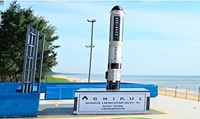
  • Chennai-based startup Agnikul Cosmos has successfully tested 'Agnite'—the world's largest single-piece 3D-printed booster engine.
  • This 1-meter-long engine is crafted from an Inconel alloy and was manufactured in just 7 days.
  • It is completely weld-free, a feature that reduces production time and costs by up to 97%.

Key Facts:

  • Key Feature: 'Agnite' is a single-piece 3D-printed booster engine that utilizes electric motor-driven pumps.
  • Revolutionizing Production: In contrast to traditional engines—which take months to build—this engine was completed in just 7 days, thereby significantly accelerating the manufacturing process.
  • Testing and Capability: The test was conducted at the company's in-house facility in Chennai. This engine is capable of carrying payloads weighing between 100 and 300 kilograms into Low Earth Orbit (LEO).
  • Technical Specifications: It is constructed from 'Inconel' (a superalloy comprising nickel, chromium, and iron), a material capable of withstanding extremely high temperatures.
  • Significance: This achievement is pivotal for the 'Agnibaan' launch vehicle, which is designed to enable on-demand satellite launches.

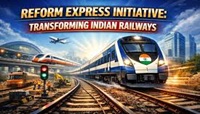
“Reform Express” Initiative

  • Indian Railways has announced 5 new key reforms under the “Reform Express” initiative to improve passenger convenience, freight operations, and construction quality, taking the total number of reforms to 9 by 2026.
  • The ticket cancellation rules have been revised, replacing the earlier short time limits with 72, 24, and 8 hours.

The key features of the new reforms are as follows:

Category Reform Key Impact
Passenger Convenience Boarding point can be changed up to 30 minutes before departure Greater flexibility for passengers
Passenger Convenience Revision in cancellation and refund rules Reduces misuse, improves ticket availability
Freight New container design for salt transportation Reduces corrosion, improves efficiency
Freight Flexible container design for automobiles Boosts rail share in auto logistics
Construction 7 new norms for project execution Better quality, accountability, timely delivery

Supreme Court Verdict on SC Status

  • In a significant ruling, the Supreme Court clarified that Scheduled Caste (SC) status is restricted exclusively to followers of the Hindu, Sikh, or Buddhist faiths.
  • The Court stated that upon converting to Christianity or Islam—thereby departing from these religions—an individual's SC status automatically ceases, rendering them ineligible for reservation benefits and the provisions of the SC/ST Act.
  • A bench headed by Justice Prashant Kumar Mishra held that the religion-specific stipulation for SC status, contained in Paragraph 3 of the Order issued under Article 341, is constitutionally valid.

Economy and Banking

Agreement between DPIIT and Krafton India Private Limited
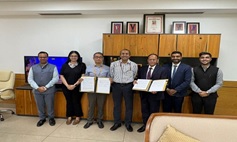
  • The Department for Promotion of Industry and Internal Trade (DPIIT), under the Ministry of Commerce and Industry, has signed a Memorandum of Understanding (MoU) with Krafton India Private Limited.

Key Facts:


  • Main Objective of the Collaboration: To strengthen the startup ecosystem in India and, specifically, to foster innovation in sectors such as digital entertainment, online gaming, and AI.
  • Key Focus Areas: Startups working in the fields of gaming, e-sports, interactive media, digital content, and Artificial Intelligence (AI)-based technologies.
  • Prior to this, on March 24, 2026, the DPIIT had signed an MoU with an air conditioning company.
  • The objective of this collaboration is to promote the growth of product-based startups operating in areas such as HVAC technologies, digital solutions, advanced manufacturing processes, and supply chain innovation.
  • Under this collaboration, the DPIIT, in conjunction with Blue Star Limited, will explore the feasibility of organizing innovation challenges as part of the 'India Startup Grand Challenge,' and will also conduct targeted hackathons focused on the HVAC, digital technology, and manufacturing sectors.
  • The agreement was signed by Mr. T.L.K. Singh, Deputy Secretary at the DPIIT, and Mr. B. Thiagarajan, Managing Director of Blue Star Limited.

Person In News

Globally Popular Leaders

  • In a global survey conducted by the American data analytics firm 'Morning Consult', Prime Minister Narendra Modi emerged as the world's most popular leader with an approval rating of 68%.

Related Facts:

  • In this ranking, Swiss President Guy Parmelin and South Korean President Lee Jae-myung share the second spot, with both receiving an approval rating of 62 percent.
  • The leaders of the Czech Republic and Argentina received approval ratings of 57 percent and 56 percent, respectively.
  • US President Donald Trump received an approval rating of 39 percent and failed to make it into the top ten.
  • British Prime Minister Keir Starmer received an approval rating of 24 percent.
  • French President Emmanuel Macron ranked near the very bottom of the list with 17 percent.

Kiran Mani

  • OpenAI has appointed Kiran Mani as the Head of the Asia-Pacific region to expand its AI operations.
  • Prior to joining OpenAI, Kiran Mani served as the CEO-Digital at 'JioStar' (a Reliance & Disney JV).
  • He will be based in Singapore and will report to OpenAI's Chief Strategy Officer, Jason Kwon.

Art & Culture

Ram Navami

  • Ram Navami is celebrated as the birth anniversary of Lord Rama, observed on the ninth day (Navami) of the Shukla Paksha in the month of Chaitra as per the Hindu calendar.
  • The festival falls on the ninth day of Chaitra Navratri (usually in March–April).
  • In 2026, the Chaitra Shukla Navami begins on 26 March and continues till 27 March, with the festival mainly celebrated on 27 March 2026 (Friday) based on Udaya Tithi.

Awards and Honors

Saraswati Samman, 2025

  • The Bengali novel ‘Hara Parvati Katha’, authored by Ramkumar Mukhopadhyay, has been selected for the Saraswati Samman, 2025.
  • The Saraswati Samman is an annual award established by the K.K. Birla Foundation in 1991.
  • This honor is conferred upon an outstanding literary work written by an Indian citizen in an Indian language and published within the last 10 years.
  • The awardee will be presented with a cash prize of ₹15 lakh, a citation, and a memento.

Defence News

'Vayu Baan' Project

  • The Indian Air Force (IAF) has launched a revolutionary project named 'Vayu Baan,' which marks India's first indigenous helicopter-launched drone system.
  • The objective of this project is to conduct precision strikes on adversaries from a safe distance—without entering enemy airspace—and to enhance surveillance capabilities by deploying small, autonomous drones from helicopters while airborne.

Key Features:

  • Objective: To conduct surveillance and strikes from a safe distance (stand-off range) without penetrating enemy territory.
  • Capability: This drone has a strike range of over 80 kilometers and can remain airborne for approximately 30 minutes.
  • Technology: It is equipped with electro-optical and infrared sensors capable of operating both day and night. It can also function effectively in GPS-denied environments.
  • Launch: It is deployed by being dropped directly into the air from a flying helicopter, after which its wings unfold, and it proceeds toward its designated target.
  • Payload: It is capable of carrying a payload (explosives) ranging from 500 grams to 1000 grams.
  • Process: The Indian Air Force's Regional Aerospace Innovation Division-Gandhinagar (RAID-GN) has issued a Request for Proposal (RFP) for 10 drones, a ground control station, and associated equipment.
  • Initiator: This project is being spearheaded by the Indian Air Force's Directorate of Aerospace Design (DAD).
  • It is capable of operating at altitudes ranging from 150 feet to 8,000 feet.


Latest Courses