National News
Finance Bill 2026

- The Lok Sabha passed the Finance Bill 2026 by a voice vote.
- With the passing of this Bill, the process of budgetary approval for the financial year 2026-27 has been completed in the Lower House.
Key Facts:
- Amendments: The Lok Sabha passed this Bill with 32 government amendments. Objective: This Bill seeks to give effect to the Central Government's financial proposals (such as changes in tax rates, duties, etc.) for the financial year 2026-27.
- Tax Administration: According to Finance Minister Nirmala Sitharaman, this Bill focuses on promoting "trust-based tax administration" and 'Ease of Living' for citizens.
- Relief Measures: The government has exempted 17 critical life-saving medicines from basic customs duty.
- Next Stage: After being passed by the Lok Sabha, it will now be sent to the Rajya Sabha for consideration.
- Powers of the Lok Sabha: In the case of a Money Bill, the Lok Sabha possesses special powers. It can be introduced only in the Lok Sabha, and the Rajya Sabha cannot amend it; it can only offer recommendations.
- Appropriation Bill: Prior to this, the Lok Sabha passed the Appropriation Bill on March 19, 2026, which authorizes the government to withdraw funds from the Consolidated Fund.
- Total Expenditure: An expenditure of ₹53.47 lakh crore has been estimated for the upcoming financial year, which is 7.7% higher than that of the previous year.
- Capital Expenditure (Capex): A capital expenditure of ₹12.2 lakh crore has been proposed for the next financial year.
Constitutional Provisions:
- Money Bill – Article 110: This includes only those matters specified in Article 110(1) (such as the imposition of taxes, government borrowing, or the withdrawal of funds from the Consolidated Fund). Finance Bill (I) – Article 117(1): This includes matters covered under Article 110, as well as matters of general legislation.
- Finance Bill (II) – Article 117(3): This contains provisions involving expenditure from the Consolidated Fund of India, but does not include any matters covered under Article 110.
- As a Money Bill: If a Finance Bill is certified as a 'Money Bill' by the Speaker of the Lok Sabha, the Rajya Sabha cannot reject or amend it. It must return the Bill within 14 days.
- The President cannot return a Finance Bill (falling under the category of a Money Bill) for reconsideration. He may either give his assent or withhold it.
|
UDAN Scheme Approved for 10 Years

- The Union Cabinet, chaired by Prime Minister Narendra Modi, has approved the continuation of the Regional Connectivity Scheme (RCS)—the revamped UDAN (Ude Desh ka Aam Naagrik) scheme.
Key Facts:
- Duration: The scheme will be implemented for a period of 10 years, spanning from the financial year 2026-27 to 2035-36.
- Total Outlay: A total budget of ₹28,840 crore has been allocated for the scheme.
- Airport Development: The objective is to develop 100 new airports by upgrading existing unserved airstrips.
- Expansion of Helipads: 200 modern helipads will be constructed to improve connectivity in inaccessible and hilly regions.
- Financial Assistance (VGF): Airline operators will be provided assistance through Viability Gap Funding (VGF). Under this provision, the Central Government will contribute up to 80–90% of the VGF assistance.
Key Components:
- CAPEX: Development of airports and infrastructure.
- O&M: Operations and maintenance of airports.
- Atmanirbhar Bharat: Promoting the indigenous aerospace sector and assisting in aircraft acquisition.
UDAN Scheme (Ude Desh ka Aam Naagrik):
- Launch: The scheme was launched on October 21, 2016, under the aegis of the Ministry of Civil Aviation.
- First Flight: The inaugural flight operated between Shimla and Delhi on April 27, 2017.
- The scheme completed 8 years of operation on April 27, 2025.
- Objective of the Scheme: To connect the country's small and remote cities through affordable air travel, thereby enhancing regional connectivity and enabling common citizens to benefit from air travel.
- Over the past eight years, the UDAN scheme has played a pivotal role in increasing the number of regional airports across the country and strengthening air connectivity. Nodal Ministry: Ministry of Civil Aviation
- Implementing Body: Airports Authority of India (AAI)
Components of the Scheme:
- Viability Gap Funding (VGF): Financial assistance provided to airlines to ensure affordable airfares.
- Airfare caps established to ensure affordability.
- Collaborative governance involving the Centre, State governments, the Airports Authority of India (AAI), and private airport operators.
- Evolution of the Scheme: From Inception to Expansion
- UDAN 1.0 (2017):
- Launch: The first flight took off on April 27, 2017 (Shimla–Delhi).
- Coverage: 128 routes across 70 airports were allocated to 5 airline operators; this included 36 new airports.
UDAN 2.0 (2018):
- The scheme was expanded to include 73 underserved and unserved airports.
- For the first time, heliports were also integrated into the UDAN network.
UDAN 3.0 (2019):
- Tourism routes were introduced in coordination with the Ministry of Tourism.
- Seaplane operations were incorporated to connect water aerodromes.
- Several routes within the North Eastern Region were added to the scheme.
UDAN 4.0 (2020):
- Focused on hilly regions, the North Eastern states, and island territories.
- Greater emphasis was placed on helicopter and seaplane services.
UDAN 5.0 and 5.5 (2024-25):
- Tenders issued for seaplane services across more than 50 water bodies.
- Service expansion extended to heliports, smaller runways, and remote areas.
|
IVFRT Scheme Approved for a Five-Year Period
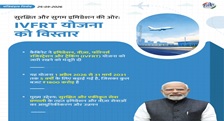
- The Union Cabinet has approved the Immigration, Visa, Foreigners Registration and Tracking (IVFRT) scheme for a period of five years.
Key Facts:
- Approved Period: Five years, from April 1, 2026, to March 31, 2031.
- Total Outlay for this Period: ₹1,800 crore.
- Objective: To integrate and streamline functions related to immigration, visa issuance, and the registration of foreigners in India.
- IVFRT Scheme: This project was approved by the Cabinet Committee on Economic Affairs on May 13, 2010, with a budgetary outlay of ₹1,111 crore and a project duration extending up to September 2014.
|
190 Projects Approved Under the AI Mission
- Jitin Prasada, Minister of State for Electronics and Information Technology, informed the Lok Sabha that a total of 190 projects have been approved under the India AI Mission.
- Of these, 78 projects have been allocated to government entities, 46 to startups and Micro, Small, and Medium Enterprises (MSMEs), and 27 to researchers or academic institutions.
- The government has launched the India AI Mission with an outlay of ₹10,372 crore to foster the development of a comprehensive AI ecosystem within the country.
| The 'IndiaAI Mission' was launched in March 2024. |
Agreement between the Ministry of Culture and YouTube
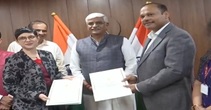
- The Ministry of Culture exchanged a Memorandum of Understanding (MoU) with YouTube.
Key Facts:
- Objective: To disseminate India's rich and diverse musical heritage globally by utilizing digital platforms.
- Minister of Culture: Gajendra Singh Shekhawat
|
Foreign Contribution (Regulation) Amendment Bill, 2026
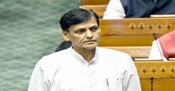
- Minister of State for Home Affairs, Nityanand Rai, introduced the Foreign Contribution (Regulation) Amendment Bill, 2026, in the Lok Sabha.
- The primary objective of this Bill is to enhance transparency and further tighten regulations for Non-Governmental Organizations (NGOs) receiving foreign contributions.
Key Highlights:
- Control over Assets: The Bill empowers the government to take custody of the assets and foreign funds of NGOs whose FCRA registration has been cancelled, has expired, or has been surrendered.
- Appointment of Government Authority: In the event of registration cancellation, a government-appointed authority will be responsible for the management and disposal of assets created using foreign funds.
- Addressing Legal Loopholes: This Bill seeks to address existing "operational and legal loopholes" within the Foreign Contribution (Regulation) Act, 2010.
- Accountability and Transparency: The government argues that these amendments are necessary to ensure the proper utilization of funds received from abroad and to prevent activities detrimental to the national interest.
- Responsibility of NGO Functionaries: According to Drishti IAS, this Bill aims to further streamline the accountability of NGO functionaries.
|
The Country's Solar Module Manufacturing Capacity
- Union Minister for New and Renewable Energy, Pralhad Joshi, informed the Lok Sabha that the country's solar module manufacturing capacity has reached 172 GW.
- The solar cell manufacturing capacity has reached 27 GW.
- The country's solar power generation capacity has increased to 144 GW.
Announcement of the Formation of Seven Empowered Groups
- Prime Minister Narendra Modi announced the formation of seven empowered groups to address the far-reaching implications of the conflict in West Asia.
- He appealed to the states to work in tandem with the Central Government—acting as 'Team India'—to navigate this crisis.
- The Prime Minister noted that these groups have been constituted along the same lines as the groups of experts and officials established to tackle the challenges posed by the COVID-19 pandemic.
The primary areas of focus for these groups are:
- Fuel and Energy Security: Ensuring a continuous supply of petrol, diesel, natural gas (LNG/LPG), and crude oil, and managing price volatility.
- Fertilizer Supply: Ensuring adequate availability of fertilizers for farmers.
- Supply Chain: Maintaining the smooth flow of essential commodities despite disruptions in global trade routes.
- Inflation Control: Formulating strategies to contain inflation driven by the conflict.
- Strategic and Foreign Affairs: Monitoring strategic aspects related to defense and foreign policy.
- Transport and Logistics: Resolving hurdles encountered in import and export operations.
- Information and Communication: Maintaining communication and engagement with the public.
|
Grants Released Under the 15th Finance Commission
- The Central Government has released a grant of ₹4,383.98 crore (approximately ₹4,384 crore) for Rural Local Bodies (RLBs) under the recommendations of the 15th Finance Commission (XV-FC).
- This financial assistance has been provided with the objective of empowering the Panchayati Raj Institutions (PRIs) of Uttar Pradesh, Bihar, Jharkhand, and Maharashtra.
Key Facts:
|
State-wise Distribution:
- Uttar Pradesh: ₹2,339.10 crore (75 District Panchayats, 826 Block Panchayats, and 57,694 Gram Panchayats).
- Bihar: ₹1,203.60 crore (38 District Panchayats, 533 Block Panchayats, and 8,053 Gram Panchayats).
- Jharkhand: ₹412.69 crore (24 District Panchayats, 253 Block Panchayats, and 4,342 Gram Panchayats).
- Maharashtra: Included among the states receiving funds under this distribution cycle.
- These grants are recommended by the Ministry of Panchayati Raj and the Ministry of Jal Shakti, and are released by the Ministry of Finance in two installments annually.
- 'Untied' grants are intended to address the specific needs of local areas—excluding salaries and establishment costs—under the 29 subjects listed in the Eleventh Schedule of the Constitution.
- On the other hand, 'Tied' grants are earmarked for core services such as sanitation, maintaining Open Defecation Free (ODF) status, waste management, and ensuring a safe drinking water supply—which also includes rainwater harvesting and water recycling.
|
Transgender Persons (Protection of Rights) Amendment Bill, 2026
- The Lok Sabha has passed the Transgender Persons (Protection of Rights) Amendment Bill, 2026.
- It amends the 2019 Act by making medical board certification mandatory instead of “self-perceived gender” for identity recognition and narrows the definition of transgender persons on a more biological basis.
- While the aim is to improve administrative clarity and security, critics view it as a violation of rights.
Key Provisions:
- Mandatory Medical Certification: Applicants will now require a recommendation from a designated medical board to obtain an identity certificate. This board will be headed by the Chief Medical Officer (CMO) or Deputy CMO.
- Revised Definition: The bill narrows the definition of “transgender person,” limiting it primarily to biological traits and specific socio-cultural identities (such as Kinnar, Hijra, Aravani).
Stricter Penal Provisions:
- Forcing a person into transgender identity (e.g., through surgery or hormonal changes) will attract punishment ranging from a minimum of 10 years to life imprisonment.
- If the offence is committed against a child, it will lead to life imprisonment and a minimum fine of ₹5 lakh.
- Right to Change Name: Based on the identity certificate, transgender persons will have the right to change their first name in birth certificates and other official documents.
- Transgender Persons (Protection of Rights) Act, 2019: A transgender person is someone whose gender does not match the gender assigned at birth. It includes trans men, trans women, intersex persons, and socio-cultural identities like Kinnar and Hijra, irrespective of medical intervention.
- Census 2011: India’s transgender population is about 4.88 lakh, with Uttar Pradesh, Andhra Pradesh, and Maharashtra having the highest numbers.
|
International Film Festival 2026

- The International Film Festival Delhi (IFFD) 2026—being held in Delhi for the first time—commenced at Bharat Mandapam, running from March 25 to March 31.
- Organized in collaboration with the Delhi Government, this festival will screen over 125 Indian and international films, with the aim of establishing the city as a global cultural hub.
Key Highlights:
- More than 130 films from 47 countries will be screened at this festival.
- Selected from over 2,000 entries submitted from 101 countries, the films featured in this festival underscore its global reach.
- The festival will open with *Sira*—an Oscar-nominated road movie by renowned filmmaker Olivier Laxe—sending a strong signal on the international stage.
- The festival will conclude with *Amoeba*—the impressive debut feature film by Singaporean director Tan Siu.
|
State News
Second State to Pass UCC Bill in India
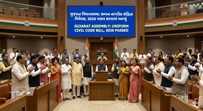
- The Gujarat Legislative Assembly has passed the Uniform Civil Code (UCC) Bill, 2026, making it the second state in India to do so.
- The law, introduced by the government led by Chief Minister Bhupendra Patel, provides uniform rules for marriage, divorce, inheritance, and live-in relationships.
Key Highlights :
- Live-in Registration: Registration of live-in relationships will be mandatory.
- Ban on Polygamy: Polygamy has been prohibited under this law.
- Property Equality: In the absence of a will, property will be distributed equally among parents, spouses, and children.
- Exemptions: This law will not apply to Scheduled Tribes (STs) and certain groups possessing traditional rights.
- Objective: To ensure women's empowerment and a uniform legal framework for marriage and family-related matters.
Constitutional Context: Article 44 of the Indian Constitution (Directive Principles of State Policy – DPSP) directs the State to secure a Uniform Civil Code for citizens throughout India.
|
Increase in Birth Rate in Mizoram

- In January of this year, Mizoram recorded 1,845 births and 720 deaths.
- According to data released by the Department of Economics and Statistics, the birth rate for girls was higher.
- In the state, 949 girls were born for every 896 boys.
- The highest number of births was recorded in Aizawl, followed by the Lunglei district in South Mizoram.
Launch of the 'Nivesh Mitra 3.0' Portal
- The Government of Uttar Pradesh has launched the 'Nivesh Mitra 3.0' portal with the objective of achieving its goal of a $1 trillion economy.
- This portal is based on Artificial Intelligence (AI) and will provide world-class facilities to investors under the framework of 'Ease of Doing Business.'
Key Highlights:
- AI-Based System: This is a next-generation digital platform that utilizes AI and data-driven governance tools.
- Simplified Services: The portal offers access to over 200 services from more than 40 departments at a single location (Single Window), thereby making processes faster and simpler.
- Dynamic CAF: It features an integrated Common Application Form (CAF) equipped with a 'Know Your Approvals' (KYA) feature, which provides investors with personalized guidance regarding the necessary approvals.
- GIS-Enabled Land Bank: This feature allows investors to view the actual availability of land on a digital map, thereby enhancing transparency.
- Integrated Tracking and Alerts: It includes real-time application tracking as well as instant notifications (alerts) delivered via WhatsApp, email, and SMS.
- Integration with National Portal: Nivesh Mitra 3.0 has been integrated with the 'National Single Window System' (NSWS).
|
Economy and Banking
India's GDP Growth Rate: S&P

- According to a recent report by S&P Global (Standard & Poor's), despite geopolitical tensions and instability in West Asia, India's GDP growth rate is projected to stand at 7.1% in the fiscal year 2026-27 (FY27).
Key Highlights:
- Driven by robust domestic demand, sustained exports, and a gradual recovery in private investment, India is set to remain one of the fastest-growing major economies.
- India is emerging as a key growth driver alongside other major economies.
- Excluding China, growth in the region is expected to rise to 4.5% in 2026.
- Despite volatility in global energy prices, inflation is projected to moderate to approximately 4.3%, remaining within a manageable range.
|
India's GDP Growth Rate: Goldman Sachs

- Citing geopolitical tensions and rising crude oil prices, Goldman Sachs has lowered its forecast for India's GDP growth rate in 2026 from 7% to 5.9%.
According to the report:
- Brent crude prices are expected to average $105 in March and rise to reach $115 in April.
- Subsequently, prices could fall to approximately $80 per barrel in the final quarter of the year.
- Goldman has raised its inflation forecast for India for 2026 to 4.6%, up from its previous estimate of 3.9%.
- Despite this increase, inflation is likely to remain within the 2–6% target range set by the Reserve Bank of India.
- India's current account deficit could widen to 2% of GDP in 2026. This represents an increase from the 1.3% recorded in the October–December quarter of 2025, signaling growing external pressures on the economy.
|
India's Total Exports in 2025-26
- Jitin Prasada, Minister of State for Commerce and Industry, informed the Lok Sabha that India's exports continue to witness substantial growth.
Key Facts:
- During the April-January period of the financial year 2025-26, the total exports of goods and services rose by US$ 36 billion to reach US$ 714.73 billion, marking an increase of 5.26% over the US$ 679.02 billion recorded in the financial year 2024-25 (April-January).
- Over the period from 2021-22 to 2024-25, exports recorded a Compound Annual Growth Rate (CAGR) of 6.9%, resulting in the export value rising from US$ 497.90 billion in 2020-21 to US$ 828.25 billion in 2024-25.
- The government has approved the Export Promotion Mission (EPM) with a budgetary outlay of ₹25,060 crore (covering the period from FY 2025-26 to FY 2030-31).
|
Launch of Three Major Initiatives
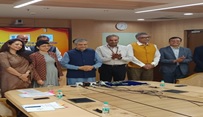
- Minister of Information and Broadcasting, Ashwini Vaishnaw, launched three major initiatives aimed at strengthening India's media, broadcasting, and digital sectors, as well as boosting the creative economy.
Key Highlights:
- National AI Skilling Initiative: This initiative has been launched in partnership with Google and YouTube, facilitated through the Indian Institute of Creative Technology (IICT). Its objective is to train 15,000 young individuals in the media and entertainment sector in the use of AI (Artificial Intelligence) tools and techniques.
- 'MyWAVES' Platform: This serves as a dedicated portal for 'Citizen Creators' on the 'WAVES' OTT platform. It empowers ordinary citizens to create, upload, and share their own content, thereby fostering greater digital participation.
- Satellite Tuners and Advanced EPG for Smart TVs: To facilitate easier access to Doordarshan's 'DD Free Dish' service, plans are underway to introduce in-built (pre-installed) satellite tuners and an Advanced Electronic Program Guide (EPG) in television sets. This will eliminate the need for set-top boxes and extend reach to remote areas.
|
International News
Intent to occupy up to the Litani River

- Israel has expressed its intention to occupy the territory in southern Lebanon extending up to the Litani River—an area described by Defense Minister Israel Katz as a "security zone."
- This marks the first time that Israel has explicitly stated its intention to take control of a territory roughly equivalent to one-tenth of the country's total landmass.
- This river flows into the Mediterranean Sea and is situated approximately 30 kilometers north of Israel's border.
Pakistan: The World's Most Polluted Country in 2025
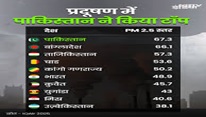
- According to an annual report by a Swiss air quality company, Pakistan was the world's most polluted country in 2025, followed by Bangladesh and Tajikistan.
- In the Air Quality Index rankings, Pakistan's PM 2.5 levels were 13.5 times higher than the World Health Organization's annual standard.
- The report further states that the situation in the country's financial capital, Karachi, has deteriorated significantly in recent years compared to previous years.
- India ranked sixth on the list of 143 countries, while Chad and Congo secured the fourth and fifth positions, respectively.
Sports News
100% Stake in Royal Challengers Bangalore

- A consortium led by the Aditya Birla Group (ABG) has acquired a 100% equity stake in the IPL franchise Royal Challengers Bangalore from its current owner, United Spirits Limited, for ₹16,706 crore.
- This consortium comprises the Aditya Birla Group, the Times of India Group, Bolt Ventures, and Blackstone's permanent private equity strategy, BXPE (Blackstone).
Khelo India Tribal Games 2026

- The inaugural Khelo India Tribal Games (KITG) are being hosted by Chhattisgarh.
- The event is being hosted across three major cities of Chhattisgarh: Raipur, Jagdalpur, and Ambikapur (Surguja).
Key Highlights:
- Dates: March 25 to April 6, 2026
- Objective: To promote the participation of tribal athletes and to strengthen sports development within India's tribal regions.
- These Games will feature seven medal events: Athletics, Football, Hockey, Weightlifting, Archery, Swimming, and Wrestling.
- Additionally, Mallakhamb and Kabaddi will be included as demonstration sports.
- Participation: Athletes from various states and Union Territories across India are expected to participate, providing tribal athletes with a national platform to showcase their talent.
- Organization: The event will be organized through the joint collaboration of the Ministry of Youth Affairs and Sports, the Sports Authority of India (SAI), the Indian Olympic Association, various National Sports Federations, and the Chhattisgarh State Organizing Committee.
- Mascot: The official mascot for these Games is 'Morveer,' symbolizing the courage and pride of India's tribal communities.
- Khelo India Scheme: The Tribal Games are an integral part of the Khelo India Scheme—a flagship Central Sector Scheme aimed at promoting mass participation in sports and fostering sporting excellence across India.
- Significance: This initiative aims to identify and encourage sporting talent within tribal communities, promote inclusivity in sports, and integrate tribal athletes into the national sports ecosystem.
|


 Don't Have an Account?