GK Update
 
  • Mobile Menu
HOME BUY MAGAZINEnew course icon
LOG IN SIGN UP

Sign-Up IcanDon't Have an Account?


SIGN UP


Login Icon

Have an Account?


LOG IN
 

or
By clicking on Register, you are agreeing to our Terms & Conditions.


or


GK Update

Tue 24 Mar, 2026

National News

Launch of Real-time Internal Audit Portal
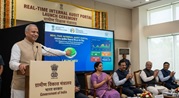
  • The Ministry of Rural Development has launched a Real-time Internal Audit Portal.
  • Developed by the National Informatics Centre (NIC), this portal will enhance transparency, accountability, and centralized monitoring, thereby ensuring the proper utilization of billions of rupees allocated for development works.

Key Features:

  • Real-time Dashboard: Live tracking of audit status and Action Taken Reports (ATRs).
  • Escalation Mechanism: Sending automated notifications in case of delays in compliance.
  • Secretary-level Visibility: Facilitating direct monitoring of all programs by senior officials of the Ministry.
  • Role-based Access: Restricting access to authorized individuals only to ensure data security.
  • Covered Schemes: This portal will cover the internal audits of major rural schemes such as MGNREGA, Pradhan Mantri Awaas Yojana-Gramin (PMAY-G), and Pradhan Mantri Gram Sadak Yojana (PMGSY).
  • Significance: This initiative aligns with the 'Digital India' mission and will aid in the efficient management of funds allocated for rural areas.

GLP-1 Based Medications

  • The Indian drug regulator (CDSCO) has stepped up surveillance to curb the unauthorized sale and misleading promotion of GLP-1 based weight-loss medications (such as Semaglutide).
  • The Ministry of Health and Family Welfare stated that, without proper medical consultation, these medications can lead to severe side effects.
  • The Ministry noted that, prior to this, on March 10, manufacturers were advised against promoting advertisements that mislead consumers.

GLP-1 (Glucagon-like Peptide-1) Based Medications:

  • These medications mimic gut hormones to suppress appetite, increase insulin secretion, and aid in weight loss of up to 15–20%. The WHO has granted them conditional approval for the treatment of obesity.
  • Mechanism of Action: These are GLP-1 receptor agonists. They reduce appetite by signaling to the brain that the stomach is full, slow down the rate at which the stomach empties, and decrease glucose production by the liver.
  • Key Uses: Type 2 diabetes, long-term weight management (obesity), and reducing the risk of cardiovascular disease.
  • Key Medications: Semaglutide, Liraglutide, and Tirzepatide.
  • WHO Guidelines: With the exception of pregnancy, the WHO recommends their long-term use—in conjunction with a healthy lifestyle—for adults living with obesity.
  • Challenges: High cost, concerns regarding counterfeit medications, muscle loss, and production volumes falling short of global demand.

State News

VAT Amendment Bill, 2026 Passed: Himachal Pradesh

  • The Himachal Pradesh Legislative Assembly has passed the VAT Amendment Bill, 2026, authorizing the levy of a cess of up to ₹5 per liter on petrol and diesel.

Key Facts:

  • Objective: This cess has been named the "Orphan and Widow Cess," and the proceeds will be utilized for welfare activities, education, and financial assistance for orphaned children and widows.
  • Imposition: This cess will be levied at the point of first sale of fuel.
  • Ceiling: The government has set a maximum limit (ceiling) for the cess at ₹5 per liter; however, Chief Minister Sukhvinder Singh Sukhu clarified that the actual cess amount could be lower than this (e.g., 10–30 paise per liter) and will be notified in accordance with the needs of the public.
  • Opposition and Support: The opposition Bharatiya Janata Party (BJP) opposed this move, arguing that it would fuel inflation and make petrol and diesel more expensive in the state compared to neighboring states. The BJP also staged a walkout from the House.
  • Government's Stance: The Chief Minister stated that this initiative is being undertaken in fulfillment of the government's role as a 'guardian' to the orphans and widows of the state.
  • Himachal Pradesh:
  • A hilly state situated in the Western Himalayas, known as 'Devbhumi' (Land of Gods).
  • Borders: Shares boundaries with Jammu & Kashmir, Ladakh, Punjab, Haryana, Uttarakhand, and China (Tibet).
  • History: Constituted as a Chief Commissioner's Province on April 15, 1948; became a Union Territory in 1956; and attained full statehood in 1971.
  • Himachal Pradesh Day is celebrated annually on April 15, marking its formation as a Chief Commissioner's Province in 1948. Capital: Shimla
  • Major Rivers: Sutlej, Beas, Ravi, Chenab, and Yamuna
  • Major Lakes: Renuka (the largest natural lake), Rewalsar, Khajjiar, and Chandra Tal. It is also home to a 'Cold Desert' (Lahaul-Spiti).

Uttar Pradesh’s Third ‘Floating Solar Plant’
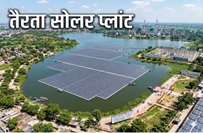
  • The Uttar Pradesh Cabinet has approved a 20 MW floating solar plant on Chilua Tal (Lake) with the objective of developing Gorakhpur as a 'Solar City'.

Key Facts:

  • Capacity and Production: The total capacity of this plant is 20 Megawatts (MW), with a targeted annual production of approximately 33.29 to 38.54 million units of green energy.
  • Implementing Agency: This project will be established by Coal India Limited.
  • Area: The floating solar panels will be installed across approximately 80 acres of the water body at Chilua Tal, located in the Sadar Tehsil of Gorakhpur.
  • Cost: The estimated cost of the project is approximately ₹140 crore.
  • Objective: According to the standards set by the Ministry of New and Renewable Energy, it is mandatory for cities being developed as 'Solar Cities' to achieve a reduction of at least 10% in the demand for conventional energy within five years. For Gorakhpur, this target has been set at approximately 121.8 million units.
  • Status of Floating Solar Plants in Uttar Pradesh:
  • This plant in Gorakhpur will be the state's third major floating solar plant.
  • Auraiya: A 20 MW capacity plant (established by NTPC).
  • Khurja (Bulandshahr): An 11 MW capacity plant (established by THDC).
  • Over the past nine years, Uttar Pradesh has made remarkable progress in the solar energy sector, establishing itself as one of the country's leading states in green energy.
  • Thanks to the effective implementation of the Uttar Pradesh Solar Energy Policies of 2017 and 2022, the state's solar capacity has grown to exceed 5,000 MW.
  • Driven by effective policies, large-scale solar projects, and public participation, more than 400,000 rooftop solar plants have been installed across the state.
  • Under the Solar Energy Policy-2022, the state government has set an ambitious target of developing 22,000 MW of solar capacity. Torrent Power is setting up a 0.5 MW green hydrogen pilot project in Gorakhpur, with a production capacity of approximately 9 kilograms per hour.
  • Meanwhile, Zero Footprint Industries Pvt. Ltd. is establishing a green hydrogen plant in Rampur with a capacity of 22.5 kilograms per hour.

Approval Granted for the Development of ‘Pachwara South Coal Block’
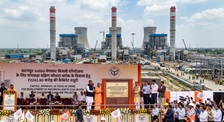
  • The Uttar Pradesh Cabinet has approved an outlay of ₹2,242.90 crore for the development of the ‘Pachwara South Coal Block’ in Jharkhand, intended to support a project comprising three 660 MW units located at ‘Ghatampur’ in Kanpur.

Key Facts:

  • Project Details: The Ghatampur Thermal Power Project is situated in the Kanpur district and consists of three supercritical units, each with a capacity of 660 MW. This project is being implemented by Neyveli Uttar Pradesh Power Limited (NUPPL), a joint venture between NLC India Limited and Uttar Pradesh Rajya Vidyut Utpadan Nigam Limited (UPRVUNL).
  • Coal Mine: The ‘Pachwara South Coal Block,’ located in the Dumka district of Jharkhand, will supply fuel to this power plant.
  • Financial Sanction: The approved cost of ₹2,242.90 crore will be utilized for the development of the mine. Of this amount, 70% (₹1,570.03 crore) will be raised through debt, while the remaining 30% will be raised as equity capital.
  • This project is being developed as a joint venture between Uttar Pradesh Rajya Vidyut Utpadan Nigam Limited and NLC India Limited.
  • 70 percent of the approved cost—i.e., ₹1,570.03 crore—will be raised through debt, while the remaining 30 percent will be raised as equity capital.
  • This includes a contribution of ₹329.71 crore, corresponding to the Production Corporation's 49 percent equity stake in the venture.

“Navyug Palika Yojana” Approved

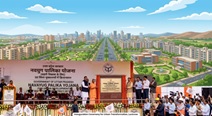
  • The Uttar Pradesh Cabinet has approved the “Navyug Palika Yojana” (New Era Municipality Scheme) under the Urban Development sector, which will be implemented across 58 district headquarters.

Key Highlights:

  • Following the lines of the Smart Cities Mission, the State Government has now decided to undertake the development of cities situated outside the jurisdiction of Municipal Corporations.
  • Under this scheme, a comprehensive blueprint has been drafted for the holistic development of urban local bodies in the remaining 58 district headquarters—excluding the 17 districts that already house Municipal Corporations—by equipping them with modern amenities.
  • A total of 58 urban local bodies have been selected under this scheme.
  • These include 55 Nagar Palika Parishads (Municipal Councils) and three Nagar Panchayats, which have been specifically chosen by virtue of being district headquarters.
  • An annual expenditure of ₹583.20 crore is earmarked for the scheme, amounting to a total outlay of ₹2,916 crore over a period of five years.
  • This scheme will be entirely funded by the State Government, with no financial contribution or participation from the Central Government.
  • The operational tenure of the scheme has been set from the financial year 2025-26 to 2029-30.
  • Committees will be constituted at the district level for the selection of projects; subsequently, approval will be granted by the competent authority following a technical scrutiny by a State-level technical committee.

Approval for the Establishment of IMLC
  • The Uttar Pradesh Cabinet has approved the establishment of an Integrated Manufacturing and Logistics Cluster (IMLC) in the Sambhal district, under the Atal Industrial Infrastructure Mission.

Relevant Facts:

  • This cluster will be developed as part of the Industrial Corridor project—proposed across 29 sites along the expressway network developed by the Uttar Pradesh Expressways Industrial Development Authority—wherein modern infrastructure facilities, including roads, RCC drains, culverts, fire stations, water reservoirs, water supply lines, fencing, and electricity, will be established.
  • The project will be executed under the EPC (Engineering, Procurement, and Construction) model; the Cabinet has granted final approval for an outlay of ₹245.42 crore—as approved by the Finance Committee—against the originally proposed project cost of ₹293.59 crore.

'UP Private Business Park Development Policy-2025' Approved
  • The Uttar Pradesh Cabinet has approved the 'UP Private Business Park Development Policy-2025,' aimed at developing world-class 'plug-and-play' infrastructure.

Key Highlights:

  • Under this policy, business parks will be developed across the state where global corporations can establish their offices, Research and Development (R&D) centers, Global Capability Centers (GCCs), and operations hubs.
  • These parks will provide 'ready-to-operate' and 'plug-and-play' facilities, thereby facilitating rapid expansion in the service and technology sectors.
  • The policy will be implemented under the 'Design, Build, Finance, Operate, and Transfer' (DBFOT) model.
  • A minimum land requirement of 10 acres has been stipulated for each business park.

Books and Authors

Launch of the Book 'Karuna: The Power of Compassion'
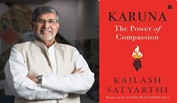
  • Nobel Peace Laureate Kailash Satyarthi's new book, Karuna: The Power of Compassion, was launched by the Satyarthi Movement for Global Compassion.
  • This book presents compassion not merely as an emotion, but as an 'Actionable Force' capable of resolving socio-global problems.

Key Facts:

  • Publication: It was launched jointly by the 'Satyarthi Movement for Global Compassion' (SMGC) and 'HarperCollins India'.
  • Satyarthi has introduced the concept of the 'Compassion Quotient' (CQ), a scientific method for measuring and enhancing compassion.

Kailash Satyarthi:

  • A renowned Indian child rights activist.
  • Birth: Born on January 11, 1954, in the Vidisha district of Madhya Pradesh.
  • Original Name: His birth name was Kailash Sharma; however, to convey a message of social equality and opposition to untouchability, he changed his surname to 'Satyarthi' (meaning 'Seeker of Truth').
  • Bachpan Bachao Andolan (BBA): He founded this organization in 1980, through which more than 100,000 children have been rescued from child labor, trafficking, and slavery to date.
  • Nobel Peace Prize (2014): He was awarded this honor jointly with Pakistan's Malala Yousafzai for "their struggle against the suppression of children and young people."
  • Autobiography: His autobiography is titled Diyaslai, which chronicles the struggles and inspirations of his life.

International News

'Terafab' Project

  • Elon Musk has announced the launch of the 'Terafab' project to develop proprietary AI chips.
  • This project is a joint initiative of Tesla, SpaceX, and xAI.

Chips (Semiconductors) in India:

  • Dhruv64: A 1.0 GHz, 64-bit dual-core microprocessor launched by C-DAC in December 2025 under the Microprocessor Development Program.
  • Vikram-32: A 32-bit indigenous chip developed at ISRO's Semiconductor Laboratory, which is critical for the space and defense sectors.
  • Chip Factory in UP: The state's first—and India's sixth—semiconductor display driver manufacturing unit has been approved for Jewar, Uttar Pradesh (with production slated to begin by 2027).
  • Mission (ISM): Under the India Semiconductor Mission (ISM) 2.0, a budget of ₹1,000 crore has been allocated for the year 2026-27, with the objective of building an indigenous ecosystem backed by a total package of ₹76,000 crore.

Sports News

JSW Indian Open 2026 Squash Tournament

  • Abhay Singh and Anahat Singh won the Men's and Women's Singles titles, respectively, at the JSW Indian Open 2026 Squash Tournament.

Squash:

  • It is a fast-paced racket sport played by two players (singles) or four players (doubles) within an enclosed, four-walled court using a small, hollow rubber ball.
  • The Court: It is a rectangular area enclosed by four walls. At the bottom of the front wall is a metal strip known as the 'Tin'; if the ball strikes this strip, it is considered 'out'.
  • Scoring: Typically, a game consists of 11 points, and a match is played in a 'Best of 5' format.
  • Global Level (WSF): The World Squash Federation (WSF) serves as the global governing body for the sport, with its headquarters located in Hastings, UK.
  • In India, the sport is administered by the 'Squash Rackets Federation of India', which is headquartered in Chennai.

Important Days

'World TB Day'

  • 'World TB Day' is observed annually on March 24th to commemorate the discovery of the TB bacterium—*Mycobacterium tuberculosis*—by Dr. Robert Koch in 1882.

Related Facts:

  • This Year's (2026) Theme: Yes! We Can End TB: Led by countries, powered by people.

Tuberculosis (TB):

  • Causative Agent: Mycobacterium tuberculosis (bacterium)
  • Transmission: Airborne (via coughing or sneezing by an infected person)

Types:

  • Drug-Sensitive: Treatable with standard anti-TB medications.
  • DR-TB (Drug-Resistant): Resistant to medication (e.g., MDR-TB and XDR-TB).
  • Key High-Burden Countries: India, Indonesia, China, the Philippines, and Pakistan.
  • Global Strategy: The WHO's 'End TB Strategy' aims to achieve a 95% reduction in TB deaths and a 90% reduction in TB cases by 2035, compared to 2015 levels.
  • Ending TB is a component of 'Sustainable Development Goal 3' (SDG 3), which aims to completely eradicate the TB epidemic by 2030.


Latest Courses