GK Update
 
  • Mobile Menu
HOME BUY MAGAZINEnew course icon
LOG IN SIGN UP

Sign-Up IcanDon't Have an Account?


SIGN UP


Login Icon

Have an Account?


LOG IN
 

or
By clicking on Register, you are agreeing to our Terms & Conditions.


or


GK Update

Sat 21 Mar, 2026

National News

India-Bhutan Agreement

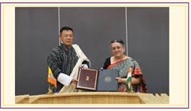
  • India and Bhutan have signed a Memorandum of Understanding (MoU) on postal cooperation.

Key Facts:

  • Objective: To promote cooperation in the fields of postal operations, technology development, capacity building, logistics connectivity, and philately (stamp collection).
  • This agreement was concluded between India's Ministry of Communications and Bhutan's Ministry of Infrastructure and Transport during the visit of the Secretary of the Department of Posts to Bhutan.

Bhutan:

  • It is also known as the 'Land of the Thunder Dragon'.
  • Capital: Thimphu
  • Location: South Asia
  • Currency: Bhutanese Ngultrum
  • Official Language: Dzongkha
  • Current King: Jigme Khesar Namgyel Wangchuck
  • It is a carbon-negative country.

Launch of the 'Krishi Sakhi' Initiative
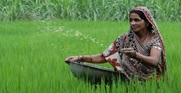
  • The Agriculture Insurance Company of India Limited (AIC) has launched the 'Krishi Sakhi' initiative with the objective of empowering women farmers.
  • Under this initiative, the AIC will conduct month-wise workshops and awareness campaigns across the country to educate women farmers about crop insurance (such as PMFBY), financial security, and modern agricultural practices.

Related Facts:

  • International Context: This initiative aligns with the goals of the 'International Year of the Woman Farmer 2026,' as declared by the United Nations (UN) and the Food and Agriculture Organization (FAO).
  • Awareness Campaigns: These include social media campaigns (January), 'Walkathons' (February), and grassroots-level workshops (March).
  • Krishi Sakhi Convergence Program (KSCP): This program was launched by the Prime Minister from Varanasi in June 2024, with the aim of training rural women to serve as para-extension workers.

Launch of the RELIEF Scheme

  • The Government of India has launched the ₹497 crore RELIEF (Resilience and Logistics Intervention for Export Facilitation) scheme to provide assistance to Indian exporters affected by the ongoing conflict in West Asia.
  • This initiative will be implemented by ECGC Limited, which will offer risk cover of up to 100% and financial relief to protect exporters against high shipping costs and insurance-related risks.

Key Highlights:

  • Objective: To provide assistance to exporters across 17–18 sectors affected by the West Asia crisis (e.g., tensions in the Strait of Hormuz) and to mitigate their operational challenges.
  • Duration: The scheme is valid for exports undertaken between February 14 and June 15, 2026.
  • Financial Security: Exporters holding ECGC insurance coverage will receive risk coverage of up to 100% for the period between February 14 and March 15, 2026, and up to 95% for the period between March 16 and June 15, 2026.
  • Special Provisions for MSMEs: Uninsured MSME exporters will receive reimbursement of up to 50% of the additional costs incurred, subject to a maximum limit of ₹50 lakh.
  • Relaxation in Export Obligations: The due dates for Advance and EPCG Authorizations falling between March 1 and May 31, 2026, will be extended until August 31, 2026, without attracting any penalty.
  • Affected Countries: This scheme will be applicable to shipments destined for or originating from the UAE, Saudi Arabia, Kuwait, Qatar, Oman, Bahrain, Iraq, Iran, Israel, and Yemen.

Economy and Banking

'Income Tax Act, 2025'

  • The Central Board of Direct Taxes (CBDT) has notified the Income Tax Rules, 2026, which will implement the provisions of the 'Income Tax Act, 2025,' effective from April 1st.

Income Tax Act, 2025:

  • This legislation will replace the Income Tax Act, 1961.
  • It replaces the dual concepts of 'Assessment Year' and 'Previous Year' with a single, uniform 'Tax Year,' defined as the period from April 1st to March 31st.
  • Chapters and Sections: This Act comprises a total of 23 chapters, 536 sections, and 16 schedules.
  • Simplification: Incorporating over 280 recommendations, unnecessary and repetitive provisions have been removed to reduce the compliance burden.

Launch of India's First LPG ATM

  • Bharat Petroleum Corporation Limited (BPCL) has launched India's first 'LPG Automated Teller Machine' (ATM) in Gurugram, Haryana.
  • This pilot project offers a 24x7 service, enabling customers to exchange an empty cylinder for a filled composite (lightweight) cylinder in just 2–3 minutes.
  • This machine primarily dispenses fiber composite cylinders (5 kg and 10 kg), which are lighter (approximately 15 kg) and transparent compared to traditional iron cylinders (approximately 30 kg).

Bharat Petroleum Corporation Limited (BPCL):

  • A leading 'Maharatna' Public Sector Undertaking (PSU) under the administrative control of the Ministry of Petroleum and Natural Gas, Government of India.
  • Granted 'Maharatna' status in 2017.
  • Established: 1952 (originally Burmah Shell; nationalized in 1976).
  • Headquarters: Mumbai (Maharashtra).

India's Achievement in Coal Production
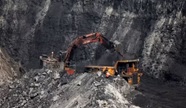
  • India has achieved the milestone of producing one billion tonnes of coal for the second consecutive year.

Coal:

  • Types of Coal: Anthracite, Peat, Bituminous, Lignite
  • Most Abundant Coal in India: Bituminous coal
  • Oldest Coalfield: Raniganj, West Bengal
  • Deepest Coal Mine in India: Chinakuri
  • India is the world's second-largest producer of coal.
  • Largest Coal-Producing States: Jharkhand > Odisha > Chhattisgarh
  • World's Largest Coal Producer: China
  • India's largest coalfield is Jharia (Jharkhand), which is also known as the 'Coal Capital of India'.

Reports and Indices

Mid-term Review of the 20th Electric Power Survey
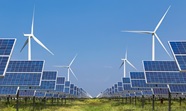
  • According to the Mid-term Review (March 2026) of the 20th Electric Power Survey conducted by the Central Electricity Authority (CEA), India's installed power capacity is expected to more than double to reach 1,121 GW by 2035-36, driven primarily by 509 GW of solar energy.
  • During this period, the share of non-fossil fuels is projected to reach 70%.
  • National Generation Adequacy Plan (2026-27 to 2035-36) Report:

Electricity Demand and Growth Rate (CAGR):

  • Peak Demand: Between FY 2024-25 and 2035-36, this is likely to witness an annual growth (CAGR) of 5.58%.
  • Total Energy Requirement: During the same period, the total electricity requirement is projected to grow at a rate of 6.41%.
  • Projected Targets (2035-36): India's peak electricity demand is expected to reach 459 GW, while the total energy requirement is projected to be 3,365 Billion Units (BU).

Expansion in Installed Capacity:

  • Current Status: Capacity is estimated to reach approximately 520 GW by January 31, 2026.
  • Future Target: The goal is to increase this to 1,121 GW by 2035-36.

Projected Energy Mix (by 2035-36):

  • Solar Energy (Solar PV): The largest contributor, accounting for 45% of the total capacity (509 GW).
  • Coal: The second-largest source, accounting for 28% of the total capacity (315 GW).
  • Wind Energy: 14% of the total capacity (155 GW).
  • Hydroelectric Power (Hydro): 77 GW (7%) from large plants and 6 GW from small plants.
  • Other Sources: Nuclear (22 GW), Gas (20 GW), and Biomass (16 GW).

Clean Energy and a Green Future:

  • Non-Fossil Fuels: By 2035-36, the total capacity from non-fossil sources (solar, wind, hydro, nuclear) is projected to reach 786 GW.
  • Increase in Generation: Net electricity generation—which stands at 1,725 ​​BU in 2024-25—is expected to double to 3,450 BU by 2035-36.

Awards and Honors

Stockholm Water Prize 2026

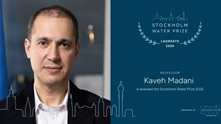
  • Renowned environmental scientist of Iranian origin, Professor Kaveh Madani, has been awarded the Stockholm Water Prize 2026 for his contributions to water resource management, policy formulation, and groundbreaking research—specifically his concept of "Water Bankruptcy."
  • At 44 years of age, Madani has become the youngest individual—as well as the first UN official—to receive this prestigious award (often referred to as the "Water Nobel"). He currently serves as the Director of UNU-INWEH.

Related Facts:

  • Award: Stockholm Water Prize 2026, considered the Nobel Prize of the water sector.
  • Contribution: Madani introduced the concepts of Game Theory and "Water Bankruptcy" to explain complex water crises.
  • Basis for Honor: He played a pivotal role in water management and policy formulation, particularly during a time when water resources are facing permanent depletion.
  • Achievement: He is the youngest winner in the 35-year history of this prestigious award.
  • Current Role: He currently serves as the Director of the United Nations University Institute for Water, Environment and Health (UNU-INWEH).

Stockholm Water Prize:

  • It is the world's most prestigious award presented for outstanding contributions to water conservation, management, and protection, and is often referred to as the "Nobel Prize of Water."
  • Presented annually since 1991 (by SIWI), this award honors individuals or organizations that have developed sustainable water solutions.

Key Facts:

  • Establishment: Founded in 1991 by the Stockholm International Water Institute (SIWI).
  • Presented by: King Carl XVI Gustaf of Sweden, who serves as its official patron.
  • Prize: The award consists of 1,000,000 Swedish Kronor and a specially designed crystal sculpture.
  • Announcement: Typically made in March, on the occasion of World Water Day. Held: During World Water Week in Stockholm in August.
  • Objective: To promote the conservation and sustainable use of water resources.
  • Indian Recipients: This honor was conferred upon India's "Water Man," Rajendra Singh, in 2015, and upon Bindeshwar Pathak, the founder of Sulabh International, in 2009.

Important Days

'International Day of Forests'

  • The 'International Day of Forests' is observed annually on March 21st with the objective of raising awareness regarding the importance of forests and trees.

Related Facts:

  • Initiation: By the Food and Agriculture Organization (FAO) in 1971.
  • Formal Recognition by the UN General Assembly: 2012.

India State of Forest Report (ISFR) 2023:

  • Forest and tree cover constitutes 25.17% of the country's geographical area (GA), comprising 21.76% forest cover and 3.41% tree cover.
  • The country's forest and tree cover has increased by 1,445.81 sq. km. compared to the year 2021.
  • According to the report, more than 33 percent of the geographical area of ​​19 states/Union Territories is under forest cover.
  • India's forest carbon stock is estimated at 7,285.5 million tonnes, which is 81.5 million tonnes higher than in 2021.
  • India's mangrove cover stands at 4,991.68 sq. km. (0.15% of GA), marking a decrease of 7.43 sq. km. since 2021.
  • Largest Forest Area (by Area): Madhya Pradesh, Arunachal Pradesh, Chhattisgarh.
  • Highest Percentage of Forest Cover: Lakshadweep (91.33%), Mizoram (85.34%), Andaman and Nicobar (81.62%).

'World Down Syndrome Day'

  • 'World Down Syndrome Day' is observed annually on March 21st with the aim of raising awareness about Down syndrome.

Key Facts:


  • Theme: "Together Against Loneliness"
  • UN Recognition: The United Nations General Assembly officially declared this day in December 2011, and it has been observed globally since 2012.

Down Syndrome:

  • It is a genetic disorder that typically results from abnormalities occurring during cell division.
  • Cause: It is caused by the presence of an extra copy of Chromosome 21, also known as 'Trisomy 21'. Typically, the human body contains two copies of this chromosome; however, in cases of Down syndrome, the number increases to three.
  • Discovery: It is named after the British physician John Langdon Down, who first identified this clinical condition in 1866.


Latest Courses