National News
Approval Granted for Construction of NH-927

- The Cabinet Committee on Economic Affairs (CCEA), chaired by Prime Minister Narendra Modi, has approved the construction of a 101.515 km long, 4-lane, access-controlled National Highway-927 (NH-927) stretching from Barabanki to Bahraich in Uttar Pradesh.
Key Features of the Project:
- Length: 101.515 km
- Design: Access-controlled 4-lane highway with continuous service roads
- Bypass: 48.28 km (bypassing major settlements)
- Connected Major Roads: NH-27, NH-330B, NH-730, SH-13, SH-30B
- Capital Cost: ₹6,969.04 crore (Civil Cost: ₹3,485.49 crore; Land Acquisition: ₹1,574.85 crore)
- Mode: Hybrid Annuity Mode (HAM)
Strategic and Economic Significance:
- Airports: Lucknow and Shravasti
- Railway Stations: Barabanki, Rasauli, Jangirabad, Rafinagar, Bindaura, Burhwal, Chaukaghat, Ghaghra Ghat, Jarwal, and Bahraich
- Land Port: Rupaidiha
- Economic Nodes: 01 SEZ and 02 Mega Food Parks
- Social Nodes: 02 Aspirational Districts
- Major Cities/Towns: Barabanki, Ramnagar, Jarwal, Kaiserganj, Kundsar, Fakharpur, Bahraich
- Upon completion, this project will also strengthen India-Nepal border trade—particularly through the Nepalganj border—and ensure faster connectivity to the Rupaidiha Land Port.
- This highway is estimated to generate 36.54 lakh direct and 43.04 lakh indirect employment opportunities. In FY-28, the Annual Average Daily Traffic (AADT) is estimated to be 28,557 PCUs in Package-1 and 21,270 PCUs in Package-2.
|
Approval of ‘Small Hydro Power Development Scheme’

- The Union Cabinet has approved the ‘Small Hydro Power Development Scheme’ for the period spanning the financial years 2026-27 to 2030-31.
- Under this initiative, support will be extended to small hydropower projects ranging from 1 to 25 MW, and financial assistance will be provided to promote clean energy generation in remote and inaccessible regions.
- Under this scheme, an allocation of ₹30 crore has been made to assist State and Central agencies in preparing Detailed Project Reports (DPRs) for approximately 200 projects.
Key Features of the Scheme:
- Expenditure: ₹2,584.60 crore
- Capacity Target: Approximately 1,500 MW
- Beneficiaries: Hilly and North-Eastern States; Border Districts; Rural and Remote Areas
Financial Assistance:
- For North-Eastern States and International Border Districts: ₹3.6 crore per MW or 30% of the project cost (whichever is lower), subject to a maximum of ₹30 crore per project.
- For Other States: ₹2.4 crore per MW or 20% of the project cost (whichever is lower), subject to a maximum of ₹20 crore per project.
- Investment Potential: Approximately ₹15,000 crore in the small hydropower sector.
- Employment Generation: Approximately 51 lakh person-days during the construction phase; additional employment opportunities in operations and maintenance.
|
Notification Issued Regarding Amendments to National Highways Fee Rules, 2026

- The Government of India has notified the National Highways Fee (Determination of Rates and Collection) (Second Amendment) Rules, 2026, effective from March 17, 2026.
Key Amendments and Provisions:
- E-Notice System: Owners of vehicles passing through toll plazas without paying the applicable fee will receive a digital notice (e-notice) via SMS or email.
- Double Penalty: Failure to make the payment within 72 hours of receiving the notice will attract a penalty of double the applicable toll fee.
- Integration with Vehicle Database: The toll system is integrated with the 'VAHAN' database; consequently, the existence of outstanding dues may lead to restrictions on other vehicle-related services.
- Grievance Redressal: Complaints may be lodged within 72 hours, and it is mandatory for such complaints to be resolved within 5 days.
- Objective: To strengthen toll compliance, enhance revenue, and promote transparent digital tolling.
- Additionally, the National Highways Authority of India (NHAI) has increased the annual FASTag pass fee from ₹3,000 to ₹3,075, effective from April 1, 2026.
|
Approval of Demand for Grants for the Ministry of Agriculture and Farmers Welfare
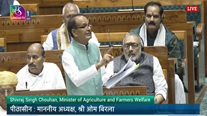
- The Lok Sabha has approved the Demand for Grants for the Ministry of Agriculture and Farmers Welfare for the year 2026-27.
Key Points and Facts:
- Budgetary Increase: The budget for agriculture has risen from ₹21,933 crore in 2013-14 to over ₹1.30 lakh crore in 2026-27.
- Record Growth in Production: Foodgrain production in the country has increased from 26.50 crore tonnes to 35.07 crore tonnes, while horticulture production has risen from 27.70 crore tonnes to 37.70 crore tonnes.
- Objectives: The government's primary focus is on enhancing farmers' income, modernizing the agricultural sector, and ensuring nutritious food for the public.
- Approval Process: After responding to the discussion on the Demands for Grants, the Lok Sabha rejected the Cut Motions and approved the demands by a voice vote.
- Approval of Expenditure: In total, the Lok Sabha has approved an expenditure of over ₹53 lakh crore for various ministries for the year 2026-27.
|
Appropriation Bill (No. 2), 2026
- The Lok Sabha passed the Appropriation Bill (No. 2), 2026.
- This Bill was introduced by the Finance Minister, Nirmala Sitharaman.
- The Bill provides for the authorization of the payment and appropriation of certain sums from the Consolidated Fund of India for the services of the financial year 2026-27.
Appropriation Bill:
- An Appropriation Bill grants the government the legal authority to withdraw funds from the Consolidated Fund of India (CFI) to meet the expenditure approved by Parliament (both voted and charged expenditure). Without the passing of this Bill, the government cannot legally withdraw any funds from the CFI, even if the Budget has already been presented.
- Constitutional Provisions:
- Article 114: Funds can be withdrawn from the Consolidated Fund of India only in accordance with the appropriations made by Parliament.
- Article 115: If the approved budgetary allocation proves insufficient, the government presents demands for Supplementary, Additional, or Excess Grants before Parliament.
- Article 116: Permits temporary expenditure—prior to the passing of the full Budget—through a 'Vote on Account,' thereby ensuring the smooth functioning of government operations.
- Presentation: The Annual Financial Statement (Budget) is presented in Parliament by the Finance Minister.
|
Approval for the 'Bharat Industrial Development Scheme' (BHAVYA)

- The Union Cabinet has approved the 'Bharat Industrial Development Scheme' (BHAVYA) at a cost of ₹33,660 crore.
Key Highlights:
- Budget and Objective: With a total outlay of ₹33,660 crore, the scheme aims to create world-class industrial infrastructure.
- Plug-and-Play Parks: 100 industrial parks will be developed, featuring ready-to-use factory sheds, underground utilities, and immediate availability of power and water.
- Single-Window System: Industries will receive expedited approvals and access to all necessary facilities at a single location through a Single-Window System.
- Employment and Investment: This initiative is expected to generate large-scale employment and accelerate the pace of industrial development.
- Infrastructure: The project encompasses roads, drainage systems, administrative facilities, and social infrastructure spread across areas ranging from 100 to 1,000 acres.
|
Approval for Cotton MSP Funding
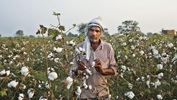
- The Union Cabinet has approved Minimum Support Price (MSP) funding of ₹1,718.56 crore for the Cotton Corporation of India (CCI) for the 2023-24 cotton season.
Related Facts:
- The government has designated the Cotton Corporation of India (CCI) as the central nodal agency for undertaking Minimum Support Price (MSP) operations for cotton.
- The CCI procures all cotton of Fair Average Quality (FAQ) from farmers without any quantitative limits whenever market prices fall below the MSP level, thereby providing a safety net to the farmers.
- During the 2023-24 cotton season, the estimated area under cotton cultivation was 114.47 lakh hectares, with production projected at 325.22 lakh bales, accounting for approximately 25% of global cotton production.
- The Government of India fixes the Minimum Support Price (MSP) for seed cotton (Kapas) based on the recommendations of the Commission for Agricultural Costs and Prices (CACP).
- The CCI has established a robust procurement network across all 11 major cotton-producing states, with over 508 procurement centers operational across 152 districts.
|
International News
India-Sri Lanka Joint Venture Approved
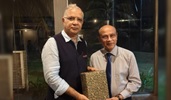
- Sri Lanka has approved an India-Sri Lanka joint venture for a transmission link to support wind energy projects in the northern region.
- This 28-km-long, 220 kV double-circuit line will connect the Mannar grid substation to Mullikulam, forming part of India's regional energy security and grid connectivity initiative.
Key Facts:
- Objective: To connect renewable energy generated in the Mannar region of Northern Sri Lanka to the national grid.
- Partnership: A joint venture between India's Jyoti Structures Ltd (JSL) and Sri Lanka's Hayleys Fentons Ltd.
- Contract: Construction of a 28 km-long, 220 kV double-circuit transmission line at a cost of 2.27 billion Sri Lankan Rupees.
- Location: From Mannar Grid Substation to Mullikulam Grid Substation.
|
Meningitis Outbreak in Britain

- A public health warning has been issued in Kent, Britain, following an outbreak of fatal meningitis (brain fever).
Meningococcal Disease:
- This is an extremely serious and life-threatening infection caused by the *Neisseria meningitidis* bacterium.
- It primarily causes meningitis (inflammation of the membranes surrounding the brain) and septicemia (blood infection).
- Symptoms: Symptoms can appear suddenly and include high fever, headache, stiff neck, and a purple rash, requiring immediate antibiotic treatment.
- Mode of Transmission: The disease spreads through droplets from the nose or throat of an infected person (via coughing, sneezing, or kissing).
- WHO Goal: The World Health Organization has developed a "Global Roadmap" (Global Roadmap to Defeat Meningitis) aimed at ending bacterial meningitis epidemics by 2030.
|
Nepal's First Transgender Woman MP

- LGBTQ+ rights activist Bhumika Shrestha has become Nepal's first transgender woman Member of Parliament (MP).
- Bhumika Shrestha has been nominated by the Rastriya Swatantra Party (RSP) under the 'proportional representation' system.
- She has also authored her autobiography, "Bhumika: Tisro Lingiko Atmakatha," which chronicles her personal struggles.
Art and Culture
Hindu New Year

- The Hindu New Year (Nav Samvatsar) begins on the *Pratipada* (first day) of the *Shukla Paksha* (waxing phase of the moon) in the month of *Chaitra*; in 2026, it is being celebrated on March 19th as Vikram Samvat 2083.
Chaitra Shukladi:
- Marks the commencement of the New Year according to the Hindu calendar (Vikram Samvat).
- Based on Vikram Samvat: India's ancient and prominent lunisolar almanac, which was instituted in 57 BCE by Emperor Vikramaditya of Ujjain to commemorate his victory over the Shakas.
- Basis: It is based on the lunar year (comprising 12 months, approximately 354 days), which is synchronized with the solar year by adding an *Adhimas* (extra month) every three years.
- Months: Chaitra, Vaishakha, Jyeshtha, Ashadha, Shravana, Bhadrapada, Ashwin, Kartik, Margashirsha, Paush, Magha, and Phalgun.
- Vikram Samvat 2083 (2026–2027): Vikram Samvat 2083 commences on March 19, 2026, and will be designated as the 'Raudra' Samvatsar.
Regional Names:
- Maharashtra/Goa: Gudi Padwa
- Andhra Pradesh/Telangana/Karnataka: Ugadi
- Sindhi Community: Cheti Chand
- Kashmir: Navreh
- Manipur: Sajibu Cheiraoba
- Start of Navratri: The auspicious festival of Chaitra Navratri also commences on this very day.
|
Reports and Indices
'Levels and Trends in Child Mortality: Report 2025'
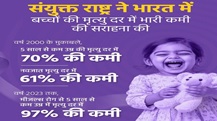
- The United Nations Inter-agency Group (UN-IGME) has released the 'Levels and Trends in Child Mortality: Report 2025'.
- According to the report, India has achieved a significant reduction in its child mortality rate.
Key Highlights:
- The neonatal mortality rate in India has declined by approximately 70%, dropping from 57 deaths per 1,000 live births in 1990 to 17 in 2024.
- An even more substantial reduction of 79% has been recorded in the mortality rate for children under five years of age, falling from 127 in 1990 to 27 in 2024.
|
Defence News
Indian Ocean Ship (IOS) SAGAR Initiative

- The Indian Navy has launched the second edition of the Indian Ocean Ship (IOS) SAGAR initiative.
Key Facts:
- Objective: To strengthen professional ties with naval personnel from friendly nations in the Indian Ocean Region, share best practices, and address shared maritime challenges.
- Participation: Naval personnel from 16 countries in the Indian Ocean Region are participating in this initiative.
- Training Structure: The program will commence with professional training at Indian Navy training establishments located in Kochi, following which the participants will be deployed aboard an Indian Navy Ship (INS Sunayna).
- Significance: This initiative holds immense significance as India is set to assume the Chairmanship of the 'Indian Ocean Naval Symposium' (IONS) in February 2026.
- SAGAR Vision: This initiative advances the Government of India's broader frameworks of 'Security and Growth for All in the Region' (SAGAR) and 'MAHASAGAR'.
|


 Don't Have an Account?