National News
22nd Installment of PM-KISAN Scheme Released

- Prime Minister Narendra Modi released the 22nd installment of the Pradhan Mantri Kisan Samman Nidhi (PM-KISAN) scheme from Guwahati, Assam.
Key Highlights:
- Total Beneficiaries: Through this installment, approximately 9.32 crore farmer families across the country have received benefits.
- Amount Transferred: A total sum of over ₹18,640 crore was sent directly to the farmers' bank accounts through Direct Benefit Transfer (DBT).
- Total Cumulative Disbursement: With this installment, the total amount transferred since the inception of the scheme in February 2019 has exceeded ₹4.27 lakh crore.
- Women's Empowerment: Over 2.15 crore women farmers have received direct financial benefits from this particular installment.
PM-KISAN Scheme:
- Announcement: It was announced in the Interim Budget for 2019-20 on February 1, 2019.
- Launch: Formally launched on February 24, 2019, from Gorakhpur (Uttar Pradesh).
- Nodal Ministry: Ministry of Agriculture and Farmers Welfare.
- Type: It is a Central Sector Scheme, 100% funded by the Government of India.
- Objective: To augment the income of small and marginal farmers and assist them in meeting their agriculture-related needs (such as seeds and fertilizers).
- Benefits: Financial assistance of ₹6,000 per year to eligible farmer families, disbursed in three equal installments of ₹2,000 every four months.
- Previous Installment: Prior to this, the 21st installment was released on November 19, 2025, from Coimbatore, Tamil Nadu, under which assistance amounting to over ₹18,000 crore was directly transferred to more than 9 crore farmers.
|
Laying of Foundation Stones and Dedication of Projects in Kokrajhar, Assam
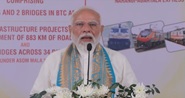
- On March 13, 2026, Prime Minister Narendra Modi laid the foundation stones for and dedicated to the nation development projects worth over ₹4,570 crore in Kokrajhar, Assam.
- Following the cancellation of his visit to Kokrajhar due to inclement weather, he launched these projects via video conferencing from Guwahati.
Key Development Projects:
- Launch of ‘Asom Mala 3.0’: The Prime Minister performed the *Bhoomi Pujan* (ground-breaking ceremony) for this road infrastructure scheme. Under this initiative, over 900 kilometers of roads will be constructed across Assam at a cost exceeding ₹3,200 crore.
- Bridges and Flyovers: To alleviate traffic congestion in the Bodoland Territorial Council (BTC) region, the foundation stones were laid for four flyovers and two major bridges (over the Sankosh and Beki rivers), estimated to cost approximately ₹1,100 crore.
- Flagging off of Three New Rail Services: PM Modi also flagged off three new rail services aimed at improving connectivity within Assam and the North-Eastern region. These include the Kamakhya-Charlapalli Amrit Bharat Express, which will provide direct rail connectivity between the North-East and South India. The Guwahati-New Jalpaiguri Express will enhance connectivity between Assam and West Bengal, while the Narengi-Agartala Express will facilitate inter-state travel for passengers, traders, and tourists by improving connectivity between Assam and Tripura.
- Cultural Context: In his address, the Prime Minister paid tribute to Bodo leaders Upendranath Brahma and Rupnath Brahma, and highlighted elements of Bodo culture such as the 'Bathou' tradition and the 'Baisagu' festival.
|
Inauguration of Green Corridor (Phase-2): Uttar Pradesh

- Defence Minister Rajnath Singh and Uttar Pradesh Chief Minister Yogi Adityanath inaugurated the Green Corridor (Phase-2) built along the Gomti River in Lucknow.
- This project is an important step towards improving the traffic system of the city.
Related Facts:
- Expansion and Route: The second phase is about 7 kilometres long, starting from Daliganj (Hanuman Setu) and passing through Nishatganj to Samta Mulak Chowk.
- Cost: The construction of this phase cost approximately ₹299 crore.
- Road Type: It is a 6-lane signal-free road.
- Next Phase: During the same programme, the foundation stones of the third and fourth phases of the project were also laid, which will connect Pipraghat to Kisan Path.
Corridors in Uttar Pradesh:
- Various types of corridors (industrial, defence, transport and spiritual) in Uttar Pradesh are key pillars of the state's infrastructure and economic development.
- Uttar Pradesh Defence Industrial Corridor (UPDIC):
- 6 Nodes: Agra, Aligarh, Chitrakoot, Jhansi, Kanpur and Lucknow
- Major Projects: BrahMos NG missile manufacturing unit in Lucknow and Adani Defence’s ammunition complex in Kanpur.
- Green Corridor (Lucknow): A 57 km long signal-free route being developed along the Gomti River to ease traffic congestion in Lucknow.
- North–South Road Corridor: The Uttar Pradesh government has approved six new corridors to strengthen vertical connectivity (north to south) in the state.
Major Routes:
- Shravasti–Prayagraj: 262 km (via Ayodhya and Sultanpur)
- Kushinagar–Varanasi: 220 km (via Deoria and Ghazipur)
- Nepal Border (Pipri)–Prayagraj: 295 km
- Lakhimpur–Banda: 502 km (via Sitapur and Lucknow)
Spiritual Corridors:
- After the success of Mahakumbh 2025, the Chief Minister announced five new spiritual corridors.
- Prayagraj–Vindhyachal–Kashi: To connect Shakti Peeths and Shiva Dhams
- Prayagraj–Ayodhya–Gorakhpur: To connect Ram Janmabhoomi and centres of the Nath tradition
- Prayagraj–Lucknow–Naimisharanya: To improve connectivity between major pilgrimage sites.
|
Proposal to Reclassify Leopards to Schedule II: Maharashtra

- The Maharashtra Cabinet approved a proposal to reclassify leopards from Schedule I to Schedule II.
- This decision was taken in view of the increasing violent encounters, especially in Maharashtra’s “sugar belt” and densely populated areas.
Related Facts:
- Change in Legal Protection: Wildlife listed under Schedule I receives the “highest level of protection”, where killing or capturing them involves a very strict legal process. If leopards are moved to Schedule II, citizens will not face legal action if a leopard entering human settlements or posing a threat is killed in self-defence.
- Administrative Flexibility: The government argues that due to the strict provisions of Schedule I, the forest department was unable to take quick action against man-eating leopards.
Other Measures:
- The cabinet also directed the implementation of a sterilization programme to control the leopard population and simplification of the process for declaring a leopard as ‘man-eater’.
- Reference to the Wildlife Protection Act (WLPA), 1972
- Schedule I: Species included in this schedule (such as tigers and leopards) receive the highest protection, and hunting is completely prohibited except when they become a threat to human life and permission is obtained from the Chief Wildlife Warden.
- Schedule II:The penalties are comparatively less strict and it becomes easier to provide legal protection for actions taken in self-defence.
Leopard :
- It is a big cat species.
- Scientific Name: Panthera pardus
- Habitat:Rainforests, savannas, deserts, shrublands and various forests across the Indian subcontinent.
Conservation Status:
- IUCN Red List: Vulnerable
- CITES: Appendix I
- Wildlife (Protection) Act, 1972: Schedule I
- The Central Government has also approved the establishment of the International Big Cat Alliance (IBCA) with its headquarters in India, with a one-time budgetary support of ₹150 crore for five years (2023–24 to 2027–28) on the occasion of the 50th anniversary of Project Tiger.
|
Plan Approved for Beautification and Tourism Development of Two Major Centers of Faith in Uttar Pradesh

- With the objective of promoting religious tourism in Prayagraj, the Uttar Pradesh government has approved a plan for the beautification and tourism development of two major centers of faith: the Phalahari Baba Temple in Karchhana and the Durga Temple (Devi Dham Pachdeva) in Soraon.
Key Facts:
- Total Budget Allocation: Approximately ₹3.46 crore
- Phalahari Baba Temple (Karchhana): Over ₹1.64 crore
- Durga Temple (Devi Dham Pachdeva) (Soraon): Approximately ₹1.82 crore
- First Installment: The first installment—₹40 lakh for the Phalahari Baba Temple and ₹45 lakh for the Durga Temple—has been released.
- Strategic Significance: Prayagraj is an integral part of Uttar Pradesh's 'Spiritual Triangle' (Prayagraj–Ayodhya–Kashi).
|
International News
Launch of Bridge Project in Sri Lanka under Operation Sagar Bandhu

- The Indian Army has started the construction of a 240-foot Bailey Bridge at Thoduwawa in Chilaw district of Sri Lanka’s North-Western Province under Operation Sagar Bandhu.
- This bridge will restore an important section of the coastal corridor connecting Colombo and Puttalam, which was damaged due to Cyclone Ditwah.
Related Facts:
- Objective: It is part of Humanitarian Assistance and Disaster Relief (HADR) being provided by India to Sri Lanka after Cyclone Ditwah.
- Project Details:The Corps of Engineers of the Indian Army is constructing the bridge in Chilaw. It will be the fourth Bailey Bridge built under this operation.
- Connectivity:The bridge will re-establish the crucial coastal connectivity between Colombo and Puttalam, facilitating the movement of goods and services.
- India’s Policy:The mission is in line with India’s ‘Neighbourhood First’ policy and the SAGAR (Security and Growth for All in the Region) vision.
|
Economy and Banking
India's Annual Retail Inflation
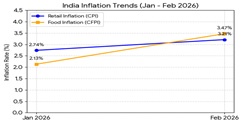
- According to data from the Ministry of Statistics and Programme Implementation (MoSPI), India's annual retail inflation (CPI) rose to 3.21% (provisional) in February 2026, up from 2.74% in January.
Key Facts:
- Period and Rate: Inflation stood at 3.21% in February 2026.
- Base Year: These figures are based on the new series (base year 2024=100), which reflects modern consumption patterns.
- Rural-Urban Divide: Rural inflation was recorded at 3.37%, while urban inflation stood at 3.02%.
- Food Inflation: The inflation rate based on the Consumer Food Price Index (CFPI) was 3.47%.
- RBI's Stance: Although inflation is at an 11-month high, it remains below the Reserve Bank of India's (RBI) medium-term target of 4% and its tolerance band of 2-6%.
|
Science and Technology
Successful Test of CE-20 Cryogenic Engine

- The Indian Space Research Organisation (ISRO) successfully conducted a 'hot test' of the CE-20 cryogenic engine at a thrust level of 22 tons at its Propulsion Complex located in Mahendragiri, Tamil Nadu.
Related Facts:
|
Key Features:
- Thrust Capacity: The engine was tested at a high thrust level of 22 tons. Previously, sea-level tests were typically conducted at a thrust of 19 tons.
- Duration: The test lasted for a total of 165 seconds, during which all performance parameters of the engine remained as expected.
- Advanced Technology: This test utilized a Nozzle Protection System (NPS) and a multi-element igniter, which help safeguard the engine under the rigorous conditions of sea-level operation.
Significance:
- Enhanced LVM3 Capability: This success is crucial for augmenting the payload-carrying capacity of India's heaviest rocket, the LVM3 (Launch Vehicle Mark-3).
- Gaganyaan Mission: The CE-20 engine has already been declared 'Human-Rated' (safe for human use) for India's manned space mission, 'Gaganyaan'.
- Indigenous Self-Reliance: This test also validates the efficacy of indigenous innovations, such as 3D-printed turbine components.
- Indian Space Research Organisation (ISRO):
- Establishment: August 15, 1969 (It replaced the Indian National Committee for Space Research – INCOSPAR, established in 1962).
- Founder: Dr. Vikram Sarabhai (He is known as the 'Father of the Indian Space Programme').
- Headquarters: Bengaluru, Karnataka.
- Current Chief: Dr. V. Narayanan.
- Ministry: It functions under the Department of Space (DoS), which reports directly to the Prime Minister of India.
Major Launch Vehicles:
- ISRO currently possesses four active launch vehicles
- PSLV (Polar Satellite Launch Vehicle): Known as ISRO's 'workhorse.' It is renowned for launching medium-weight satellites into Sun-Synchronous Polar Orbits (SSPO).
- GSLV (Geosynchronous Satellite Launch Vehicle): It utilizes an indigenous cryogenic engine to carry heavy communication satellites into higher orbits (GTO).
- LVM-3 (Launch Vehicle Mark-III): This is ISRO's most powerful rocket, capable of carrying satellites weighing up to 4 tons into GTO and payloads up to 10 tons into Low Earth Orbit (LEO). It has been/will be used for the Chandrayaan-3 and Gaganyaan missions.
- SSLV (Small Satellite Launch Vehicle): Developed to launch small satellites (up to 500 kg) rapidly and at a low cost.
Key Institutions and Commercial Arms:
- Satish Dhawan Space Centre (SDSC), Sriharikota: India's primary rocket launch port.
- Vikram Sarabhai Space Centre (VSSC), Thiruvananthapuram: The main center for the design and development of launch vehicles.
- NSIL (NewSpace India Limited) and Antrix: These are the commercial arms of ISRO that manage satellite launch services and technology transfer.
|
C-DOT Organizes 'Demo Day'

- The Centre for Development of Telematics (C-DOT) successfully organized a 'Demo Day' for Cohort-II of its 'Samarth' incubation program at the NBCC Convention Hall in New Delhi.
Key Facts:
|
Key Highlights and Objectives:
- Program Objective: Its primary goal is to foster startups in the Telecom and Information and Communication Technology (ICT) sectors and to develop indigenous solutions.
- Structure: The 'Samarth' program is divided into two cohorts (each spanning six months), with a target of including a total of 36 startups (18 in each cohort).
- Implementation Partners: It is being implemented in collaboration with the Software Technology Parks of India (STPI) and TiE (The Indus Entrepreneurs).
Support and Benefits:
- Financial Assistance: Selected startups are provided with a grant of up to ₹5 lakh.
- Infrastructure: Startups are granted access to fully equipped office spaces and advanced laboratory facilities at C-DOT's Delhi and Bengaluru campuses for a period of six months.
- Mentorship: Technical guidance and mentorship are provided by C-DOT scientists and industry experts.
Centre for Development of Telematics (C-DOT):
- It is a premier autonomous telecom Research and Development (R&D) center operating under the Department of Telecommunications (DoT), Ministry of Communications, Government of India.
- Establishment: It was established in August 1984 as a registered society.
- Headquarters: New Delhi (it also maintains a major center in Bengaluru).
- Key Personality: Sam Pitroda served as its founding Executive Director.
- C-DOT is governed by a Governing Council, which is chaired by the Union Minister for Communications.
|
Successful Treatment of Women Suffering from Asherman's Syndrome
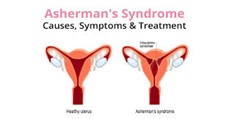
- Doctors at Sir Ganga Ram Hospital in New Delhi have achieved a major milestone in the medical field by successfully treating two women suffering from Asherman's Syndrome.
Key Facts:
- Major Achievement: For the first time in India, a successful 'live birth' (the birth of a living child) has been recorded in patients with Asherman's Syndrome using Mesenchymal Stem Cells derived from the umbilical cord.
- Treatment Procedure: The doctors injected stem cells extracted from 'Wharton’s jelly' beneath the damaged lining of the uterus (endometrium). This helped in regenerating the uterine lining, thereby making embryo implantation possible.
- Medical Team: This historic procedure was led by the team of Dr. Abha Majumdar, Director of the hospital's IVF and Human Reproduction Centre.
- Outcome: Following the treatment, a 39-year-old woman gave birth to a healthy baby boy at 35 weeks, and a 40-year-old woman gave birth to a baby girl at 31 weeks.
- Asherman's Syndrome: Asherman's Syndrome is a rare but serious condition in which scar tissue or 'adhesions' form inside a woman's uterus. It is also known as Intrauterine Synechiae.
Primary Causes:
- D&C (Dilation and Curettage): This procedure, performed to clean the uterus following a miscarriage or childbirth, is the most common cause.
- Uterine Surgery: Surgeries such as the removal of fibroids (Myomectomy) or a C-section.
- Infection: Uterine infections or Pelvic Tuberculosis (TB), which is a major cause in India.
- Key Symptoms:
- Changes in Menstruation: Very scanty periods (Hypomenorrhea) or a complete cessation of periods (Amenorrhea).
- Pain: Severe cramps or pain during menstruation, even in the absence of bleeding.
- Impact on Fertility: Difficulty conceiving (Infertility) or recurrent miscarriages.
|
Launch of 'Critical Care Follow-up Clinic'

- Safdarjung Hospital in New Delhi has launched a 'Critical Care Follow-up Clinic'—a first of its kind in the country.
- 'Critical Care Follow-up Clinic': This is a tele-follow-up clinic that provides continuous medical support to patients who have spent an extended period in the ICU due to critical illnesses (such as sepsis, organ failure, etc.).
Important Days
Ustad Vilayat Khan's Death Anniversary

- The death anniversary of the legendary sitar maestro, Ustad Vilayat Khan, is observed on March 13.
- He passed away on March 13, 2004, at the age of 75, at Jaslok Hospital in Mumbai.
Related Facts:
- Pioneer of the 'Gayaki Ang': He developed the 'Gayaki Ang' (vocal style) within sitar playing, a technique that imbued the melodic waves emanating from the sitar with the emotive quality of the human voice (singing).
- Aftab-e-Sitar: Former President Fakhruddin Ali Ahmed conferred upon him the title of 'Aftab-e-Sitar' (The Sun of the Sitar).
- Imdadkhani Gharana: Born on August 28, 1928, he belonged to the renowned Imdadkhani (Etawah) Gharana of music.
- Rejection of Awards: He declined prestigious civilian honors—such as the Padma Shri in 1964 and the Padma Vibhushan in 1968—stating that the selection process was not impartial and that he had not been accorded the respect commensurate with his stature.
|


 Don't Have an Account?