National News
FSSAI Makes Registration Mandatory for Milk Producers and Sellers

- The Food Safety and Standards Authority of India (FSSAI) has made it mandatory for milk producers and sellers (except dairy cooperatives) to obtain registration or a license before starting or continuing their business.
- This step has been taken to prevent adulteration and ensure compliance with food safety regulations.
Related Facts:
- Scope: This directive applies to individual milk producers and sellers who are not part of dairy cooperatives.
- Objective: To prevent milk adulteration, ensure better regulation of the dairy sector, and reduce foodborne illnesses.
- Requirements: All concerned must obtain registration or a license through the FoSCoS FSSAI portal.
- Inspection and Compliance: Enforcement agencies have been directed to conduct periodic inspections of milk chillers and storage facilities and ensure compliance.
- Legal Action: Non-compliance with regulations may result in heavy fines or license suspension under the FSS Act, 2006.
Food Safety and Standards Authority of India (FSSAI):
- Established: 2008 (under the Food Safety and Standards Act, 2006)
- Nodal Ministry: Union Ministry of Health and Family Welfare
- Headquarters: New Delhi
- Regional Offices: Delhi, Guwahati, Mumbai, Kolkata, Cochin, and Chennai
- Key Functions: Ensuring food quality, setting safety standards, and issuing licenses to food businesses
|
Discussion on Supplementary Demands for Grants in the Lok Sabha
- The Lok Sabha began its discussion on the supplementary demands for grants (second batch) for the financial year 2025-26, seeking approval for gross additional expenditure of over ₹2.81 lakh crore.
- This additional expenditure is primarily for fertilizer and food subsidies, which are necessary amid geopolitical tensions in West Asia.
Related Facts:
- Additional Expenditure Requirement: The government has sought the House's approval for gross additional expenditure of over ₹2.81 lakh crore.
- Cash Outgo: Of this total amount, the net cash outgo is estimated to be ₹2,01,142.96 crore.
- Adjustment by Savings: Expenditure of approximately ₹80,145.71 crore will be met from savings or increased receipts of various ministries.
- Reason: During the debate, the ruling party (BJP's Jagdambika Pal) stated that the situation in West Asia had led to an increase in crude oil prices (from $88 to $119 per barrel), which had a direct impact on fertilizers, gas, and transportation.
- Article 115: This article deals with supplementary, additional, or excess grants.
- Definition: When the amount authorized by Parliament is found to be insufficient for the year's service, the government introduces 'supplementary demands for grants'.
- Procedure: These are passed through the Appropriation Bill, and the President's recommendation is mandatory (Article 113).
|
Free Treatment in Himachal Pradesh Under AB-PMJAY
- Minister of State for Health and Family Welfare, Pratap Rao Jadhav, informed Parliament in response to a question from Rajya Sabha MP, Indu Bala Goswami, that a total of 86,093 patients were treated in Himachal Pradesh during 2024-25 under the Pradhan Mantri Jan Arogya Yojana.
- During 2024-25, the highest number of patients were treated in Mandi district of Himachal Pradesh and the lowest in Lahaul-Spiti district under the Pradhan Mantri Jan Arogya Yojana.
- Under this scheme, 45,768 ASHA and Anganwadi workers in Himachal Pradesh have been provided healthcare facilities as of February 28 of this year.
Euthanasia Permitted
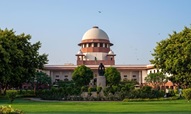
- In a landmark judgment, the Supreme Court permitted passive euthanasia in the case of 32-year-old Harish Rana.
Related Facts:
- Case Background: Harish Rana was seriously injured after falling from the fourth floor of a Punjab University hostel in 2013 and had been in a persistent vegetative state (PVS) for the past 13 years.
- Court Order: A bench of Justices J.B. Pardiwala and K.V. Vishwanathan directed AIIMS, Delhi, to admit Harish to the palliative care department so that treatment could be discontinued in a humane and dignified manner.
- Constitutional Basis: The Court cited the landmark judgment of Common Cause v. Union of India (2018), which recognized the right to die with dignity as a fundamental right under Article 21 (right to life).
- Procedural Waiver: Given the unique circumstances of this case, the court also waived the 30-day reconsideration period because all stakeholders agreed to discontinue treatment.
- Significance: Although passive euthanasia was legalized in 2011 (the Aruna Shanbaug case) and 2018 (Common Cause), the Harish Rana case is the first instance where the court has ordered its actual implementation.
Important Terms:
- Passive euthanasia: Allowing death by removing life support systems (such as ventilators, feeding tubes). This is legal in India with certain conditions.
- Active euthanasia: Directly inflicting death through lethal medication. This is completely illegal in India.
- Living Will: A document in which a person can give instructions in advance that their treatment be discontinued if they enter a coma-like state in the future.
|
Global Conference on the Role of Women in Agri-Food Systems
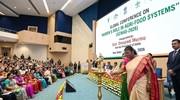
- President Draupadi Murmu inaugurated the three-day Global Conference on the Role of Women in Agri-Food Systems (GCWAS-2026) in New Delhi.
Related Facts:
- Theme of the Conference: "Driving Progress, Attaining New Heights"
- Venue: Bharat Ratna C. Subrahmanyam Hall, ICAR Convention Centre, NASC Complex, New Delhi
- It is being jointly organized by the Indian Council of Agricultural Research (ICAR), the Trust for Advancement of Agricultural Sciences (TAAS), CGIAR, and the Protection of Plant Varieties and Farmers' Rights Authority (PPV&FRA).
- The event is being held during the International Year of Women Farmers 2026, declared by the United Nations.
|
Gross Expenditure on Research and Development
- Minister of State for Education, Dr. Sukanta Majumdar, informed the Rajya Sabha that gross expenditure on research and development in the country has been steadily increasing over the past few years.
Related Facts:
- It has increased from ₹60,000 crore in 2010-11 to over ₹1,27,000 crore in 2020-21.
- Mazumdar said that over the past five years, the government has sanctioned over ₹99,000 crore to the country's leading technical educational institutions, including IITs and NITs, for teaching, research, and innovation.
|
Opposition motion to remove Speaker of Lok Sabha rejected by voice vote
- The opposition motion to remove the Speaker under Article 94(c) in the Lok Sabha was rejected by voice vote.
Related Facts:
- Grounds for Removal: According to Article 94(c) of the Indian Constitution, the Speaker (or Deputy Speaker) of the Lok Sabha can be removed by a resolution passed by an effective majority of the then existing members of the House.
- 14 Days' Notice: No such motion can be introduced unless at least 14 days' written notice of the intention to introduce it is given.
- Effective Majority: This means a majority of more than 50% of the then existing membership of the House (excluding vacancies).
- Parliamentary Procedure and Rules:
- Presidency of the House (Article 96): While a motion to remove the Speaker is pending, they cannot preside over the House, although they have the right to be present, speak, and participate in the proceedings.
- Voting Rights: In such a situation, the Speaker has the right to vote in the first instance, but in case of a tie, he cannot cast the casting vote.
- Acceptance of the Motion: According to the rules of the Lok Sabha, the support of at least 50 members is required for this motion to be accepted in the House.
|
Launch of Bharat Tex 2026
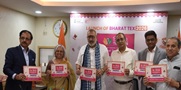
- Textiles Minister Giriraj Singh inaugurated Bharat Tex 2026 in New Delhi.
Related Facts:
- The third edition of the event will be held from July 14 to 17 at the Bharat Mandapam in the national capital.
- It is a major platform for trade, investment, and networking in the textile sector.
- On this occasion, Mr. Singh stated that India will emerge as a hub for natural fibers in the coming days.
- The Textiles Minister informed that people from 141 countries will participate in the event.
- On this occasion, the information leaflet for Bharat Next 2026 was released and the website was launched.
- The event is expected to attract over 130,000 trade visitors, including 7,000 international buyers.
|
State News
Sworn in as the 23rd Lieutenant Governor of Delhi

- Taranjit Singh Sandhu was sworn in as the 23rd Lieutenant Governor of Delhi.
Related Facts:
- Swearing-in: Chief Justice of the Delhi High Court, Devendra Kumar Upadhyay, administered the oath of office and secrecy to him. The ceremony was held at Lok Niwas (Raj Niwas) in Civil Lines.
- Who succeeded: He succeeds Vinay Kumar Saxena, who has now been appointed Lieutenant Governor of Ladakh.
- Background: Sandhu is a 1988 batch Indian Foreign Service (IFS) officer. He served as India's Ambassador to the United States from February 2020 to January 2024.
- Special Achievement: He is the second Sikh to become the Lieutenant Governor of Delhi. He was preceded by Arjan Singh in 1989.
- Political Bio: He contested the 2024 Lok Sabha elections from Amritsar on a BJP ticket, but was unsuccessful.
- The administrator appointed under Article 239 will be called the 'Lieutenant Governor'.
|
Acting Governor of Tamil Nadu
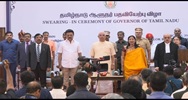
- Rajendra Vishwanath Arlekar was sworn in as the Acting Governor of Tamil Nadu.
- Chief Justice of the Madras High Court, Sushrut Arvind Dharmadhikari, administered the oath at Lok Bhavan.
Related Facts:
- The Indian Constitution does not have a separate permanent post for the Acting Governor, but specific provisions are made for contingencies.
- Article 160 of the Constitution empowers the President to make provisions for the discharge of the functions of the Governor in any contingency not mentioned in Part VI of the Constitution.
- 7th Constitutional Amendment Act (1956): This amendment provided that a single person could be appointed as Governor of two or more states.
|
International News
Newly Elected President of Chile
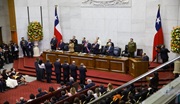
- Minister of State for External Affairs Kirti Vardhan Singh represented India at the swearing-in ceremony of the newly elected President in Valparaíso, Chile, yesterday.
- José Antonio Kast was sworn in as the 38th President of Chile.
Chile:
- A long and narrow country located on the western coast of South America.
- Located between the Andes Mountains and the Pacific Ocean.
- Capital: Santiago
- Currency: Chilean Peso
- Language: Spanish
- Geographical Feature: The world's driest desert, the Atacama, is in northern Chile.
- Borders: Peru to the north, Bolivia to the northeast, and Argentina to the east.
- Border Facts: It is the only country in South America that does not border Brazil.
- Highest Peak: Ojos del Salado, an active volcano (elevation: 6,893 meters).
- Copper Production: Chile is the world's largest producer of copper.
|
Life-saving medicine as humanitarian aid to Tanzania
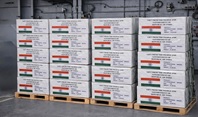
- India sent a consignment of life-saving medicine to the Sri Hindu Mandal Hospital in Dar es Salaam, the capital of Tanzania, as humanitarian aid.
- It is being transported onboard the INS Trikand ship.
- This hospital was established in 1919 by the Indian-origin community.
US closes its Consulate General in Peshawar

- The United States has decided to permanently close its Consulate General in Peshawar, Pakistan.
- The Consulate was the closest US diplomatic base to the Afghan border.
- It was also a key operational and logistics hub before, during, and after the 2001 invasion of Afghanistan.
IEA to Release Emergency Oil Reserves

- The 32 member countries of the International Energy Agency (IEA) approved the largest emergency oil release in its history due to rising tensions in the Middle East and the effective closure of the Strait of Hormuz.
Key Details:
- Removal Volume: A total of 400 million barrels of crude oil will be released into the market.
- Historical Context: This volume is more than double the 182 million barrels released during the Russia-Ukraine War in 2022.
- Reason: The Strait of Hormuz, which carries approximately 20% of global oil supplies, has been disrupted due to the conflict between Iran and the US/Israel.
- Objective: To stabilize skyrocketing oil prices (Brent crude near $120) and ensure global energy security.
- India's stand: India, which is an associate member of the IEA, has welcomed this move to bring stability in the global market.
|
Bill to Remove Remaining Hereditary Members

- The UK Parliament approved the House of Lords (Hereditary Peers) Bill.
Related Facts:
- Abolition of Hereditary Membership: This bill eliminates the right of the remaining 92 Hereditary Peers to sit and vote in the House of Lords.
- Historical Background: More than 600 hereditary peers were removed under the House of Lords Act of 1999, but 92 were retained under a "temporary compromise" that had been in place for the past 27 years.
- Constitutional Reform: This reform is a major step towards strengthening Britain's modern democracy and eliminating the principle of reserved seats in Parliament based on birthright.
- Compromise and Life Peers: To mitigate opposition from opposition parties, the government has given some of the retiring hereditary peers the option of remaining in the House as "Life Peers."
- Further reforms: The British government also plans to set a retirement age (80 years) for the House in the future and introduce new conditions of participation for membership.
Hereditary Peers:
- Individuals who attain membership of the upper house of the British Parliament (House of Lords) solely by birth or inheritance, without election, are called Hereditary Peers.
|
Defense News
Two-Day Conference of ADGs and DDGs of the National Cadet Corps (NCC)
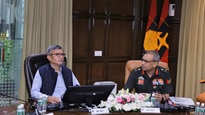
- A two-day conference of Additional Directors General (ADGs) and Deputy Directors General (DDGs) of the National Cadet Corps (NCC) began on March 12, 2026, at the Manekshaw Centre in New Delhi.
National Cadet Corps (NCC):
- The world's largest uniformed voluntary youth organization.
- Director General: Virendra Vats
- Motto: "Unity and Discipline," adopted on October 12, 1980.
- Establishment: It was established under the NCC Act of 1948. Historically, it is considered the successor to the 'University Corps' of 1917.
- Headquarters: Its headquarters are located in New Delhi.
- Leadership: It is headed by the Director General (DG), who is a three-star military officer of the rank of Lieutenant General.
- Objective: To develop character, discipline, leadership, secular outlook, and ideals of selfless service among youth.
- The Karnataka and Goa National Cadet Corps (NCC) Directorate won the prestigious 'Prime Minister's Banner and Trophy' for the second consecutive year at the Republic Day Camp (RDC) 2026 held in New Delhi.
|
Reports and Indices
Second Annual Edition of the Fiscal Health Index 2026
- NITI Aayog released the second annual edition of the Fiscal Health Index 2026 in New Delhi.
- The Fiscal Health Index provides a comprehensive and comparative assessment of the fiscal performance of Indian states.
- While the previous Fiscal Health Index evaluated the fiscal performance of 18 major states, this edition also includes 10 North-Eastern and Himalayan states.
NITI Aayog:
- The premier policy think tank of the Government of India, providing direction and policy inputs.
- NITI Aayog - National Institution for Transforming India
- Established: January 1, 2015 (replaced the Planning Commission)
- Nature: It is a non-constitutional and non-statutory body, established through an executive resolution of the Union Cabinet.
- Chairperson: Prime Minister of India (ex-officio)
|
Important Days
World Kidney Day
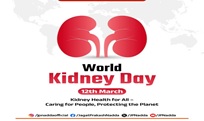
- World Kidney Day is celebrated annually on the second Thursday of March to raise awareness about kidney disease.
- In 2026, the day was held on March 12.
Related Facts:
- This year's theme: "Kidney Health for All: Caring for People, Protecting the Planet."
- It was first launched in 2006.
- Organizer: It is a joint initiative of the International Society of Nephrology (ISN) and the International Federation of Kidney Foundations (IFKF).
Kidneys:
- Two fist-sized, bean-like organs located below the ribs on either side of the spine, filter approximately 200 quarts of blood daily and excrete waste and excess fluid as urine.
- Main Functions:
- Blood purification: It filters waste products (such as urea and creatinine) and excess fluid from the blood and expels them from the body in the form of urine.
- Blood pressure control: The kidneys produce a hormone called renin, which helps regulate blood pressure.
- Red blood cells (RBCs): It produces the hormone erythropoietin, which signals the bones to make red blood cells.
- Balance: It maintains the balance of water, salt, and minerals (such as sodium, calcium, and potassium) in the body.
|
The Dandi Satyagraha Begins

- The Dandi Satyagraha (or Salt Satyagraha) was initiated by Mahatma Gandhi on this day, March 12, 1930, from Sabarmati Ashram (Ahmedabad).
- This year marks the 96th anniversary of the Dandi Satyagraha.
Historical Events:
- Start and End: This 24-day march began from Sabarmati Ashram on March 12, 1930, and ended in the coastal village of Dandi on April 6, 1930.
- Objective: To challenge the British government's salt monopoly and unjust 'Salt Tax'.
- Participants: Gandhiji began the march with 78 trusted volunteers, but by the time he reached Dandi, thousands had joined.
- Distance: The Satyagrahis covered a distance of approximately 240 miles (approximately 385-390 km).
- Civil Disobedience Movement (CDM): The nationwide Civil Disobedience Movement formally began with Gandhiji breaking the salt law on 6 April 1930.
|


 Don't Have an Account?