GK Update
 
  • Mobile Menu
HOME BUY MAGAZINEnew course icon
LOG IN SIGN UP

Sign-Up IcanDon't Have an Account?


SIGN UP


Login Icon

Have an Account?


LOG IN
 

or
By clicking on Register, you are agreeing to our Terms & Conditions.


or


GK Update

Tue 10 Mar, 2026

National News

Essential Commodities Act 1955 implemented
 

  • In light of the situation in West Asia, the Central Government implemented the Essential Commodities Act 1955 on natural gas.
  • According to a notification from the Ministry of Petroleum and Natural Gas, priority has been given to the supply of natural gas to domestic pipeline natural gas supplies, CNG for transportation, LPG production, pipeline compressor fuel, and other essential pipeline operational needs.
  • The notification states that supplies will be maintained subject to 100 percent operational availability of the average gas consumption of the previous six months.

Essential Commodities Act 1955:


  • Objective: To prevent hoarding, black marketing, and artificial shortages of essential commodities.
  • Scope: It applies throughout India.
  • Control: The government can fix the price of goods and set stock limits.
  • Punishment for violation: Violation of the law can result in imprisonment ranging from 3 months to 7 years, a fine, or both.

Key provisions:

  • Powers of the Central Government (Section 3): The Central Government can declare any commodity as 'essential' and set a stock limit.
  • Delegation of Powers (Section 5): The Central Government can delegate its powers to State Governments or their officers to ensure effective enforcement at the ground level.
  • Punishment (Section 7): Violation of the Act's orders is punishable by both imprisonment (3 months to 7 years) and a fine.
  • Cognizable Offences (Section 10A): Offences committed under this Act are cognizable.

Some of the major commodities covered under the Act:

  • Food: Oil, pulses, cereals
  • Energy: Petrol, diesel, kerosene, LPG
  • Health: Medicines, masks, sanitizers
  • Other: Fertilizers
  • 2020 Amendment: Parliament amended the Act in 2020, limiting the central government's powers to regulate certain commodities, such as cereals, pulses, potatoes, onions, edible oilseeds, and fuel oil, in exceptional circumstances. These include war, famine, extraordinary price rise, and natural calamities of a severe nature.

Increase in Food Grain Production


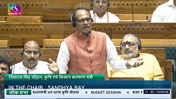
  • Union Agriculture Minister Shivraj Singh Chouhan, while answering supplementary questions during Question Hour in the Lok Sabha, stated that food grain production in the country has increased by 44% in the last ten years.

Production Figures:


  • The country's total food grain production has reached a record 357.73 million tons.
  • In 2015-16, this production was 251.54 million tons, an increase of approximately 106 million tons.
  • Record in Rice Production: India has now become the world's largest rice producer, surpassing China.
  • Pulses Production: Pulse production has also increased significantly, from 19 million tons to approximately 26 million tons.
  • Budget Allocation: The budget for the agriculture sector has seen a significant increase. During the UPA government, it was ₹27,000 crore, which has now increased to ₹1.27 lakh crore.

Government Schemes and Reforms:

  • Pradhan Mantri Dhan-Dhanya Yojana: Implemented in 100 districts across the country to ensure balanced development.
  • Fertilizer Subsidy: Last year, the government provided ₹1.86 lakh crore in subsidies to keep fertilizers affordable.
  • Pradhan Mantri Kisan Samman Nidhi (PM-KISAN): So far, 10 crore farmers are benefiting from this scheme.

‘Exploring Society: India and Beyond’ Withdrawn
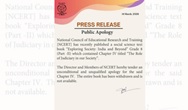
 

  • The National Council of Educational Research and Training (NCERT) withdrew the Class 8 (Part II) social science textbook, ‘Exploring Society: India and Beyond’.

Related Facts:


  • Cause of Controversy: Comments on topics such as ‘corruption’ in the judiciary, heavy caseloads, and a shortage of judges in the fourth chapter of the book, ‘The Role of Judiciary in Our Society,’ were deemed objectionable.
  • Supreme Court Intervention: The Supreme Court of India took suo motu cognizance of the matter and imposed a complete ban on the publication, reprinting, and digital dissemination of the book. The Court termed it as defamatory material.
  • NCERT Apology: NCERT has publicly apologized “unconditionally and irrevocably” for these errors and admitted that an error of judgment had occurred in the selection of the material.

Post-Budget Webinar 2026


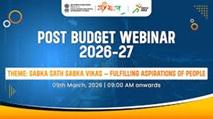
  • The Post-Budget Webinar 2026 was organized under the leadership of the Ministry of Health and Family Welfare on the theme "Sabka Saath Sabka Vikas - Fulfilling the Aspirations of the People."
  • Prime Minister Narendra Modi addressed the webinar and discussed the roadmap for effectively implementing the announcements made in the Union Budget 2026-27.

Union Budget 2026-27:


  • Presented by Finance Minister Nirmala Sitharaman on February 1, 2026
  • Fiscal Position: The fiscal deficit in 2026-27 is estimated to be 4.3% of GDP.
  • Expenditure: Total expenditure is estimated at ₹53.5 lakh crore. Capital expenditure is estimated at ₹12.2 lakh crore (~3.1% of GDP), which will accelerate growth.
  • Receipts: Total non-debt receipts are estimated at ₹36.5 lakh crore, including net tax revenue of ₹28.7 lakh crore.
  • Borrowing: Net market borrowing is estimated at ₹11.7 lakh crore (gross: ₹17.2 lakh crore).
  • Economic Growth: Nominal GDP growth is projected at 10.5% and real GDP growth at around 7%.
  • Total Expenditure: Total expenditure for FY 2026-27 is estimated at ₹53.5 lakh crore.

Key Sector-wise Announcements:

Healthcare:

  • A record allocation of ₹1,06,530.42 crore was made to the Ministry of Health.
  • Biopharma SHAKTI: New scheme with an outlay of ₹10,000 crore.
  • Proposal to establish 1,000 accredited clinical trial sites and district-level trauma centers.
  • Defense: The Ministry of Defense has been allocated ₹7.85 lakh crore, the highest among all ministries.

Technology and Manufacturing:

  • India Semiconductor Mission (ISM) 2.0 announced.
  • Outlay for electronics component manufacturing increased to ₹40,000 crore.

Total Cheetah Population in India


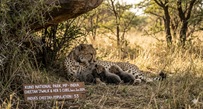
  • Namibian female cheetah 'Jwala' (formerly Siyaya) gave birth to five healthy cubs in Kuno National Park, Madhya Pradesh, bringing the total number of cheetahs in India to 53.

Related Facts:


  • Cubs Born in India: The number of live cubs born on Indian soil has currently risen to 33.
  • Success Rate: This is the 10th successful litter of cheetahs on Indian soil.
  • Third-time Mother: Jwala has given birth to cubs for the third time in India (previously in March 2023 and January 2024).
  • Gamini's Contribution: Just days before Jwala's delivery, the South African female cheetah 'Gamini' also gave birth to four cubs.
  • New Cheetahs from Botswana: In late February 2026, 9 new cheetahs (6 females and 3 males) were brought to Kuno from Botswana and are currently in quarantine enclosures.

Project Cheetah:

  • India's ambitious effort to reintroduce African cheetahs.
  • Start: September 17, 2022
  • Cheetahs brought from South Africa and Namibia
  • South Translocation of cheetahs from Africa and Namibia to Kuno National Park in Madhya Pradesh

"Jal Mahotsav 2026"


  • The main objective of "Jal Mahotsav 2026," organized by the Ministry of Jal Shakti from March 8-22, 2026, is to promote community participation (Jan Bhagidari) in rural water management under the Jal Jeevan Mission.
  • According to Drishti IAS, it focuses on women empowerment and water conservation through the transfer of water bodies to Panchayats, with the theme "Village Festival, Country Festival."

Related Facts:


  • Organizer: Department of Drinking Water and Sanitation, Ministry of Jal Shakti
  • Objective: Strengthen community ownership in rural drinking water management, ensure water security, and promote rainwater harvesting.
  • Start and Duration: March 8 (International Women's Day) to March 22 (World Water Day), 2026, inaugurated as "Jal Arpan Diwas."
  • Key Activities: Transfer of water supply assets to Gram Panchayats, "Jal Chaupal" dialogues, water quality testing in schools, and preparation of the "Lok Jal Utsav" calendar.
  • Women's Participation (Susjal Shakti): Involvement of over 2.4 million women in water quality testing through Field Testing Kits (FTKs).
  • Participation: A national-level event will be held on March 11, 2026, in New Delhi, in the presence of the President, where outstanding committees will be honored.

Pink Line: The country's first ring metro
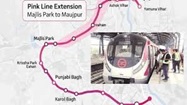
 

  • Prime Minister Narendra Modi inaugurated the Majlis Park-Maujpur section of the Delhi Metro's Pink Line, making it India's first fully operational 'ring metro' (approximately 71.56 km).
  • This project, part of the Delhi Metro's Phase IV, connects various corners of the city, hoping to reduce traffic congestion and improve connectivity.

Related Facts:


  • Definition: Ring Metro means that this metro line forms a circular route around a large part of the city, providing direct connectivity to passengers without having to travel from one point to another through the center.
  • Total Length: With the addition of Majlis Park-Maujpur-Babarpur (12.3 km), the total length now stands at 71.56 km.
  • Key areas: It connects several important areas of East, North, and West Delhi, such as Majlis Park, Burari, Jagatpur-Wazirabad, Khajuri Khas, Bhajanpura, and Maujpur-Babarpur.
  • Technical features: This section includes a new bridge over the Yamuna River and a double-decker viaduct, on which both the metro line and the road will run simultaneously.
  • Significance: It will ease travel within Delhi-NCR, especially between East Delhi and Northeast Delhi, and also reduce the distance between Ashram and the airport.
  • Other inaugurations: The Deepali Chowk-Majlis Park corridor of the Magenta Line was also inaugurated at the event.

State News

All villages in Uttar Pradesh achieve ODF Plus status
 

  • Uttar Pradesh achieved 100% ODF Plus village status under the Swachh Bharat Mission (Gramin).
  • All 95,767 villages in the state, or 100% of villages, achieved ODF Plus status under Phase II of the mission.

Related Facts:


Swachh Bharat Mission Gramin (SBM-G):

  • is a flagship sanitation campaign of the Government of India, aimed at improving sanitation and health levels in rural areas.
  • Launch: 2014
  • Ministry: Ministry of Jal Shakti
  • Goal: To make villages 'ODF Plus', with solid/liquid waste management and visual sanitation.

Swachh Bharat Mission (Gramin) [SBM(G)] Phase II:

  • Implementation Period (Phase II): 2020-21 to 2026-27
  • Objective: To ensure sustainability of Open Defecation Free (ODF) status and transform villages into ODF Plus (Model) villages, with efficient solid and liquid waste management.

ODF Plus Villages:

  • ODF Plus villages refer to open defecation free villages that ensure toilet use as well as solid and liquid waste management and where sanitation levels remain high.
  • This is an ongoing initiative under the Swachh Bharat Mission, which aims to make villages not only open defecation free but also clean (clean water, drainage, and garbage free).
  • Uttar Pradesh has made rapid progress in the current financial year. As of January 1, 2023, there were only 15,088 villages in the state that were declared ODF Plus.
  • In just 9 months, the state made efforts to achieve ODF Plus in mission mode.
  • More than 80,000 villages achieved ODF Plus status in the last 9 months and this accelerated pace has resulted in timely achievement of ODF Plus.

TWEES Scheme Launched


  • The Tamil Nadu government launched the Tamil Nadu Women Entrepreneur Empowerment Scheme (TWEES).
  • This initiative, run by the Micro, Small and Medium Enterprises (MSME) Department, will provide financial assistance, training, and institutional support to 100,000 women over the next five years to set up enterprises.

Related Facts:


  • Objective: To promote women-led businesses, ensure gender equality, and increase economic participation.
  • Financial Assistance: Loans up to ₹10 lakh are available under the scheme without any collateral.
  • Subsidy: The scheme offers a 25% subsidy, with an upper limit of ₹2 lakh.
  • Goal: To create 100,000 women entrepreneurs over the next five years.
  • Eligibility: Women aged 18-55 and transgender people in Tamil Nadu are eligible.
  • Sector: It is applicable to manufacturing, service, and trading businesses.

Tamil Nadu:

  • A major southern state of India, with Chennai as its capital.
  • It is renowned for its ancient Dravidian culture, classical Tamil language, and grand temple architecture.
  • Established: November 1, 1956.
  • Capital: Chennai (known as the 'Detroit of South Asia')
  • Official languages: Tamil (one of the world's oldest languages) and English
  • State flower: Kandal or 'Gloriosa Lily'
  • State emblem: Gopuram of the Srivilliputhur Temple
  • Classical dance: Bharatanatyam, which originated in the temples here.
  • Major festivals: Pongal (major harvest festival), Puthandu (Tamil New Year).

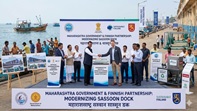
Modernization of Sassoon Dock


  • The Maharashtra government has partnered with Finnish companies to modernize Sassoon Dock.

Related Facts:


  • Main objective of the agreement: Transform Sassoon Dock into a world-class and sustainable fishing port.
  • Partner organizations: Maharashtra Fisheries Development Corporation (MFDC), Helvar, Mirasis, River Recycle
  • Key Focus: Plastic waste management, recycling of abandoned nets, energy-efficient lighting systems, and AI-based security and surveillance.
  • Significance: The dock is home to over 1,560 mechanized boats and produces 50,000-60,000 metric tons of fish annually.
  • Implementation: It will operate under the supervision of the Maharashtra Fisheries Development Corporation (MFDC).

Technical Collaboration:

  • Helvar: will provide energy-efficient and smart lighting systems.
  • Mirasys: Will provide AI-based monitoring solutions and digitize the fisheries supply chain.
  • River Recycle: Will focus on recycling plastic waste and managing discarded fishing nets (Circular Economy).

Sassoon Dock:

  • Located in Colaba, Mumbai, it is one of India's oldest and most important fishing ports.
  • Construction: It was built in 1875 on reclaimed land by Albert Abdullah David Sassoon, a Baghdadi Jewish merchant.
  • First Wet Dock: It was the first commercial wet dock to be built in Bombay (now Mumbai).
  • Commercial Importance: Initially, it was used for the cotton and opium trade. The dock's importance increased significantly after the opening of the Suez Canal (1869) reduced the trade distance between India and Europe.
  • Ownership: It is currently owned by the Mumbai Port Authority (MbPA).
  • Koli Community: It is a major center of culture and livelihood for the Koli community, the indigenous inhabitants of Mumbai.
  • Export: A large quantity of seafood is exported from here, earning the country foreign exchange.

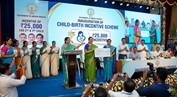
Third Child Incentive Announced


  • The Andhra Pradesh government announced an incentive of ₹25,000 for the second and third children to increase the fertility rate.

Related Facts:


  • Incentive: A one-time ₹25,000 assistance to parents for the birth of a second or third child.
  • Objective: To increase the fertility rate from 1.5 to the replacement level (2.1) and prevent a shortage of future young workforce due to the growing elderly population.
  • Other Benefits: Additional assistance for the third child, such as ₹1,000/month for 5 years and free education until 18 years.
  • Leave and Benefits: Maternity/paternity leave of 12 months for the mother and 2 months for the father.

Andhra Pradesh:

  • Capital: Amaravati
  • Largest City: Visakhapatnam
  • Major Rivers: Godavari and Krishna
  • Geographical Region: The Eastern Ghats separate the coastal plains from the peninsular plateaus.
  • Establishment: Andhra State was formed on October 1, 1953, from the Telugu-speaking districts of Madras State, making it the first state to be formed on a linguistic basis.
  • Formation of Telangana: In June 2014, the state was reorganized to form Telangana as a separate state.
  • Dance: Kuchipudi, one of the eight classical dances of India, originated in Andhra Pradesh.

International News

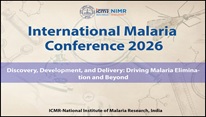
International Malaria Conference 2026


  • The International Malaria Conference 2026 was held in New Delhi, under the theme “Discovery, Development, and Delivery: Progress towards Malaria Elimination and Beyond.”

Related Facts:


  • Global experts discussed malaria vaccines, diagnostics, and community-based strategies at the conference.
  • Organized by: National Institute of Malaria Research (NIMR) under the Indian Council of Medical Research (ICMR).

Three main pillars:

  • Discovery: Focused on advances in parasite biology and drug resistance.
  • Development: Discussed innovations in new diagnostics, research tools, and surveillance technologies.
  • Delivery: Emphasis was placed on translating scientific discoveries into effective public health interventions and vaccine research.
  • This event is an important step towards India's goal of becoming malaria-free by 2030.

Malaria:

  • A disease caused by a parasite (Plasmodium).
  • Spread: By the bite of an infected female Anopheles mosquito.
  • Causative agent: It is not caused by a virus or bacteria, but by a parasite called Plasmodium, which is transmitted by female Anopheles mosquitoes.
  • Types: The most common strains in India are Plasmodium falciparum (severe) and Plasmodium vivax.
  • Symptoms: High fever, chills, headache, fatigue, and in severe cases, organ failure or death.
  • Testing: Diagnosis is made using a blood microscopic examination or RDT (Rapid Diagnostic Test) kit.

Malaria status in India:

  • Achievement: India reduced cases by 9.6% between 2022 and 2023.
  • India's goal: To be malaria-free by 2027 and eliminate it completely by 2030.
  • HBHI Strategy: Under the 'High Burden to High Impact' initiative, a special campaign was launched in four states (West Bengal, Jharkhand, Chhattisgarh and Madhya Pradesh) in 2019, which is now effective across the country till 2024.

Important Days

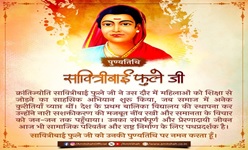
Death Anniversary of Savitribai Phule


  • Tributes are paid to the renowned social reformer Savitribai Phule every year on March 10th, her death anniversary.
  • She was a renowned social reformer, educationist, and poet, known as "India's first female teacher" and the "mother of Indian feminism."

Savitribai Phule:


  • Born: January 3, 1831, in Naigaon, Satara district, Maharashtra
  • Marriage: Married at the age of 9 to 13-year-old Jyotirao Phule
  • Education: She was illiterate at the time of marriage, but her husband Jyotirao educated her at home, and she later received teacher training.
  • Jyotirao Phule, also known as Jyotiba, was a social reformer who worked in the field of women's education. Jyotirao taught Savitribai at home after their marriage.
  • Women's education: In 1848, she, along with her husband and Fatima Sheikh, opened India's first school for girls in Bhidewada, Pune.
  • Satyashodhak Samaj: She, along with her husband, played a key role in founding the Satyashodhak Samaj (Society of Truth Seekers) in 1873, which aimed to free Dalits and backward classes from exploitation.
  • Opposition to social evils: She strongly opposed child marriage, the practice of Sati, and caste discrimination.
  • Established the 'Balhatya Pratibandhak Griha' to prevent the exploitation of widows.
  • In the 1850s, the Phule couple founded two educational trusts—the Native Female School, Pune, and the Society for Promoting the Education of Mahars, Mangs, and others—under which numerous schools were established.
  • Literary Works: Her major works include 'Kavya Phule' (1854) and 'Bavan Kashi Subodh Ratnakar' (1892).
  • Death: On March 10, 1897, while caring for patients during a plague epidemic in Pune, she contracted the disease and died.
  • Honor: In 2014, Pune University was renamed 'Savitribai Phule Pune University' in her honor. India Post has also issued a postage stamp in her honor.

International Women Judges Day


  • International Women Judges Day is celebrated every year on March 10th to promote equal participation of women in the justice system.

Related Facts:


  • History: The United Nations General Assembly (UNGA) passed the resolution on April 28, 2021, and it will be celebrated for the first time on March 10, 2022.
  • Significance: This day promotes gender equality in the workplace through the "Women in Justice, Women for Justice" campaign.
  • Situation in India: The participation of women judges in India's High Courts is still low, at approximately 14% (as of 2024).
  • Origin: The initiative to celebrate this day was taken by Qatar.
  • Current Status of Women in the Judiciary:
  • Supreme Court: Only 1 woman judge (out of a total of 33)
  • High Courts: 14.85% of judges are women
  • District Courts: Approximately 37% of judges are women

CISF's 57th Foundation Day


  • The Foundation Day of the Central Industrial Security Force (CISF) is celebrated every year on March 10th. This year, CISF celebrated its 57th Foundation Day.

Related Facts:


  • Main Function: This year's main Foundation Day function was held on March 6, 2026, in Mundali, Odisha.
  • Chief Guest: Union Home Minister Amit Shah
  • Special Announcement: The Home Minister announced that the government is committed to making the country completely Naxal-free by March 31, 2026, in which CISF plays a key role.
  • Central Industrial Security Force (CISF):
  • A Central Armed Police Force (CAPF)
  • Established: March 10, 1969 (under the CISF Act 1968)
  • Motto: "Protection and Security"
  • Headquarters: New Delhi

Appointments

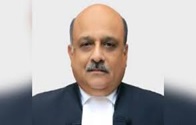
Arvind Dharmadhikari


  • Justice Sushrutha Arvind Dharmadhikari (S.A. Dharmadhikari) was appointed the 55th Chief Justice of the Madras High Court.
  • Governor R.N. Ravi administered the oath of office to him at a ceremony held at the Raj Bhavan in Chennai. He succeeded Justice Manindra Mohan Shrivastava.

Related Facts:

  • Background: Justice Dharmadhikari was born on July 8, 1966, in Raipur and studied commerce and law at Nagpur University.
  • Experience: He enrolled as an advocate in the Madhya Pradesh High Court in 1992 and served as a standing counsel for the Central Government from 2000 to 2015.
  • Judicial Career: He was appointed as an Additional Judge of the Madhya Pradesh High Court on April 7, 2016, and as a permanent judge on March 17, 2018. Before becoming Chief Justice of the Madras High Court, he was a judge of the Kerala High Court.
  • Appointment: This appointment is made on the recommendation of the Supreme Court Collegium.
  • Constitutional Provisions Relating to the High Court:
  • Article 214: Provides for a High Court for each state.
  • Article 215: The High Court has the status of a "Court of Record," with the power to punish for contempt of court.
  • Article 216: Specifies the constitution of the High Court, consisting of a Chief Justice and other judges appointed by the President from time to time.
  • Article 217: Details the appointment of judges and their terms of office. These appointments are made by the President of India.
  • Article 222: Transfer by the President from one High Court to another.
  • Article 226: Grants the High Court broad power to issue writs for the enforcement of fundamental rights and for other purposes.
  • Article 227: Grants the High Court the power of superintendence over all subordinate courts within its jurisdiction.
  • Article 231: Empowers Parliament to establish a common High Court for two or more states.
  • Qualifications: Must be a citizen of India and have held a judicial office for at least 10 years or have been an advocate of a High Court for at least 10 years.
  • Age Limit: High Court judges hold office until they attain the age of 62.

Defense News

Indian Army's First Strategic Communications Conclave


  • The Indian Army's Central Command held its first Strategic Communications Conclave in Lucknow.
  • The primary objective was to develop an institutional framework for strategic communications, perception management, and information warfare in line with the emerging information age in national security.

Related Facts:


  • Organizer: Indian Army Central Command, Lucknow
  • Venue: Lucknow, Uttar Pradesh
  • Theme: The conference focused on "Institutionalizing Strategic Communications as a Capability for Future Preparedness in the Emerging Communications Arena."
  • Key Focus: Discussions on Hybrid Threats, Disinformation, and Perception Management in the Age of Digital Media.
  • Participation: Approximately 500 participants, including military experts, diplomats, and media professionals, participated.
  • Significance: This conference is a major step towards understanding the role of information power in modern warfare and integrating it into national security strategy.
  • Indian Army Central Command:
  • Also known as 'Surya Command',
  • it is one of the seven operational commands of the Indian Army.
  • It is headquartered in Lucknow, Uttar Pradesh.


Latest Courses