07 March, 2026
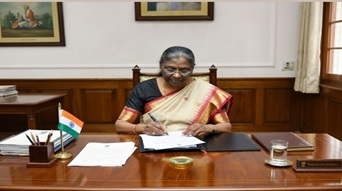
Appointment of New Governors and Lieutenant Governors in 9 States and Union Territories
Sun 08 Mar, 2026
Context :
- In March 2026, the President of India, Droupadi Murmu, carried out a major reshuffle and appointed new Governors and Lieutenant Governors (LGs) in 9 states and Union Territories.
Appointments :
- The Governor of Himachal Pradesh, Shiv Pratap Shukla, was appointed as the Governor of Telangana.
- The Governor of Telangana, Jishnu Dev Varma, was appointed as the Governor of Maharashtra.
- Nand Kishore Yadav was appointed as the Governor of Nagaland.
- Lieutenant General (Retd.) Syed Ata Hasnain was appointed as the Governor of Bihar.
- The Governor of Tamil Nadu, R. N. Ravi, was appointed as the Governor of West Bengal.
- The Governor of Kerala, Rajendra Vishwanath Arlekar, will discharge the functions of the Governor of Tamil Nadu.
- The Lieutenant Governor of Ladakh, Kavinder Gupta, was appointed as the Governor of Himachal Pradesh.
- The Lieutenant Governor of Delhi, Vinai Kumar Saxena, was appointed as the Lieutenant Governor of Ladakh.
- Taranjit Singh Sandhu was appointed as the Lieutenant Governor of Delhi.
Resignation Accepted :
- The resignation of the Governor of West Bengal, C. V. Ananda Bose, was accepted by the President prior to the announcement of the new appointments.
Constitutional Provisions Related to the Appointment of Governor :
- Under the Constitution of India, the Governor is appointed by the President under Article 155.
- They are nominated by the Central Government and hold office during the pleasure of the President (Article 156).
- The office of Governor is described in Part VI of the Constitution, covering Articles 153 to 162 and related provisions.
- Article 153 : There shall be a Governor for each State.
- According to the Seventh Amendment of the Constitution of India, one person can be appointed as the Governor of two or more states simultaneously.
- Article 155 (Appointment) : The Governor is appointed by the President through a warrant under his/her hand and seal.
- Article 156 (Tenure) : The Governor holds office during the pleasure of the President. The normal term is five years, but they continue until the President decides otherwise.
- Article 159 (Oath or Affirmation) : The Governor takes the oath before the Chief Justice of the High Court of the concerned state (or the senior-most judge available).
Constitutional Provisions Related to the Lieutenant Governor :
- The main provisions related to the Lieutenant Governor (LG) are given in Part VIII of the Constitution (Articles 239–241), which deal with the administration of Union Territories.
- The President appoints an Administrator as his/her representative, who administers the Union Territory on behalf of the President.
- Article 239 :
It states that every Union Territory shall be administered by the President through an Administrator appointed by him/her, whose designation may be specified by the President.
- Designation :
The President determines the title of the Administrator.
- In five Union Territories —
National Capital Territory of Delhi,
Puducherry,
Jammu and Kashmir,
Ladakh, and
Andaman and Nicobar Islands —
the Administrator is designated as the Lieutenant Governor (LG).
- In Chandigarh,
Lakshadweep, and
Dadra and Nagar Haveli and Daman and Diu,
the administrator is simply called an “Administrator.”
- Article 239AA (Special Provision for Delhi) :
It provides special provisions for the National Capital Territory of Delhi, where the Lieutenant Governor has significant powers over reserved subjects such as police, public order, and land.