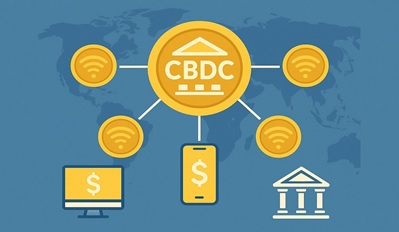
Launch of CBDC-Based Food Subsidy Distribution Project
 
  • Mobile Menu
HOME BUY MAGAZINEnew course icon
LOG IN SIGN UP

Sign-Up IcanDon't Have an Account?


SIGN UP


Login Icon

Have an Account?


LOG IN
 

or
By clicking on Register, you are agreeing to our Terms & Conditions.


or


Launch of CBDC-Based Food Subsidy Distribution Project

Mon 02 Mar, 2026

Context:

  • The Central Government has launched a Central Bank Digital Currency (CBDC)-based food subsidy pilot project in Puducherry under the Prime Minister Garib Kalyan Anna Yojana (PMGKAY).

Key Points:

  • Objective: To enhance transparency in the Public Distribution System (PDS), prevent leakages, and ensure targeted utilization of subsidies.
  • Inauguration: Launched by Union Minister for Consumer Affairs, Food and Public Distribution Pralhad Joshi, in the presence of the Lieutenant Governor of Puducherry K. Kailashnathan and Chief Minister N. Rangasamy.
  • Mechanism: Food subsidies will be credited directly into beneficiaries’ digital wallets in the form of programmable e₹ tokens.
  • Programmability: These digital tokens can be used only at authorized Fair Price Shops (FPS) for purchasing food grains, eliminating the possibility of fund misuse.
  • Key Stakeholders: The project is being implemented in coordination with the Reserve Bank of India (RBI), the Government of Puducherry, the Public Financial Management System (PFMS), and Canara Bank.

Importance and Benefits:

  • Reduction in Leakages: Since the tokens are programmable, they cannot be used for purposes other than purchasing food grains, preventing misuse of funds.
  • Transparency and Real-Time Tracking: The government can monitor transactions in real time, enhancing accountability.
  • Technological Solution: The system helps address challenges related to biometric authentication and e-PoS machines (such as network issues).

Central Bank Digital Currency (CBDC):

  • CBDC, or Digital Rupee (e₹), is the official digital currency issued by the Reserve Bank of India (RBI).
  • It is the digital form of physical cash and has legal tender status.

Types: RBI has introduced two versions:

  • Retail (e₹-R): For everyday transactions by the general public, private sector, and businesses.
  • Wholesale (e₹-W): For financial institutions, mainly for interbank settlements and large-value transactions.
  • No Bank Account Requirement: Unlike UPI, transactions do not require an intermediary bank account. It allows direct Person-to-Person (P2P) and Person-to-Merchant (P2M) payments.
  • Different from Cryptocurrency: Unlike Bitcoin and other cryptocurrencies, it is not decentralized. It is fully regulated and backed by the RBI, making it secure and stable.

Key Advantages:

  • Security: Reduces the risk of counterfeit currency.
  • Cost Efficiency: Saves the high cost of printing and managing physical currency.
  • Programmability: Can be programmed for specific purposes (as seen in the Puducherry project).
  • Offline Transactions: Planned to enable usage even without internet connectivity in the future.

Prime Minister Garib Kalyan Anna Yojana (PMGKAY):

  • A major food security scheme of India, originally launched in 2020 during the COVID-19 pandemic to provide relief to the poor.
  • Current Status: Extended for five years from January 1, 2024 to December 2028.
  • Integration: From January 1, 2023, the earlier PMGKAY (additional ration) and NFSA (subsidized ration) were merged into a single integrated scheme, under which food grains are now provided completely free of cost.

Beneficiaries and Eligibility:

  • Approximately 81.35 crore beneficiaries are covered under the scheme.

Two categories are included:

  • Antyodaya Anna Yojana (AAY): Poorest families receive 35 kg of free food grains per family per month.
  • Priority Household (PHH): Identified by State Governments; receive 5 kg of free food grains per person per month.
  • Nodal Ministry: Ministry of Consumer Affairs, Food and Public Distribution.

Key Features:

  • Free Food Grains: Beneficiaries receive rice, wheat, and millets free of cost (earlier priced at ₹3/2/1 per kg).
  • Fortified Rice: The government has approved the continuation of fortified rice supply under the scheme until Temporary Suspension of Fortified Rice: On February 27, 2026, the Central Government temporarily suspended the supply of fortified rice under PMGKAY and other welfare schemes.
  • One Nation, One Ration Card (ONORC): Beneficiaries can access their food grain quota from any Fair Price Shop (FPS) across the country.

Latest Courses