23 February, 2026
Human Papillomavirus (HPV) Vaccination Campaign
Fri 27 Feb, 2026
Context
- The Government of India has announced the launch of a nationwide, voluntary, and free Human Papillomavirus (HPV) vaccination campaign for 14-year-old girls to eliminate cervical cancer.
Key Highlights
Objective :
- The initiative aims to protect adolescent girls from cervical cancer, one of the most common yet preventable cancers affecting women in India.
Target Group :
- Specifically for 14-year-old girls
- Approximately 11.5 million (1.15 crore) girls are expected to be covered annually
Administration & Cost :
- The vaccine will be available free of cost and voluntary
- Provided at government health centers such as Ayushman Arogya Mandirs and district hospitals
Type of Vaccine :
- Currently, the Gardasil (quadrivalent vaccine) will be used
- Protects against HPV types 16 & 18 (cancer-causing) and 6 & 11 (cause genital warts)
Dosage :
- India has adopted the single-dose schedule in line with WHO recommendations
Duration :
- Initially launched as a 90-day (3-month) special campaign
- Later to be integrated into the routine immunization program
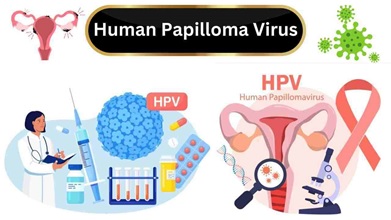
Human Papillomavirus (HPV)
About HPV :
- A very common virus and one of the most prevalent sexually transmitted infections (STIs) worldwide
- Comprises over 200 types, affecting the skin and mucous membranes
- In India, it is the leading cause of cervical cancer, the second most common cancer among women
Virus Type :
- A non-enveloped DNA virus
Target Group for Vaccination :
- Primarily 14-year-old adolescent girls
Classification of HPV
High-Risk Types :
- HPV 16 and 18
- Responsible for approximately 70% of cervical cancer cases
Low-Risk Types :
- HPV 6 and 11
- Mainly cause genital warts
Transmission and Impact
Transmission :
- Primarily through unprotected sexual contact
- Can also spread via close skin-to-skin intimate contact
Diseases Caused :
Besides cervical cancer, HPV can also cause:
- Anal cancer
- Vaginal cancer
- Penile cancer
- Oropharyngeal (throat) cancer
Symptoms :
- Most infections are asymptomatic
- Many resolve naturally through the body’s immune response
Prevention and Detection
Vaccination :
- Most effective between 9–14 years of age
- Vaccines available in India include CERVAVAC (indigenous vaccine) and Gardasil
Screening Methods :
- Pap Smear Test – Detects abnormal cell changes
- HPV DNA Test – Detects presence of the virus
- VIA (Visual Inspection with Acetic Acid) – Used in low-resource settings
Awareness :
- International HPV Awareness Day is observed annually on March 4
Cervical Cancer :
- Occurs when cells in the cervix (lower part of the uterus) grow abnormally
- Second most common cancer among women in India
- According to the World Health Organization (WHO), nearly all cases are caused by HPV infection
- High-risk HPV types 16 and 18 account for about 70% of cases
- One of the most preventable cancers with timely vaccination and screening
WHO’s 90-70-90 Strategy (By 2030):
- 90% of girls fully vaccinated by age 15
- 70% of women screened at ages 35 and 45 with high-performance tests
- 90% of identified cases receive appropriate treatment
Situation in India :
- Cervical cancer remains the second most common cancer among women in India
- Approximately 80,000 new cases and over 42,000 deaths are reported annually