National News
8th Edition of the Legal Glossary
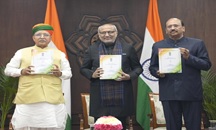
- The Vice-President of India, Shri C. P. Radhakrishnan, released the updated versions of the Constitution of India in Tamil and Gujarati, along with the 8th Edition of the Legal Glossary (English–Hindi), at Uprashtrapati Bhavan in New Delhi.
- This initiative follows previous efforts by the Ministry of Law and Justice to provide official translations of the Constitution in languages such as Santhali, Bodo, Dogri, and Nepali.
Constitution of India
|
- Adoption Date: 26 November 1949 (celebrated as Constitution Day or Law Day).
- Commencement Date: 26 January 1950.
- Drafting Time: 2 years, 11 months, 18 days.
- Constituent Assembly Sessions: 11 sessions (167 days).
- Father of the Constitution: Dr. B.R. Ambedkar.
- Calligrapher: Prem Behari Narain Raizada (handwritten in English).
- Original Structure: 395 Articles, 22 Parts, 8 Schedules.
- Current Structure: Approx. 444+ Articles, 25 Parts, 12 Schedules.
- Source: Heavily influenced by the Government of India Act 1935.
Significant Historical & Constitutional Dates
- First Meeting: 9 December 1946 (Dr. Sachchidananda Sinha was the temporary President; later Dr. Rajendra Prasad became President).
- Objective Resolution: Moved by Jawaharlal Nehru on 13 December 1946.
- Last Meeting: 24 January 1950.
Major Amendments & Structural Features
- 42nd Amendment (1976): Known as the "Mini-Constitution"; added "Socialist", "Secular", and "Integrity" to the Preamble.
- Fundamental Duties: Added by the 42nd Amendment (Article 51A, Part IV-A) based on the Swaran Singh Committee.
- Structure: Parliamentary form of government with a mix of federal and unitary features.
- Citizenship: Single citizenship.
Key Articles & Schedules
- Preamble: Describes India as a Sovereign, Socialist, Secular, Democratic Republic.
- Part III (Art. 12-35): Fundamental Rights.
- Part IV (Art. 36-51): Directive Principles of State Policy (DPSP).
- Schedules: 12 total (e.g., 10th Schedule: Anti-defection law; 11th/12th Schedule: Panchayats/Municipalities).
- Important Articles: Art. 14 (Equality), Art. 17 (Abolition of Untouchability), Art. 32 (Constitutional Remedies), Art. 51A (Fundamental Duties), Art. 324 (Election Commission), Art. 352-360 (Emergency Provisions).
Important Landmark Judgments
- Kesavananda Bharati Case (1973): Established the "Basic Structure Doctrine," stating that Parliament cannot amend certain core features of the Constitution.
- Minerva Mills Case (1980): Upheld the balance between Fundamental Rights and Directive Principles.
|
New Delhi Declaration
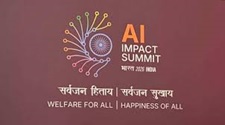
- The AI Impact Summit 2026 concluded at Bharat Mandapam, New Delhi with the adoption of the New Delhi Declaration on AI Impact, a landmark agreement endorsed by 88 countries and international organisations.
|
The New Delhi Declaration
The declaration outlines a shared global vision for making AI a tool for inclusion, rooted in the Indian principle of "Sarvajan Hitaya, Sarvajan Sukhaya" (Welfare for all, Happiness for all). Key commitments include:
- Seven Pillars (Chakras): Structured global cooperation around democratising AI resources, economic growth, secure AI, AI for science, social empowerment, human capital, and energy efficiency.
- M.A.N.A.V. Vision: A framework for AI governance focusing on Moral and ethical systems, Accountable governance, National sovereignty, Accessible and inclusive design, and Valid/legitimate outcomes.
- Voluntary Frameworks: All commitments, such as the Charter for the Democratic Diffusion of AI, are described as voluntary and non-binding to encourage broad participation from both advanced and developing nations.
Major Global Deliverables
The summit announced several concrete initiatives to translate the declaration into action:
- Global AI Impact Commons: A practical platform for countries to share and scale successful AI use cases globally.
- Trusted AI Commons: A collaborative repository of tools, benchmarks, and best practices for building secure AI systems.
- AI Workforce Playbook: Guidelines for skilling and reskilling workforces to prepare nations for an AI-driven economy.
- International Network of AI for Science: A initiative to link technical institutes and pool research capabilities across borders.
Economic and Strategic Impact
- Infrastructure Pledges: India secured over $250 billion in investment commitments for AI infrastructure.
- Major Pledges:
- Reliance Industries: $110 billion over seven years for multi-gigawatt AI data centres.
- Adani Group: $100 billion to expand its data centre platform to 5 gigawatts.
- Microsoft: $17.5 billion for cloud and AI infrastructure in India.
- Global Leadership: As the first global AI summit hosted in the Global South, it shifted the narrative from "AI Safety" to "AI for Development and Impact".
|
STATE SPECIAL NEWS
NIELIT and Government of Andhra Pradesh signed MoU
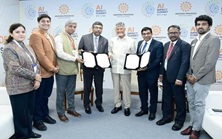
- National Institute of Electronics & Information Technology (NIELIT), under the Ministry of Electronics & Information Technology (MeitY), Government of India, signed a Memorandum of Understanding (MoU) with the Government of Andhra Pradesh to establish India’s first dedicated Quantum and Artificial Intelligence University campus in Amaravati.
|
National Institute of Electronics & Information Technology (NIELIT)
- Ministry: Administrative control lies with the Ministry of Electronics and Information Technology (MeitY).
- Headquarters: Located in New Delhi.
- It is an Autonomous Scientific Society of the Government of India.
- Deemed University: In July 2024, NIELIT was conferred the status of a Deemed-to-be University (de-novo category) by the Ministry of Education.
- Director General: Dr. Madan Mohan Tripathi
|
INTERNATIONAL NEWS
US President Donald Trump Hikes Global Tariffs from 10% to 15%
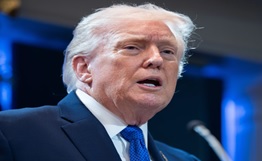
- US President Donald Trump has officially announced an increase in global tariffs from 10% to 15%.
- This decision follows a major legal defeat in the US Supreme Court, where a 6-3 ruling struck down his administration's broad use of emergency powers under the International Emergency Economic Powers Act (IEEPA) to impose sweeping tariffs.
- Trump is now invoking Section 122 of the 1974 Trade Act, which allows the President to impose a temporary surcharge of up to 15% for 150 days to address serious balance-of-payments deficits.
SUMMITS AND CONFERNCES
The National CSR Summit 2026
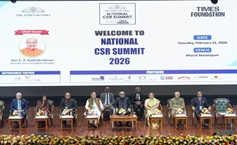
- Times of India Group (Times Foundation) organised ‘The National CSR Summit 2026’, at Bharat Mandapam, New Delhi.
- The summit focused on aligning "profit with purpose" and moving CSR from mere legal compliance to a deep-seated commitment to nation-building, specifically supporting the vision of Viksit Bharat @ 2047.
Corporate Social Responsibility (CSR)
- Legal Framework: Section 135 of the Companies Act, 2013, making India the first country to mandate CSR.
- Mandatory Spend: 2% of the average net profits of the immediately preceding three financial years.
- Principles: Aligns with "Triple-Bottom-Line Approach" (Economic, Environmental, Social).
|
5th Edition of the Goa Maritime Conclave (GMC-26)
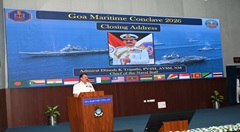
- The 5th Edition of the Goa Maritime Conclave (GMC-26) was successfully conducted at Naval War College, Goa.
- Hosted by the Indian Navy, the biennial event serves as a high-level regional forum to address maritime security challenges in the Indian Ocean Region (IOR).
- Theme: "Common Maritime Security Challenges in the IOR — Progressing Lines of Effort (LsoE) to Mitigate Dynamic Threats such as IUU Fishing and other Illegal Maritime Activities".
Participating Nations:
Representatives and Naval Chiefs from 14 nations attended the conclave:
- South Asia: Bangladesh, Maldives, Sri Lanka.
- Southeast Asia: Indonesia, Malaysia, Singapore, Thailand, Myanmar.
- Africa & Islands: Comoros, Kenya, Madagascar, Mauritius, Seychelles, Tanzania.
APPOINTMENTS
Shri Shailesh Vagerwal
- The Public Enterprises Selection Board (PESB) has recommended Shri Shailesh Vagerwal, Chief General Manager at Munitions India Limited (MIL), for the position of Chairman & Managing Director (CMD) of Bharat Dynamics Limited, a key Schedule B defence PSU.
BOOKS AND AUTHORS
Coffee Table Book ‘Atal Bihari Vajpayee: The Eternal Statesman’
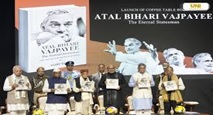
- The Vice-President of India, Shri C. P. Radhakrishnan, released the coffee table book “Atal Bihari Vajpayee: The Eternal Statesman”, authored by Shri Vijay Goel, at Dr. Ambedkar International Centre, New Delhi.
About Atal Bihari Vajpayee
- Birth: December 25, 1924, in Gwalior (Madhya Pradesh). His birthday is celebrated as Good Governance Day (Sushasan Diwas).
- Political Career:
- Co-founder of Bharatiya Jana Sangh (BJS) in 1951, later became Bharatiya Janata Party (BJP) in 1980.
- First non-Congress Prime Minister to complete a full 5-year term (1999–2004).
- Served as Minister of External Affairs (1977–1979) in the Janata Party government.
- Major Achievements & Policies:
- Nuclear Policy: Conducted Pokhran-II nuclear tests (Operation Shakti) in May 1998, establishing India as a nuclear-weapon state.
- Foreign Policy: Initiated the Lahore Declaration (1999) to improve ties with Pakistan, famously taking the bus to Lahore.
- Infrastructure: Launched major projects including the Golden Quadrilateral (connecting Delhi, Mumbai, Chennai, Kolkata) and the Pradhan Mantri Gram Sadak Yojana (PMGSY).
- Education/Economy: Introduced Sarva Shiksha Abhiyan (Education for All) and privatized several public sector units.
- Conflict Management: Successfully managed the Kargil War (1999) against Pakistan.
- Awards:
- Bharat Ratna (India's highest civilian award) in 2015.
- Padma Vibhushan in 1992.
- Literary Works: Known for his poetry; notable works include Meri Ikyavan Kavitaein.
- Passing: Died on August 16, 2018; his memorial is named Sadaiv Atal.
|
REPORTS, RANKS AND INDICES
Policy Report and Developers’ Toolkit on voice technologies
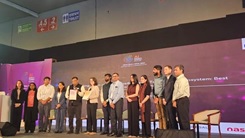
- A new Policy Report and Developers’ Toolkit on voice technologies was launched at the India AI Summit Expo 2026 to set out a policy and practice framework supporting open, inclusive, and responsible voice technologies.
- This initiative, spearheaded by the Ministry of Electronics and Information Technology (MeitY) through its Digital India BHASHINI Division, aims to establish a "voice-first" digital public infrastructure to bridge language and literacy divides.
- The initiative introduced VoicERA, an open-source Voice AI stack enabling government sectors to rapidly implement voice-enabled services.
- Developed collaboratively by ARTPARK @ IISc, Digital Futures Lab, Trilegal, and FAIR Forward (GIZ), the initiative aims to shift India toward "Voice-Natural Interfaces". This shift, highlighted at the summit attended by representatives from 118 countries, seeks to bypass literacy barriers, ensuring broader access to digital services across India.
AWARDS AND HONOURS
Digital Leadership Award
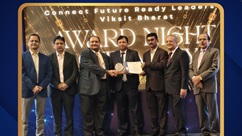
- Indian Bank, a leading public sector bank in India, was conferred with the Digital Leadership Award at the 5th edition of “Connect Future Ready Leaders: Viksit Bharath at 2047”, organized by Enqube Collaborations.
Indian Bank
- Establishment & History: Incorporated on March 5, 1907
- Nationalization: Nationalized in 1969 along with 13 other major commercial banks.
- Headquarters: Chennai, Tamil Nadu.
|
ECONOMY & BANKING
HCL-Foxconn semiconductor facility

- Prime Minister Narendra Modi laid foundation stone for the establishment of the HCL-Foxconn semiconductor facility in Uttar Pradesh.
- This project, operated under the joint venture India Chip Private Limited, is the first semiconductor unit in the state.
|
Project Overview
- Joint Venture (JV): A 60:40 partnership between India's HCL Group and Taiwan’s Foxconn (Hon Hai Technology Group).
- Location: Situated on 48 acres in Sector 28 of the Yamuna Expressway Industrial Development Authority (YEIDA) region, near the upcoming Noida International Airport in Jewar.
- Investment: A total investment of approximately ₹3,700 crore (roughly $445 million).
- Facility Type: An Outsourced Semiconductor Assembly and Test (OSAT) plant, which focuses on packaging and testing silicon wafers into finished chips.
Semiconductors
- Materials whose electrical conductivity is intermediate between that of a conductor and an insulator.
- Example: Silicon is the most common, followed by Germanium and Gallium Arsenide
- Doping Process: Introducing impurities (like Boron or Phosphorus) to improve conductivity, creating P-type (positive) or N-type (negative) semiconductors.
- Devices: Diodes, Transistors, Light-Emitting Diodes (LEDs), Integrated Circuits (ICs).
|
Corporate Governance Ecosystem at GIFT-IFSC
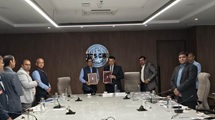
- International Financial Services Centres Authority (IFSCA) and the Indian Institute of Corporate Affairs (IICA) signed a Memorandum of Understanding (MoU) at the IFSCA Campus, GIFT City in Gujarat to strengthen India's international financial services ecosystem by establishing a structured framework for capacity building, policy research, and knowledge partnership.
|
International Financial Services Centres Authority (IFSCA)
- Establishment: Established on April 27, 2020, under the International Financial Services Centres Authority Act, 2019.
- Headquarters: GIFT City (Gujarat International Finance Tec-City), Gandhinagar, Gujarat.
- Purpose: Act as a unified regulator to promote ease of doing business and provide a world-class regulatory environment in India’s only IFSC, the GIFT IFSC.
- Regulatory Power: It replaces domestic regulators like SEBI, RBI, PFRDA, and IRDAI for financial business within the IFSC.
Indian Institute of Corporate Affairs (IICA)
- Nature: A premier think tank and capacity-building institution under the Ministry of Corporate Affairs, Government of India.
- Role: Provides policy advice, training, and research to advance corporate governance frameworks.
GIFT City (Gujarat International Finance Tec-City)
- Location: Gandhinagar, Gujarat
- India’s first operational smart city and International Financial Services Centre (IFSC)
- Unified Regulator: The International Financial Services Centres Authority (IFSCA), established in April 2020 under the IFSCA Act 2019. It consolidates powers from RBI, SEBI, IRDAI, and PFRDA.
|
National Launch of the Access Pass for Fishing
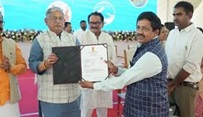
- Shri Rajiv Ranjan Singh, the Union Minister for Fisheries, Animal Husbandry, and Dairying launched the National Launch of the Access Pass for Fishing in India’s Exclusive Economic Zone (EEZ) in Veraval, Gujarat.
|
Key Features of the Access Pass
- Fully Digital & Free: The pass is issued free of cost through the upgraded ReALCRaft portal, ensuring a transparent, time-bound, and paperless process.
- Target Vessels: It is mandatory for approximately 64,000 mechanised fishing vessels and large motorised vessels over 24 metres.
- Exemptions: Traditional non-motorised fishing crafts are exempt from the requirement to protect the livelihoods of small and artisanal fishers.
- Scope of Operation: Authorised vessels can now operate across the entire EEZ spanning from 12 to 200 nautical miles.
Exclusive Economic Zone (EEZ)
- Definition & Distance: Extends up to 200 nautical milesfrom the baseline/coastline.
- Legal Framework: Established under the United Nations Convention on the Law of the Sea (UNCLOS), 1982.
- India’s EEZ Area: Spans nearly 2.4 million square kilometres, offering massive potential for fisheries and energy resources.
India's Exclusive Economic Zone
- Size: India's EEZ covers approximately 2.02 to 2.37 million square kilometers, making it the 18th largest in the world.
- Governing Law: Regulated by the Territorial Waters, Continental Shelf, Exclusive Economic Zone and Other Maritime Zones Act, 1976.
- Security: The Indian Coast Guard (ICG) is the primary agency responsible for safeguarding India's EEZ from illegal activities like smuggling and unauthorized fishing.
- Future Extension: India has petitioned the United Nations to extend its continental shelf rights up to 350 nautical miles based on scientific data.
|
NIPER-Boehringer MoU for Education and Research & AMRITVA Cohort 2 Unveiled
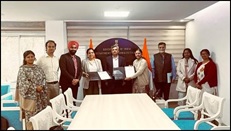
- National Institute of Pharmaceutical Education and Research (NIPER), Raebareli, and Boehringer Ingelheim India signed a Memorandum of Understanding (MoU) to advance pharmaceutical education and research.
- AMRITVA Cohort 2 was also unveiled to support research translation into market-ready ventures.
- AMRITVA (Alliance for Medicinal Research, Innovation, Translation & Value Acceleration) is a CSR initiative by Boehringer Ingelheim, implemented by SIIC, IIT Kanpur, in partnership with NIPER Raebareli.
PERSON IN NEWS
Joseph Philip
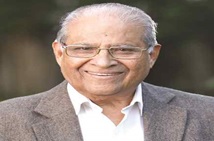
- Chevalier Professor J. Philip, a titan of Indian management education and Founder Chairman of the Xavier Institute of Management & Entrepreneurship (XIME), passed away.
ENVIRONMENT + SCIENCE & TECHNOLOGY
Indigenously Manufactured Tetanus & Adult Diphtheria (Td) Vaccine
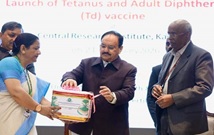
- Union Health Minister Shri Jagat Prakash Nadda launched the indigenously manufactured Tetanus and Adult Diphtheria (Td) vaccine at the Central Research Institute (CRI), Kasauli, in Himachal Pradesh.
- The vaccine has been formally introduced for supply under the UIP, which is the world's largest immunisation initiative.
|
Tetanus (Clostridium tetani):
-
- Cause: Bacteria found in soil, dust, feces, and on rust (nails, tools).
- Transmission: NOT contagious; enters through cuts or wounds.
- Symptoms: Painful muscle stiffness/spasms, "lockjaw" (inability to open mouth), difficulty swallowing/breathing.
- Mortality: In absence of treatment, case-fatality rate approaches 100%.
Diphtheria (Corynebacterium diphtheriae):
-
- Cause: Bacterium that spreads person-to-person (respiratory droplets).
- Symptoms: Thick grey/white coating in the throat/tonsils, fever, swollen neck glands ("bull neck").
- Complications: Breathing obstruction, heart failure, paralysis
Td Vaccine
- Combination vaccine with a lower concentration of Diphtheria antigen (d), making it suitable for adolescents and adults.
|
NDMA, AcSIR and CSIR–NIScPR Signed MoU
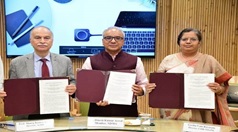
- The National Disaster Management Authority (NDMA), Academy of Scientific and Innovative Research (AcSIR), and CSIR–National Institute of Science Communication and Policy Research (CSIR–NIScPR) signed a Memorandum of Understanding (MoU) to establish a collaborative framework for academic programmes, capacity building, policy research, and communication in Disaster Management and Risk Reduction (DMRR).
|
National Disaster Management Authority (NDMA)
- Established: 27th September 2006, under the Disaster Management Act, 2005.
- Role: Apex statutory body for disaster management (natural & man-made) in India.
- Structure: Headed by the Prime Minister (Chairperson), with a Vice-Chairperson and up to 9 members.
- Key Functions: Lays down policies, plans, and guidelines to ensure timely response.
- Key Divisions: Planning and Policy, Mitigation, Operations and Communication, Capacity Building, Finance.
- Key Initiatives: National Disaster Management Plan (NDMP), Guidelines on Chemical Disasters, School/Hospital Safety.
|
DEFENCE NEWS
Headquarters of 10th Battalion of the Assam Police
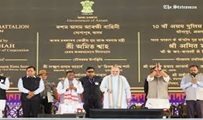
- Union Home Minister and Minister of Cooperation Shri Amit Shah laid the foundation stone of the headquarters of 10th Battalion of the Assam Police in Kamrup, Assam.
- The Union Home Minister's attended the 87th CRPF Raising Day parade in Guwahati, marking the first time this event was held in the Northeast.
|
CRPF
- Formation & Designation: Established as Crown Representative's Police on July 27, 1939. Renamed CRPF on July 28, 1949, by the CRPF Act.
- Command & Control: Under the Ministry of Home Affairs (MHA), Government of India.
- Role & Function: Primary force for internal security, anti-Naxal (LWE) operations, counter-insurgency in J&K/North East, VVIP security, and conducting general elections.
- Structure: It is not a border-guarding force, unlike BSF or ITBP, but handles inland security challenges.
- Director General (DG), CRPF: Gyanendra Pratap Singh (G. P. Singh)
|
SPORTS
India- Australia Women’s T20I Series 2026

- The Indian Women's cricket team won the three-match T20I series against Australia 2-1 in February 2026 by Australia by 17 runs in the third and final T20I at the Adelaide Oval.
- This marked India’s first T20I series victory in Australia in a decade, dating back to 2016.


 Don't Have an Account?