23 February, 2026
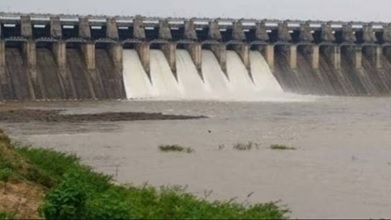
Shahpur Kandi Barrage/Dam Project
Fri 20 Feb, 2026
Context :
- India is accelerating work on a plan to stop surplus water of the Ravi River from flowing into Pakistan through the Shahpur Kandi Barrage/Dam project.
Shahpur Kandi Barrage/Dam Project :
- Location: In Pathankot district of Punjab, downstream of Ranjit Sagar Dam and upstream of Madhopur Barrage
- River: Ravi River
- Nature: A multipurpose project (irrigation and hydropower)
Objectives:
- Irrigation: To provide irrigation to 32,173 hectares in Kathua and Samba districts of Jammu & Kashmir and 5,000 hectares in border areas of Punjab.
- Water Utilization: To fully utilize Ravi River waters under the Indus Waters Treaty (1960).
- Historical Background: Agreement signed between Punjab and Jammu & Kashmir in 1979; granted “National Project” status in 2008.
- Funding: 80% cost borne by Punjab Government and 20% by the Central Government.
- Geopolitics: The project is a concern for Pakistan because it uses Ravi’s waters, strengthening India’s strategic position under the Indus Waters Treaty.
- Regional Development: Will increase agricultural productivity in Jammu & Kashmir (Kathua/Samba) and Punjab, boosting economic growth.
- Environment & Geography: Understanding the origin, course, and role of the Ravi River in the Indus system is important along with the region’s geotechnical conditions.
- Inter-State Cooperation: Resolves river-water issues between Punjab and Jammu & Kashmir.
- Completion Timeline: Project will be completed by 31 March 2026.
- From April 2026, during summer season, surplus Ravi water will not flow into Pakistan.
Ravi River :
- A major perennial river of the Indus river system; a transboundary river flowing through India and Pakistan.
- Origin: Emerges near Rohtang Pass in the Bara Bhangal region of Kangra district, Himachal Pradesh; flows through Jammu & Kashmir and enters Pakistan.
- Vedic Name: Known in ancient times as Parushni or Iravati.
- Tributaries: Siul, Sewa, Nai, Ujh, Budhil, etc.
- Length: Total length 720 km — about 320 km in India and 400 km in Pakistan.
- Dams & Barrages: Ranjit Sagar Dam, Chamera Dam, Madhopur Headworks, Sidhnai Barrage, Shahpur Kandi Barrage.
- Confluence: Joins the Chenab River near Jhang district in Pakistan.
- Battle of Ten Kings: A famous Rigvedic battle fought on its banks.
- Kartarpur Sahib: A sacred Sikh site located on its bank in Pakistan.
- Under the treaty, Ravi, Beas, and Sutlej (Eastern Rivers) are allocated for India’s exclusive use.
- The Indus Waters Treaty (IWT) is one of South Asia’s two major transboundary water treaties (the other is the 1996 Ganga Treaty).
- Treaty signed between India and Pakistan in 1960.
- Mediated by the World Bank.
Indus Waters Treaty (1960):
| River Category | Rights of India | Rights of Pakistan |
| Eastern Rivers (Ravi, Beas, Sutlej) | Exclusive and unrestricted rights over waters; India can utilize 100% of water. | Pakistan has no rights over these waters (except very limited domestic use). |
| Western Rivers (Indus, Jhelum, Chenab) | Non-consumptive uses allowed: 1) Domestic use 2) Limited irrigation 3) Run-of-the-river hydropower projects (without storage). | Pakistan has primary rights. India is not permitted to divert waters or create large storage. |