


 Don't Have an Account?




SSC Foundation Eklavya - 2 Offline Cum Online Batch Lucknow Branch
10 September, 2026



Enter your Email ID and we'll send you a link to get back into your account.

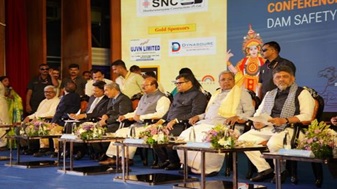

International Conference on Dam Safety (ICDS) 2026
Mon 16 Feb, 2026
Why in News
The two-day International Conference on Dam Safety (ICDS) 2026, beginning 13 February 2026, concluded after extensive discussions among policymakers, engineers, international experts, and institutions. The conference focused on strengthening India’s dam safety governance, climate resilience, and sustainable reservoir management.
Background
Institutional and Legal Framework
A major focus of ICDS 2026 was the implementation of the Dam Safety Act, 2021, India’s first comprehensive national legislation on dam safety.
The Act created a multi-tier institutional system:
These institutions ensure uniform safety protocols, regular surveillance, emergency planning, and accountability mechanisms across states.
Dam Rehabilitation and Improvement Project (DRIP)
The conference reviewed progress under the Dam Rehabilitation and Improvement Project (DRIP), supported by the World Bank.
DRIP aims to:
Hundreds of dams have already been upgraded through modern safety technologies and reporting systems.
Major Technical Issues Discussed
1. Ageing Dams and Rehabilitation
Experts highlighted that many dams are approaching or exceeding their design life. Scientific, risk-based rehabilitation supported by strong governance and quality assurance is necessary to prevent structural failures.
2. Reservoir Sedimentation
Sediment accumulation reduces storage capacity, weakens operational efficiency, and threatens safety. The conference recommended:
3. Risk-Informed Decision-Making
Technical sessions emphasised the need for:
Emergency Action Plans (EAPs) and coordination with disaster management authorities were identified as crucial.
4. Hydrological Safety and Flood Management
Given climate change impacts, the conference stressed:
These measures help manage both floods and droughts effectively.
5. Digital Monitoring and Technology Adoption
Industrial sessions showcased advances such as:
Such tools enable predictive maintenance and safer operational decisions.
Key Structural Concern in India
Government Initiatives Related to Dam Safety
Significance for India
ICDS 2026 highlighted that dam safety today extends beyond engineering to include:
Ensuring dam safety is essential because dams support:
Failure of a major dam could cause catastrophic human, economic, and environmental losses.
Conclusion
The International Conference on Dam Safety 2026 reinforced India’s commitment to modernising its dam safety ecosystem through legislation, technological adoption, institutional strengthening, and international cooperation. The knowledge exchange and recommendations from the conference are expected to guide future policy decisions aimed at ensuring safer dams and sustainable water infrastructure in the era of climate uncertainty.
10 September, 2026
24 August, 2026
06 August, 2026
28 July, 2026
27 July, 2026
22 July, 2026
20 July, 2026
26 May, 2026
08 May, 2026
20 April, 2026
