National News
PM RAHAT (Road Accident Victim Hospitalisation and Assured Treatment) Scheme

- The PM RAHAT (Road Accident Victim Hospitalisation and Assured Treatment) scheme was officially launched by the Government of India on February 14, 2026.
- It is designed to provide immediate, cashless medical treatment to road accident victims to prevent fatalities during the critical "Golden Hour".
- A dedicated Grievance Redressal Officer is nominated by the District Road Safety Committee (chaired by the District Collector or Magistrate) to address any issues or complaints at the local level.
Key Features and Benefits
- Cashless Treatment: Every eligible road accident victim is entitled to cashless medical treatment up to ₹1.5 lakh.
- Duration of Coverage: The scheme covers treatment for a maximum of 7 days from the date of the accident.
- Stabilisation Care: Victims receive stabilisation treatment for up to 24 hours in non-life-threatening cases and up to 48 hours in life-threatening situations.
- Universal Eligibility: The scheme applies to all victims—including drivers, passengers, pedestrians, and bystanders—on any category of road across India.
- Hospital Network: Treatment is provided at hospitals empanelled under the Ayushman Bharat - PM Jan Arogya Yojana (PM-JAY).
Ayushman Bharat - PM Jan Arogya Yojana (PM-JAY)
- Recommendation: Based on recommendations of the National Health Policy 2017 to achieve UHC.
- Launch Date: 23rd September 2018
- Nodal Agency: National Health Authority (NHA)
|
Indian Railways: “52 reforms in 52 weeks” initiative
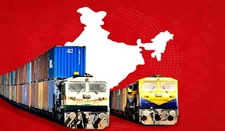
- Indian Railways became the second-largest rail cargo carrier in the world by volume.
- This achievement was highlighted by Union Minister Ashwini Vaishnaw during the announcement of the “52 reforms in 52 weeks” initiative on 14 February 2026.
Indian Railways:
- Father of Indian Railways: Lord Dalhousie is credited for his "Railway Minutes" of 1853, which initiated the network.
- First Passenger Train: Ran on April 16, 1853, between Bori Bunder (Mumbai) and Thane (34 km).
- Locomotives: Three steam engines named Sahib, Sindh, and Sultan.
- Operator: Great Indian Peninsula Railway (GIPR).
- First Industrial Train: The Red Hill Railway (1837) in Madras was used to transport granite, predating the passenger service.
- First Electric Train: Started on February 3, 1925, between Bombay VT and Kurla on DC traction.
- Nationalization: The system was nationalized in 1951.
- Budget Merger: Since 1924, the Railway Budget was separate until it was merged with the Union Budget in 2017.
Chairman & CEO (Railway Board): Satish Kumar
First Female Chairperson: Jaya Varma Sinha
- Global Rank: Fourth largest railway network in the world (after US, China, and Russia).
- Zonal Structure: Divided into 18 administrative zones (including Metro Railway, Kolkata) and 68 divisions.
- Fastest Train: Vande Bharat Express (Indigenous semi-high speed).
- Longest Route: Vivek Express (Dibrugarh to Kanyakumari), covering ~4,234 km.
- World Heritage Sites (UNESCO): Four sites are recognized:
- Darjeeling Himalayan Railway
- Nilgiri Mountain Railway
- Kalka-Shimla Railway
- Chhatrapati Shivaji Maharaj Terminus (CSMT), Mumbai.
- Engineering Marvels:
- Longest Platform: Gorakhpur (UP) at ~1,366 meters.
- Highest Rail Bridge: Chenab Bridge (35m taller than the Eiffel Tower).
Milestones
- 1909: Introduction of toilets in trains (following a complaint letter by Okhil Chandra Sen).
- 1984: India’s first Metro started in Kolkata.
- 1986: First computerized reservation system launched in New Delhi.
Mascot: Bholu, the Guard Elephant (introduced for the 150th anniversary in 2002).
|
Kumar Bhaskar Varma Setu
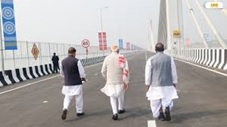
- Prime Minister Narendra Modi inaugurated and flagged off several key development projects in Assam worth over ₹5,450 crore. The projects aim to transform regional connectivity, digital infrastructure, and higher education.
- Kumar Bhaskar Varma Setu is A massive 6-lane extradosed bridge over the Brahmaputra River connecting Guwahati and North Guwahati which inculcates base isolation technology for seismic safety and a real-time Bridge Health Monitoring System.
- Emergency Landing Facility (ELF) was inaugurated which is Located on the Moran Bypass (NH-37) in Dibrugarh, this is the first facility of its kind in Northeast India.
- The Prime Minister also inaugurated the Indian Institute of Management (IIM) Guwahati (initially operating from a temporary campus) to bolster higher management education in the Northeast.
- National Data Centre for NER was also inaugurated which is a state-of-the-art facility at Amingaon in Kamrup district with a sanctioned load of 8.5 MW.
Cabinet Approves Major Rail and Highway Projects
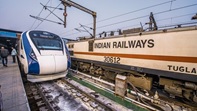
- The Union Cabinet, led by Prime Minister Narendra Modi, approved major infrastructure projects with a total estimated outlay of ₹48,250 crore.
Railway Projects (₹18,509 Crore)
- Kasara – Manmad 3rd & 4th Line (Maharashtra): Aimed at reducing congestion on one of the busiest rail corridors.
- Delhi – Ambala 3rd & 4th Line (Delhi & Haryana): Designed to improve mobility between the national capital and northern hubs.
- Ballari – Hosapete 3rd & 4th Line (Karnataka): Essential for transporting commodities like iron ore and coal, also improving access to the Hampi UNESCO World Heritage Site.
Major Highway & Strategic Projects
- Brahmaputra Underwater Tunnel (Assam): A landmark ₹18,662-crore project to construct a four-lane, access-controlled greenfield corridor between Gohpur and Numaligarh. It features India's first twin-tube underwater road-cum-rail tunnel (15.79 km) under the Brahmaputra River, significantly cutting travel time for the Northeast.
- NH-56 Upgradation (Gujarat): Upgrading 107.67 km to four-lane standards at a cost of ₹4,583.64 crore, improving connectivity to tribal areas and the Statue of Unity.
- NH-167 Widening (Telangana): Widening 80.01 km from Gudebellur to Mahabubnagar on the Hyderabad-Panaji Economic Corridor to 4-lane standard for ₹3,175.08 crore.
- NH-160A Upgradation (Maharashtra): Rehabilitation and 2/4-laning of the Ghoti – Palghar section covering 154.6 km at a cost of over ₹3,320 crore.
Urban Challenge Fund
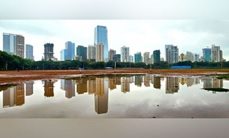
- The Union Cabinet, led by Prime Minister Narendra Modi, approved the Urban Challenge Fund (UCF) on February 14, 2026, with a total Central Assistance of ₹1 lakh crore which aims to shift India's urban development towards a market-linked, reform-driven model.
- The UCF provides 25% of the project cost as Central Assistance. Cities are required to raise at least 50% of the cost from market sources such as municipal bonds, bank loans, and PPPs.
- The fund is expected to generate a total investment of ₹4 lakh crore over five years. The scheme will run from FY 2025–26 to FY 2030–31 and can be extended until FY 2033–34.
|
Major Indian Schemes for Urban Development
- Constitutional Basis: The 74th Constitutional Amendment Act (1992) granted constitutional status to Urban Local Bodies (ULBs) and listed 18 civic functions (12th Schedule) for them to manage, such as urban planning, water supply, and slum improvement.
Major Current Schemes
| Scheme Name |
Launch Year |
Objectives |
| Smart Cities Mission (SCM) |
2015 |
Aims to develop 100 cities with core infrastructure and "smart" solutions like ICT-based governance. |
| AMRUT 2.0 |
2015 (v1) |
Focuses on water supply and sewerage in 500 cities. AMRUT 2.0 (launched 2021) aims for 100% water coverage in all statutory towns. |
| PMAY-Urban |
2015 |
"Housing for All" initiative aiming to construct over 2 crore houses for urban poor/slum dwellers. |
| Swachh Bharat Mission-U |
2014 |
Focuses on making cities 100% Garbage Free and Open Defecation Free (ODF) through waste management and toilet construction. |
| HRIDAY |
2015 |
Heritage City Development and Augmentation Yojana; focuses on preserving the character of 12 heritage cities like Varanasi and Amritsar. |
| DAY-NULM |
2013 |
Deendayal Antyodaya Yojana-National Urban Livelihoods Mission; aims to reduce poverty through skill training and self-employment. |
|
INTERNATIONAL NEWS
USS Gerald R. Ford Deployed to the Middle East
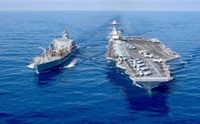
- President Donald Trump has ordered the USS Gerald R. Ford (CVN-78) to deploy to the Middle East from its current position in the Caribbean Sea.
- This move is a strategic escalation aimed at pressuring Iran to reach a deal regarding its nuclear and ballistic missile programmes.
- The Ford will join the USS Abraham Lincoln (CVN-72) carrier strike group, which is already patrolling the Arabian Sea.
|
United States (USA)
- Independence: July 4, 1776
- Capital: Washington, D.C.
- A federal republic of 50 states, founded in 1776 after declaring independence from Great Britain
- The Constitution, adopted in 1789, is the oldest written national constitution in use.
- Key Conflicts: American Revolutionary War (1775-1783), American Civil War (1861-1865, abolishing slavery).
- Key Leaders: George Washington (1st President), Abraham Lincoln (Civil War leader), Franklin D. Roosevelt (Great Depression/WWII).
- Lowest/Highest Points: Death Valley (86m below sea level) is the lowest; Denali (formerly Mount McKinley, 6,198m) is the highest.
- Major Mountain Ranges:
- Rocky Mountains: Young, jagged mountains in the West.
- Appalachian Mountains: Older, eroded mountains in the East.
- Sierra Nevada & Cascades: Located along the Pacific coast.
- Major River Systems:
- Mississippi-Missouri System: Combined, they form the 4th longest river system in the world.
- Colorado River: Known for carving the Grand Canyon.
- Rio Grande: Forms part of the border with Mexico.
The Great Lakes: Five interconnected freshwater lakes (Superior, Michigan, Huron, Erie, Ontario). Lake Superior is the world's largest freshwater lake by surface area.
|
6th India–RoK Foreign Policy and Security Dialogue
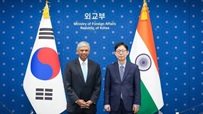
- India and the Republic of Korea (RoK) further strengthened their Special Strategic Partnership as Secretary (East) P. Kumaran co-chaired the 6th India–RoK Foreign Policy and Security Dialogue (FPSD) with Park Yoon-joo, First Vice Minister of Foreign Affairs of the Republic of Korea.
Republic of Korea (RoK)
- Capital: Seoul
- President: Lee Jae-myung
- Prime Minister: Kim Min-seok
- Highest Point: Mount Halla (1,950m) on Jeju Island, an extinct volcano
- UNESCO Sites: Home to multiple sites like Seokguram Grotto, Bulguksa Temple, and Jeju Volcanic Island.
- Currency: South Korean Won
- Borders: Shares its only land border with North Korea along the Demilitarized Zone (DMZ), roughly at the 38th Parallel.
- Major Rivers: Han River (flows through Seoul) and Nakdong River (longest)
|
SUMMITS AND CONFERNCES
Research, Industry, Start-up, and Entrepreneurship (RISE) Conclave 2026
- Council of Scientific and Industrial Research (CSIR) through its Chennai-based labs: CSIR-SERC, CSIR-CLRI, and CSIR-CECRI organised Research, Industry, Start-up, and Entrepreneurship (RISE) Conclave 2026 in Chennai.
- This conclave was inaugurated by Union Minister Dr. Jitendra Singh and he also launched a new Centre of Excellence established by Larsen & Toubro in Kanchipuram during the event.
Munich Security Conference 2026
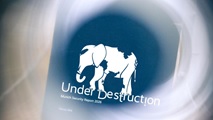
- India’s External Affairs Minister Dr S. Jaishankar participated in 62nd Munich Security Conference (MSC 2026) held in Munich, Germany.
- Dr Jaishankar reaffirmed India's commitment to strategic autonomy, stating it is "deeply rooted in our history". He clarified that India's energy choices, including Russian oil imports, are driven by national interest and market conditions rather than external pressure.
- At the Ananta Aspen Centre roundtable titled "Delhi Decides: Mapping India's Policy Calculus," he emphasized the need for a nimble and dynamic foreign policy to navigate an increasingly multipolar world.
- In meetings with G7 Foreign Ministers, he reiterated India's strong support for the UN@80 agenda, specifically calling for meaningful reforms to the UN Security Council to reflect contemporary realities.
About the Munich Security Conference 2026
- The conference was themed "Under Destruction," reflecting a critical inflection point for the post-1945 international order.
- The official Munich Security Report 2026 highlights the rise of political forces that favor "wrecking-ball" tactics over reform, specifically examining the impact of the current US administration's policies on global stability.
|
IMPORTANT DAYS
International Childhood Cancer Day
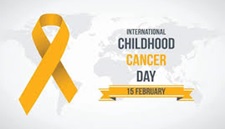
- International Childhood Cancer Day (ICCD) is observed annually on February 15th.
- Established in 2002 by Childhood Cancer International (CCI), the day is a global collaborative campaign to raise awareness about childhood cancer and express support for children, adolescents, survivors, and their families.
AWARDS AND HONOURS
A.K. Ramanujan Prize 2026
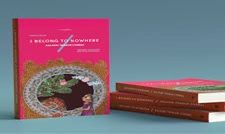
- Sipra Mukherjee and Mrinmoy Pramanick became the first Bengalis to win the 2026 A.K. Ramanujan Prize for Translation (Association for Asian Studies) for translating “I Belong to Nowhere: Poems of Hope and Resistance” by Dalit feminist poet Kalyani Thakur Charal.
ECONOMY & BANKING
Country’s first, Central Bank’s digital currency (CBDC)-based Public Distribution System
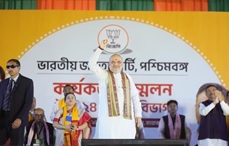
- Union Home Minister Amit Shah launched country’s first Central Bank Digital Currency (CBDC)-based Public Distribution System at Mahatma Mandir in Gandhinagar, Gujarat.
|
Key Features of the CBDC-based PDS
- Digital Token System: Developed by Punjab National Bank, the system credits beneficiaries' RBI-authorised digital wallets with e-Rupee (CBDC) tokens.
- Restricted Usage: These tokens are programmable; they specify the commodity, quantity, and price, and can only be used at authorized Fair Price Shops for rations.
- Authentication: Smartphone users can redeem entitlements via QR codes, while feature-phone users utilize Aadhaar-based OTPs.
|
ART & CULTURE
Herath Poshte
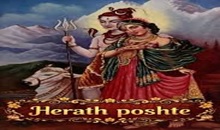
- Herath Poshte is a traditional greeting used during Herath (or Har-Ratri), the most significant socio-religious festival of the Kashmiri Pandit community.
- Marking their unique celebration of Mahashivratri, the festival commemorates the divine union of Lord Shiva and Goddess Parvati.
|
Art and Culture and festivals of Jammu and Kashmir
- Art and Craft: Papier-mâché, Basohli Paintings,
- Music and Dance: Features folk forms like "Chakri" and "Rouf" in Kashmir, and "Dogri Geet" in Jammu.
Festivals of Jammu and Kashmir
- Tulip Festival: Celebrated in April in Srinagar, showcasing millions of tulips in bloom.
- Shikara Festival: A celebration on Dal Lake with decorated boats.
- Hemis Festival: A major two-day Buddhist festival in Ladakh celebrating the birth of Padmasambhava.
- Baisakhi: A harvest festival celebrated with immense joy, particularly in the Jammu region.
- Lohri: Marks the onset of spring in January with bonfires and traditional songs in Jammu.
|
ENVIRONMENT + SCIENCE & TECHNOLOGY
G-4 Geological and Radiometric Surveys Commence in Koderma
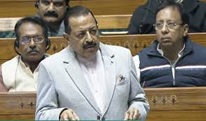
- According to information shared by Union Minister Dr. Jitendra Singh in the Lok Sabha, the Atomic Minerals Directorate (AMD) for Exploration and Research has initiated G-4 level geological and radiometric surveys in Jharkhand’s Koderma district to explore rare and strategic minerals.
- These surveys aim to identify potential deposits of rare earth elements (REEs) and other critical resources, enhancing domestic supply for industries such as defense, renewable energy, and electric vehicles.
|
Rare Earth Elements (REEs)
- REEs consist of 17 chemical elements: Lanthanum, Cerium, Praseodymium, Neodymium, Promethium, Samarium, Europium, Gadolinium, Terbium, Dysprosium, Holmium, Erbium, Thulium, Ytterbium, Lutetium, Scandium, and Yttrium.
- Often divided into Light REEs (LREE) and Heavy REEs (HREE). HREEs are typically more rare and valuable.
Global Distribution
- China: Holds ~34% of global reserves but controls 70-80% of global production and nearly 90% of refining.
- Vietnam & Brazil: Hold the second and third largest reserves, though production is significantly lower than China's.
- USA: Mountain Pass mine (California) is their primary source; they are actively trying to "de-risk" from Chinese supply.
- India: Holds the 5th largest reserves in the world (approx. 6% of global share), primarily in beach sands.
India's REE sector is state-regulated due to its strategic importance and association with radioactive minerals.
- IREL (India) Limited: Formerly Indian Rare Earths Limited, it is a CPSE under the Department of Atomic Energy (DAE). It has a monopoly over mining and processing.
- The Source: Most Indian REEs come from Monazite sands found in coastal states like Kerala, Tamil Nadu, Odisha, and Andhra Pradesh.
Strategic Applications: "The Vitamins of Modern Industry"?
- Green Energy: Neodymium and Dysprosium are essential for permanent magnets in Wind Turbines and Electric Vehicle (EV) motors.
- Defense: Used in precision-guided missiles, lasers, radar, and night-vision goggles.
- Electronics: Smartphones, hard drives, and flat-screen monitors rely on various REEs for color and miniaturization.
- Catalysts: Lanthanum and Cerium are used in petroleum refining and automotive catalytic converters.
|
Akashvani News Launched New Series ‘Prakriti ki Baat’
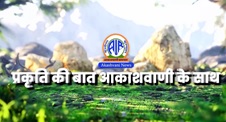
- Akashvani News has launched a new series titled ‘Prakriti ki Baat, Akashvani ke Sath’ to highlight India's environmental commitments and achievements.
- The program focuses on India's environmental achievements, commitments, and the "whole-of-government" approach toward climate action.
ISS returned to full crew strength

- The International Space Station (ISS) returned to full crew strength 14 February 2026, with the arrival of four new astronauts as part of the SpaceX Crew-12 mission.
- The new arrivals, who are set to spend eight to nine months aboard the station, are NASA astronauts Jessica Meir and Jack Hathaway, France’s Sophie Adenot, and Russia’s Andrei Fedyaev.
|
International Space Station (ISS)
Largest modular space station currently in low Earth orbit (LEO), serving as a unique microgravity research laboratory.
- Launch of First Module (Nov 20, 1998): The Russian Zarya (meaning "Dawn" or "Sunrise") control module was the first component launched into space.
- It is governed by a complex set of legal and political agreements, primarily the Intergovernmental Agreement (IGA).
- Mission control is shared between Houston (NASA) and Moscow (Roscosmos), with support from centers in Germany (ESA), Japan, and Canada.
|
DEFENCE NEWS
116th Raising Day of Corps of Signals of Indian Army
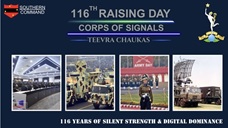
- The Indian Army's Corps of Signals celebrated its 116th Raising Day on 15 February.
Corps of Signals of Indian Army
- Established: February 15, 1911, as a separate entity under Lieutenant Colonel S.H. Powell.
- Official Birthday: This date was chosen because the first Divisional Signal Companies of Sappers and Miners were raised on February 15, 1911.
- Current Motto: "Teevra Chaukas", which translates to "Swift and Secure" (formerly "Certa Cito" or "Swift and Sure").
- Role: The Corps handles all military communications, including battlefield networks, cyber and information systems, electronic warfare, and satellite communications.
|
SPORTS
Aizawl International Half Marathon 2026
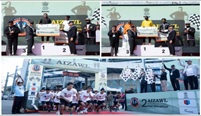
- Kenya's Kemboi Kevin Kiprono and India's Renu Singh emerged as the winners of the second Aizawl International Half Marathon 2026 held at the Rajiv Gandhi Stadium in Aizawl.
Milano Cortina 2026 Winter Olympics

- At the Milano Cortina 2026 Winter Olympics, Brazilian skier Lucas Pinheiro Braathen made history by winning the gold medal in the Men's Giant Slalom.
- His victory at the Stelvio Ski Centre in Bormio secured the first-ever Winter Olympic medal for both Brazil and South America.
Pramod Bhagat won gold medal at the BWF Para World Championships
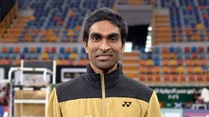
- Pramod Bhagat clinched the gold medal in the men’s SL3 singles at the BWF Para Badminton World Championships 2026 in Manama, Bahrain


 Don't Have an Account?