


 Don't Have an Account?




SSC Foundation Eklavya - 2 Offline Cum Online Batch Lucknow Branch
10 September, 2026



Enter your Email ID and we'll send you a link to get back into your account.

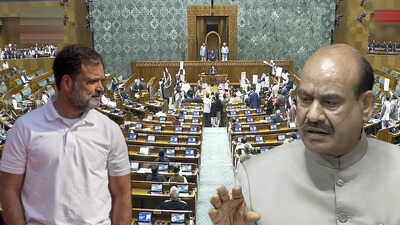

No-Confidence Motion Against the Lok Sabha Speaker
Thu 12 Feb, 2026
Context
A notice of no-confidence against the Speaker of the Lok Sabha was moved under Article 94(c) of the Constitution of India. The notice was submitted to the Secretary-General of the Lok Sabha by Congress Chief Whip K. Suresh and Whip Jawed Ahmed, reportedly backed by 118–119 Members of Parliament (MPs) belonging to parties such as the Congress, DMK, Samajwadi Party, RJD and Left parties.
Constitutional Basis
The removal of the Speaker of the Lok Sabha is governed by Article 94(c) of the Constitution of India.
Article 94 states that the Speaker or Deputy Speaker:
Thus, the Constitution provides a specific mechanism for accountability of the Speaker.
Procedure for Removal
This ensures neutrality in proceedings.
Why Is the Speaker Important?
The Speaker of the Lok Sabha occupies a constitutional office and is the presiding officer of the Lower House of Parliament. The Speaker:
Because of these powers, the Speaker’s office is expected to function in a politically neutral and impartial manner.
No-Confidence Motion vs. Removal Resolution
It is important to distinguish:
In public discourse, the term “no-confidence motion” may be used loosely, but constitutionally it is a removal resolution.
Major Terms
Static Facts
Conclusion
A motion for removal of the Lok Sabha Speaker is a rare and constitutionally significant event. While political in nature, it highlights the accountability mechanisms embedded within India’s parliamentary democracy.
10 September, 2026
24 August, 2026
06 August, 2026
28 July, 2026
27 July, 2026
22 July, 2026
20 July, 2026
26 May, 2026
08 May, 2026
20 April, 2026
