


 Don't Have an Account?




SSC Foundation Eklavya - 2 Offline Cum Online Batch Lucknow Branch
10 September, 2026



Enter your Email ID and we'll send you a link to get back into your account.

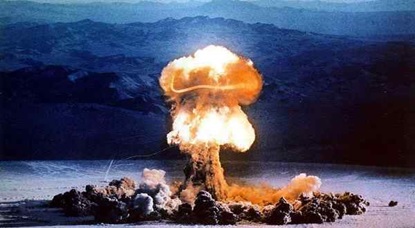

New Strategic Arms Reduction Treaty (New START)
Fri 06 Feb, 2026
The New Strategic Arms Reduction Treaty (New START), the last remaining bilateral nuclear arms control agreement between the United States and Russia, officially expired on 5 February. With its expiry, an era of formal, legally binding constraints on the world’s two largest nuclear arsenals has come to an end. This development marks a major setback for global nuclear arms control and has far-reaching implications for strategic stability, non-proliferation efforts, and countries like India, which operate in an increasingly complex nuclear environment.
Background of New START
New START emerged from a phase of diplomatic “reset” between Washington and Moscow in the late 2000s. It entered into force on 5 February 2011, replacing earlier Cold War–era arms control frameworks. The treaty placed verifiable limits on strategic offensive nuclear weapons of both sides.
Key provisions of New START included:
These measures enhanced transparency, predictability, and mutual confidence, reducing the risks of miscalculation and unintended escalation.
Why New START Collapsed
Despite its importance, New START remained under constant strain.
Technological advancements further complicated matters. Russia unveiled new strategic systems such as the Sarmat heavy ICBM and Avangard hypersonic glide vehicle, which were brought under New START limits after U.S. insistence. However, other advanced systems like the Poseidon nuclear-powered underwater drone and Burevestnik nuclear-powered cruise missile remained outside the treaty’s technical scope.
Originally set to expire in 2021, the treaty received a one-time five-year extension until 5 February 2026. However, after the escalation of the Ukraine conflict, Russia announced in February 2023 that it was suspending participation, citing hostile Western actions and the impossibility of inspections. The U.S. soon followed suit in practice, rendering the treaty ineffective even before its formal expiry.
Global Consequences
For the first time since 1972, there are now no legally binding limits on the strategic nuclear arsenals of the U.S. and Russia. Formal verification mechanisms have ceased, forcing both sides to rely on satellite imagery and unilateral intelligence, which are more prone to errors and politicisation.
Additionally, modern warfare has blurred distinctions between nuclear and non-nuclear strategic systems. Cyberattacks, space-based assets, and hypersonic weapons can threaten nuclear command and control without crossing the nuclear threshold, increasing instability. Analysts highlight that the loss of predictability and transparency is more dangerous than the mere numerical increase in warheads.
The expiry of New START also weakens prospects for expanding arms control to include China and other nuclear powers.
Implications for India
For India, the collapse of New START has indirect but significant strategic implications:
1. Erosion of Global Arms Control Norms
India has traditionally supported global nuclear restraint and credible deterrence. The weakening of arms control regimes undermines strategic stability worldwide, including in Asia.
2. Impact on Asia-Pacific Security
A less constrained U.S.–Russia environment may accelerate nuclear modernisation globally, influencing China’s nuclear posture. This, in turn, affects India’s strategic calculations vis-à-vis China.
3. Challenges to Non-Proliferation
The dilution of arms control makes it harder to strengthen global non-proliferation frameworks, complicating India’s advocacy for responsible nuclear behaviour.
4. Strategic Autonomy and Deterrence
India may need to place greater emphasis on credible minimum deterrence, survivability, and command-and-control resilience in a more unpredictable nuclear order.
Way Forward
Experts argue that near-term solutions may lie in incremental measures rather than comprehensive treaties. These include restoring basic transparency between the U.S. and Russia, standardising definitions among the P5 nuclear states, and strengthening confidence-building tools such as hotlines, launch notifications, and fissile material security.
Conclusion
The expiry of New START marks a critical turning point in global nuclear governance. While it does not immediately trigger an arms race, it removes vital guardrails that ensured transparency and stability. For India, this evolving strategic landscape underscores the importance of diplomatic engagement, regional stability, and sustained commitment to responsible nuclear policy in an increasingly uncertain world order.
10 September, 2026
24 August, 2026
06 August, 2026
28 July, 2026
27 July, 2026
22 July, 2026
20 July, 2026
26 May, 2026
08 May, 2026
20 April, 2026
