15 December, 2025
Launch of the District-Led Textile Transformation Initiative (DLTT)
Sun 11 Jan, 2026
Context
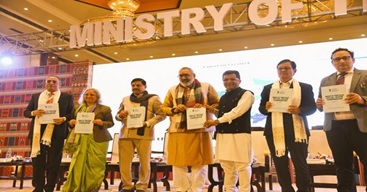
- The Ministry of Textiles has launched the District-Led Textile Transformation Initiative, with the primary objective of developing each district of India as an independent textile export hub.
Key Highlights
- Launch Event: National Conference of Textile Ministers, Guwahati
- Significance: A strategic step towards transforming India’s textile sector from “Local to Global.”
- Core Objective: To develop districts not merely as administrative units, but as economic clusters.
Strategic Classification of Districts
Based on their potential, districts have been divided into two distinct categories:
| Category | Target (Number) | Core Strategy | Focus Areas |
| Champion Districts | 100 | Scale & Refinement | Mega Common Facility Centres (CFCs), Industry 4.0 technologies, and direct export linkages |
| Aspirational Districts | 100 | Foundation & Formalization | Basic skill development, raw material banks, strengthening of SHGs, and ecosystem building |
Key Pillars of the Initiative
- Inclusive Development: Priority to North-Eastern states and tribal regions to address regional imbalances.
- Cultural Preservation: Global recognition of local handicrafts through Geographical Indication (GI) tagging.
- Formalization: Integrating rural and unorganized workforce into the formal economy.
Economic and Social Significance
- GDP Contribution: The textile sector currently contributes 2.3% to India’s GDP, which this initiative aims to further enhance.
- Employment Generation: The second-largest employer after agriculture. The initiative is a game-changer for women empowerment, as 60–70% of the workforce in textiles comprises women, and for rural livelihoods.
- Global Ranking: India is currently the 6th largest textile exporter; the initiative aims to position India among the top three globally.
Synergy with Existing Schemes
- PM MITRA: Development of mega textile parks to reduce logistics costs.
- ATUFS: Support for technology upgradation.
- One District One Product (ODOP): In the context of Uttar Pradesh, DLTT will directly strengthen ODOP products such as Bhadohi carpets and Lucknow Chikankari, transforming them into global export hubs.
Textile Sector in India
- Second-largest employment-generating sector after agriculture.
- A backbone of the Indian economy, contributing significantly to GDP while showcasing India’s cultural heritage globally.
- Exports (FY 2024–25): USD 37,755 million (including handicrafts), registering 5.2% growth over the previous year.
- India is the 6th largest exporter of textiles globally.
- Share in Total Exports (2023–24): 8.21%; global trade share of 4.5%, with the USA and EU accounting for 47% of India’s textile and apparel exports.
- Employment: Over 45 million people employed directly and more than 100 million indirectly, with a large share of women and rural workers.
- GDP Contribution: Approximately 2–2.3%.
- Industrial Production (IIP): Around 13% of total industrial output.
- Market Size Target: USD 350 billion by 2030.
India’s Global Positioning
- Cotton: Largest producer globally (about 23% of world production).
- Jute: World’s largest producer.
- Silk: Second-largest producer after China.
- Man-Made Fibre (MMF): Second globally in polyester and viscose production.
Major Government Policy Support
- PM MITRA: Development of 7 mega textile parks (including Lucknow–Hardoi in Uttar Pradesh).
- PLI Scheme: Financial incentives for MMF and technical textiles (extended till 31 March 2026).
- SAMARTH: Skill development programme for the textile sector, targeting training of millions.
- Cotton Mission (5-Year): Announced in 2025 to enhance productivity of Extra-Long Staple (ELS) cotton.