LVM3-M6 / BlueBird Block-2 Mission
 
  • Mobile Menu
HOME BUY MAGAZINEnew course icon
LOG IN SIGN UP

Sign-Up IcanDon't Have an Account?


SIGN UP


Login Icon

Have an Account?


LOG IN
 

or
By clicking on Register, you are agreeing to our Terms & Conditions.


or


LVM3-M6 / BlueBird Block-2 Mission

Wed 24 Dec, 2025

Context:

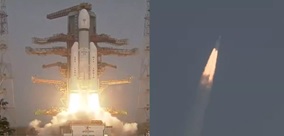
  • The Indian Space Research Organisation (ISRO) successfully launched the next-generation American communication satellite “BlueBird Block-2” on 24 December 2025 from Sriharikota, Andhra Pradesh, using its heaviest launch vehicle LVM3-M6.

Key Highlights

  • Launch Vehicle: LVM3-M6 (also known as the “Bahubali” rocket)
  • Payload: BlueBird Block-2 satellite
  • Satellite Mass: Approximately 6,100 kg (6.1 tonnes)
  • Manufacturer: AST SpaceMobile (USA)

Special Features of the Mission

  • This is the heaviest commercial satellite ever launched by ISRO from Indian soil.
  • The BlueBird Block-2 satellite can connect directly to ordinary 4G/5G smartphones without requiring special satellite phones or large antennas.
  • It is equipped with a 223 square meter phased-array antenna, the largest commercial antenna ever deployed in Low Earth Orbit (LEO).
  • The launch is part of a major commercial agreement between NewSpace India Limited (NSIL) and AST SpaceMobile (USA).
  • NSIL is the commercial arm of ISRO.

LVM3 (Launch Vehicle Mark-3)

  • ISRO’s most powerful and heavy-lift launch vehicle
  • Earlier known as GSLV Mk-III
  • Nicknamed “Bahubali” due to its heavy payload-carrying capability
  • Type: Three-stage heavy-lift launch vehicle

Payload Capacity

  • GTO (Geostationary Transfer Orbit): ~4,000 kg
  • LEO (Low Earth Orbit): ~8,000 kg

Physical Specifications

  • Height: 43.5 meters (equivalent to a 14-storey building)
  • Lift-off Mass: ~640 tonnes

Three Stages of LVM3

1. S200 – Solid Boosters

  • Two large strap-on boosters mounted on the sides
  • Use solid fuel
  • Provide massive thrust during lift-off

2. L110 – Liquid Core Stage

  • Central stage with two Vikas engines
  • Uses liquid propellants UH25 and N₂O₄

3. C25 – Cryogenic Upper Stage

  • Most critical stage
  • Powered by India’s largest CE-20 cryogenic engine
  • Uses liquid hydrogen and liquid oxygen

Important Missions Using LVM3

  • Chandrayaan-2 (2019): Proved LVM3’s capability to carry heavy lunar payloads
  • OneWeb Missions (2022–23): Two successful launches of 36 satellites each on a commercial basis
  • Chandrayaan-3 (14 July 2023): Enabled India’s historic soft landing near the Moon’s south pole
  • Gaganyaan (Upcoming): India’s first human spaceflight mission; LVM3 is being human-rated

Low Earth Orbit (LEO)

  • The orbit closest to Earth
  • Used by most satellites, the International Space Station (ISS), and future space tourism missions

Altitude Range

  • 160 km to 2,000 km above Earth

Orbital Characteristics

  • Speed: ~27,400 km/h (7.6 km/s)
  • Orbital Period: 90–120 minutes (multiple orbits per day)

Major Uses of LEO

  • Satellite Communication: Starlink, OneWeb (low latency)
  • Earth Observation: High-resolution imaging, weather monitoring, mapping
  • Human Spaceflight: ISS, China’s Tiangong station, and India’s upcoming Gaganyaan mission

Other Major Earth Orbits

Medium Earth Orbit (MEO)

  • Altitude: ~2,000 km to 35,786 km (commonly ~20,200 km)
  • Use: Navigation satellites
  • Examples: GPS (USA), GLONASS (Russia), Galileo (Europe)

Geosynchronous & Geostationary Orbits (GSO & GEO)

  • Altitude: 35,786 km above Earth
  • GSO: Orbital period equals Earth’s rotation (24 hours)
  • GEO: A special GSO directly above the equator; satellites appear stationary
  • Uses: TV broadcasting (DTH), satellite communication, weather forecasting
  • Examples: India’s INSAT and GSAT satellites

Polar & Sun-Synchronous Orbits (SSO)

  • Polar Orbit: Satellite passes over Earth’s poles, covering the entire planet over time
  • Sun-Synchronous Orbit (SSO): A special polar orbit where the satellite passes over a location at the same local solar time
  • Uses: Surveillance, weather monitoring, environmental studies
  • Ideal for imaging due to consistent lighting conditions

Latest Courses