


 Don't Have an Account?




द्रोण - 1 SUPER TET Offline Cum Online batch ORAI Branch
28 July, 2026



Enter your Email ID and we'll send you a link to get back into your account.

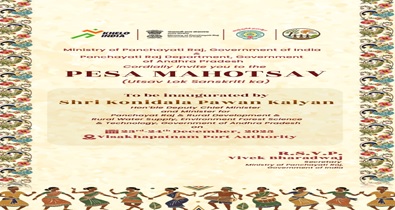

Two-Day PESA Mahotsav
Tue 23 Dec, 2025
Context:
Key Highlights
Objective:
– To review progress in the implementation of the PESA Act
– To strengthen Gram Sabhas in Scheduled Areas
Venues:
– Visakhapatnam Port Authority Campus (main venue)
– Ramakrishna Beach, Indoor Stadium, Cricket Stadium, and Kalavani Auditorium
Inauguration:
– By Kondidala Pawan Kalyan, Deputy Chief Minister and Panchayati Raj Minister of Andhra Pradesh
– Prof. S. P. Singh Baghel, Minister of State for Panchayati Raj, addressed the gathering through a video message
Participants:
– Around 2,000 delegates from 10 PESA states
– Included Panchayat representatives, athletes, artisans, craftsmen, and cultural performers
Major Attractions
PESA Run:
– Flagged off at Ramakrishna Beach
– Witnessed participation from all age groups, especially tribal youth
Sports Competitions:
– Kabaddi, Archery, and traditional games such as Chakki Khel, Uppanna Barelu, and Mallakhamb
– Kabaddi Winners:
– Men’s category: Madhya Pradesh
– Women’s category: Jharkhand
Cultural Programs:
– Folk dances, music, tribal cuisine, handicrafts, and art exhibitions
– 68 stalls showcasing tribal heritage
Special Gram Sabhas:
– Organized across the 10 PESA states
– Discussions focused on strengthening Gram Sabhas, conservation of natural resources, and preservation of traditions
Mascot: Krishna Jinka (Blackbuck) unveiled
Conclusion:
– On 24 December, the ceremonial baton for hosting the next PESA Mahotsav in 2026 was handed over to Chhattisgarh
Key Initiatives and Launches
PESA Act, 1996
Core Objective:
– To provide self-governance to tribal communities
– To protect their culture, traditions, and rights over natural resources (water, forests, and land)
– Often referred to as a “Constitution within the Constitution”
Bhuriya Committee:
– Headed by Dilip Singh Bhuriya (1994)
States Implementing PESA (10):
Andhra Pradesh, Chhattisgarh, Gujarat, Himachal Pradesh, Jharkhand, Madhya Pradesh, Maharashtra, Odisha, Rajasthan, and Telangana
Five Major Powers under the PESA Act
Ministry of Panchayati Raj (MoPR)
Key Responsibilities:
– Ensuring constitutional compliance by states
– Financial empowerment of Panchayats through Central Finance Commission grants
– Capacity building of elected representatives and Panchayat staff
– Promoting e-governance initiatives such as e-GramSwaraj
– Monitoring implementation of the PESA Act, 1996
Panchayat Awards
Three-Tier Structure of Panchayati Raj
28 July, 2026
27 July, 2026
22 July, 2026
20 July, 2026
26 May, 2026
08 May, 2026
20 April, 2026
01 April, 2026
01 April, 2026
16 March, 2026
