08 December, 2025
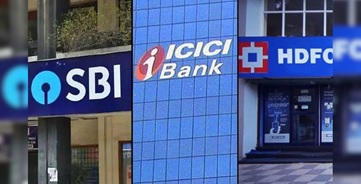
SBI, HDFC and ICICI Retained as D-SIB
Fri 05 Dec, 2025
Context:
- The Reserve Bank of India (RBI), in its December 2025 announcement, has retained SBI, HDFC and ICICI Bank as Domestic Systemically Important Banks (D-SIBs), and has kept their earlier levels of systemic-risk capital (CET1 surcharge) unchanged.
Key Points:
- The core point of RBI’s 2025 decision is that the D-SIB list and their ‘Bucket’ classification remain the same as the 2024 list.
- This highlights the continued dominance and systemic importance of these three major banks in the Indian banking sector.
Systemic-Risk Capital and CET1 Surcharge:
- D-SIBs are placed in different ‘Buckets’ based on their Systemic Importance Score (SIS).
- The higher the bucket, the higher the requirement for additional Common Equity Tier 1 (CET1) capital as a percentage of Risk-Weighted Assets (RWA).
Major Observations:
- Importance of SBI: SBI is the only bank in Bucket 4, making it the largest and most significant institution in India’s financial system.
- HDFC & ICICI: These private-sector banks fall in Buckets 2 and 1 respectively. Even after the merger of HDFC Bank with HDFC Ltd., its systemic importance increased, but RBI has retained its previous bucket classification.
Implications of the Decision
A. Impact on Financial Stability:
- Enhanced Safety Net: The additional CET1 capital requirement ensures that these banks maintain sufficient buffers to absorb unexpected shocks or financial crises.
- This contributes to overall stability in the banking sector.
Market Confidence:
- The D-SIB status and additional capital requirements publicly confirm that these banks are under strict regulatory oversight and have a higher likelihood of government/RBI intervention in case of distress.
- This increases customer and investor confidence.
B. Regulatory and Operational Pressure on Banks:
- Capital Discipline:
Banks must maintain a strong capital base, preventing them from excessively engaging in risky activities.
- Potential Constraint on Growth:
Additional capital requirements mean that a portion of the bank’s capital must be reserved instead of being used for lending or other business activities.
This may slightly affect profitability, but it is necessary for financial safety.
C. Economic Signal:
- The unchanged list indicates that systemic risk levels in the Indian banking system remain stable.
- Compared to 2024, there has been no major change in the relative importance scores of these banks that would justify shifting them to higher or lower buckets.
- It also reflects continuity in India’s “Too Big to Fail” policy.
Domestic Systemically Important Banks (D-SIBs) :
- Definition: Banks whose failure would significantly impact the entire financial system of the country.
- Issuing Authority: Reserve Bank of India (RBI)
- First Announcement: India first released the list of D-SIBs in 2015.
- Objective: To maintain financial stability and enforce additional regulatory oversight on large banks.
- Additional Capital Requirement: D-SIBs must maintain extra Common Equity Tier-1 (CET1) capital compared to normal banks.
- Evaluation Basis: Bank size, interconnectedness, complexity, substitutability, etc.
Current List of D-SIBs in India:
- Banks: State Bank of India (SBI), HDFC Bank, and ICICI Bank
- RBI designated SBI and ICICI Bank as D-SIBs in 2015 and 2016, and HDFC Bank was added in 2017.
- Grading: RBI classifies these banks into ‘Buckets’—the higher the bucket, the higher the capital requirement.
- RBI’s Role: Special supervision, stress testing, risk management, and additional reporting for these banks.
- International Context: The framework is based on Basel III norms and Financial Stability Board (FSB) guidelines.
Significance:
- Ensures financial stability in the economy.
- Strengthens public trust in the banking system.
- Reduces the risk of banking crises.