


 Don't Have an Account?




द्रोण - 1 SUPER TET Offline Cum Online batch ORAI Branch
28 July, 2026



Enter your Email ID and we'll send you a link to get back into your account.

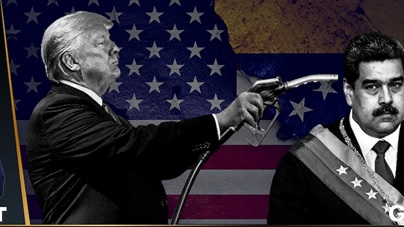

USA–Venezuela Conflict
Sun 30 Nov, 2025
(a) Rise of Hugo Chávez (1999–2013): The conflict can be traced back to the election of Hugo Chávez, who promoted an anti-U.S., socialist, Bolivarian revolution. His nationalisation of oil assets, criticism of U.S. foreign policy and alliances with China, Russia and Iran made Washington view Caracas as hostile.
(b) U.S. Sanctions and Political Breakdown: The U.S. began imposing sanctions on Venezuelan leaders, oil companies, and state institutions, accusing them of corruption, democratic backsliding, and human rights violations. These sanctions intensified after Nicolás Maduro succeeded Chávez in 2013.
(c) 2019: Parallel Governments: In January 2019, the U.S. recognised opposition leader Juan Guaidó as the “interim President” of Venezuela, declaring Maduro’s re-election illegitimate.
(a) Oil Politics: Venezuela possesses one of the largest proven oil reserves in the world. U.S. sanctions on PDVSA (Venezuela’s state oil company) severely affected the country’s economy.
Oil revenues collapsed, causing shortages of food, medicines, and electricity.
(b) Migration Crisis: Over 7 million Venezuelans have fled the country in the last decade, creating Latin America’s largest humanitarian refugee crisis.
In 2025, U.S. President Donald Trump announced that airspace above and around Venezuela should be considered “closed in its entirety.”
Meaning & Implications:
This step is seen as one of the toughest aviation-related restrictions imposed by the U.S. on a Latin American country in recent years.
5. Regional & Global Implications
(a) Latin American Polarisation: The move has divided countries in the region—Colombia and Brazil have supported tougher actions, while Bolivia, Cuba, and Nicaragua have condemned the U.S. stance.
(b) Role of Russia & China: Both Moscow and Beijing have criticized the U.S. decision, reiterating their support for Maduro and accusing the U.S. of interfering in the internal affairs of a sovereign state.
(c) Humanitarian Risks: Airspace restrictions can disrupt medical supplies, international flights, and refugee movement, worsening Venezuela’s economic crisis.
While intended to increase diplomatic pressure, it also risks aggravating humanitarian challenges and widening geopolitical divisions in the region.
| USA (United States of America) | Venezuela (Bolivarian Republic of Venezuela) |
|
|
28 July, 2026
27 July, 2026
22 July, 2026
20 July, 2026
26 May, 2026
08 May, 2026
20 April, 2026
01 April, 2026
01 April, 2026
16 March, 2026
