GK Update
 
  • Mobile Menu
HOME BUY MAGAZINEnew course icon
LOG IN SIGN UP

Sign-Up IcanDon't Have an Account?


SIGN UP


Login Icon

Have an Account?


LOG IN
 

or
By clicking on Register, you are agreeing to our Terms & Conditions.


or


GK Update

Sun 16 Aug, 2026

National News

Organization of the ‘Suryapath Tiranga Global Relay’ Campaign
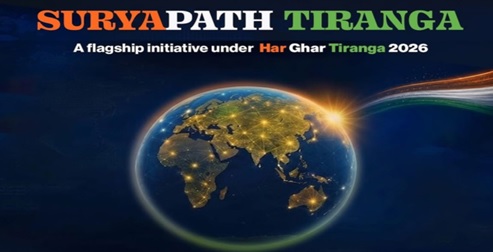
  • The ‘Suryapath Tiranga Global Relay’ campaign was organized to mark the 80th Independence Day; it commenced in Fiji and concluded in San Francisco, USA.

Related Facts:

Campaign Overview:

  • Campaign Name: Suryapath Tiranga Global Relay
  • Occasion: India’s 80th Independence Day (15 August 2026)
  • Flagship Initiative: Under the ‘Har Ghar Tiranga’ campaign
  • Organizers: Ministry of Culture and Ministry of External Affairs (Indian Missions)

Key Features of the Campaign:

  • Commencement: From Suva, Fiji (High Commission of India)
  • Conclusion: At San Francisco, USA (Consulate General of India)
  • Concept: Hoisting the Tricolour while following the rising sun and time zones
  • Embassies/Missions Involved: The relay continued uninterrupted for over 19 hours, geographically connecting more than 50 countries and involving 54 Indian missions and divisions
  • Nodal Points: It primarily traversed the Pacific region, Asia, Africa, Europe, and the Americas

Key Objectives and Significance:

  • Global Engagement: Connecting the Pacific, Asia, Africa, Europe, and the Americas through a chain of flag-hoisting events.
  • Special Commemoration: Collective singing of the National Song (‘Vande Mataram’) and the National Anthem at the embassies to mark the completion of 150 years of ‘Vande Mataram’.
  • Message: The Tricolour transcends borders, uniting the Indian diaspora and friends of India across the globe.

80th Independence Day

  • India celebrated its 80th Independence Day on August 15, 2026, marking the completion of 79 years of freedom from British rule (which began in 1947).
  • The theme for this year is 'Viksit Bharat@2047 through Youth Power' (Viksit Bharat@2047 for Youth Power), highlighting the role of India's youth in building a developed nation by 2047.
  • Every year on Independence Day, the Prime Minister of India hoists the national flag at the Red Fort.
  • Additionally, 2026 marks the 150th anniversary of 'Vande Mataram'.

Related Facts:

  • First Independence Day: August 15, 1947
  • First Prime Minister of independent India: Pandit Jawaharlal Nehru (hoisted the Tricolour for the first time at the Lahori Gate of the Red Fort on August 15, 1947)
  • Composer of the National Anthem ('Jana Gana Mana'): Rabindranath Tagore (written in 1911; adopted as the National Anthem on January 24, 1950)
  • Design of the National Flag: Created by Pingali Venkayya (adopted by the Constituent Assembly on July 22, 1947)
  • Flag's length-to-width ratio: 3:2
  • Radcliffe Line: The line demarcating the borders between India and Pakistan; it was published on August 17, 1947—two days after independence.
  • This was the Prime Minister's 13th consecutive address from the ramparts of the Red Fort on the occasion of the 80th Independence Day (August 15, 2026).

The Prime Minister unveiled 'Saptadhara' (seven pillars of reform) to achieve the goal of 'Viksit Bharat@2047':

  • Manufacturing and Global Supply Chain: Expanding 'Make in India' to transform the country into a global hub for production, design, and exports.
  • Agriculture and Food Processing: Boosting farmers' income and establishing agricultural products as global brands.
  • Technology and Innovation: Leading in AI, quantum computing, and semiconductors.
  • PM Gati Shakti: Developing next-generation multimodal logistics and high-speed connectivity.
  • Defence Capability: Achieving complete self-reliance in advanced technologies (drones, hypersonic systems).
  • Green and Blue Economy: Focusing on renewable energy and deep-sea resource exploration.
  • Soft Power and Creative Economy: Promoting global well-being through Yoga, Ayurveda, and the entertainment sector.

Announcements regarding Youth, Education, and Technology:

  • AI Skilling: A major announcement was made to provide Artificial Intelligence (AI) training to 10 million (1 crore) youths over the next year.
  • Free Online Coaching: A decision was taken to launch government-sponsored free online coaching for various competitive examinations to alleviate the financial burden of coaching on poor and middle-class families.
  • Semiconductor Manufacturing: It was announced that commercial production and exports have commenced at three plants in India, with plans to establish 5 to 8 new plants in the coming years.

Energy Security and Infrastructure:

  • Nuclear Energy Target: A long-term goal has been set to achieve 100 GW of nuclear energy capacity by the year 2047. As part of this, five new nuclear reactors will be commissioned within this decade.
  • 'Samriddh Manthan': A new initiative was announced to open up India's coastal waters for deep-sea mineral and energy exploration.
  • Fortune 500 Goal: The objective is to elevate Indian manufacturing to a level where at least 50 Indian companies can make it to the Fortune 500 list.
  • Mission Olympics 2036: Confirming India's bid for the 2036 Olympic Games, a nationwide 'talent hunt' was announced for children aged 5 to 15 to groom world-class athletes.

‘Ayushman Bharat-Pradhan Mantri Jan Arogya Yojana’ Implemented in West Bengal
  • The West Bengal government officially implemented the ‘Ayushman Bharat-Pradhan Mantri Jan Arogya Yojana’ (AB-PMJAY) in the state for the first time on August 16, 2026.
  • With this move, West Bengal has become the 36th state/Union Territory in the country to adopt the scheme, thereby completing the nationwide rollout of this health scheme across India.

Related Facts:

  • The scheme was implemented in the state following a Memorandum of Understanding (MoU) signed between the West Bengal government (led by Chief Minister Suvendu Adhikari) and the National Health Authority (NHA).
  • The state government has announced that August 16 will now be observed as ‘Ayushman Diwas,’ replacing the previous government's ‘Khela Hobe Diwas.’
  • Individuals who do not meet the eligibility criteria for the Centre’s Ayushman Bharat scheme will be covered under the state government’s ‘Mukhyamantri Swasthya Bima Yojana’ (MMSBY). Additionally, the state’s existing ‘Swasthya Sathi’ scheme will be phased out over the coming months.
  • The cost of the scheme will be shared between the Central and State governments in a 60:40 ratio.
  • In Bengal, approximately 1.5 crore families (around 6 crore people) are expected to benefit from this scheme. Furthermore, all senior citizens aged 70 years or older have been included within its ambit.

Ayushman Bharat Pradhan Mantri Jan Arogya Yojana (AB PM-JAY):

  • Type: A Centrally Sponsored Scheme.
  • Launch Date: It was launched by Prime Minister Narendra Modi on September 23, 2018.
  • Launch Location: The scheme was rolled out across India from Ranchi, Jharkhand.
  • Nodal Agency: The National Health Authority (NHA) implements it at the central level.
  • Ministry: The scheme falls under the Ministry of Health and Family Welfare. Ayushman Bharat Diwas: Observed annually on April 30th to raise awareness across the country.
  • Benefits/Coverage: Cashless health cover of up to ₹5 lakh per family per year (for secondary and tertiary care hospitalization).
  • Cooperative Federalism: Health is a subject under the State List (Entry 6) of the Constitution.
  • The scheme is linked to the Ayushman Bharat Digital Mission (ABDM) and the ABHA (Ayushman Bharat Health Account) ID, making it easier to track patients' digital medical records.

Foreign Assets of Small Taxpayers-Disclosure Scheme, 2026

  • The Central Government has launched the time-bound FAST-DS (Foreign Assets of Small Taxpayers-Disclosure Scheme, 2026) to enable small taxpayers to disclose undisclosed foreign assets and income.
  • This scheme came into effect on August 16, 2026, and online declarations under it can be filed until December 31, 2026.

Related Facts:

  • Initiated by: Central Government (Income Tax Department / Ministry of Finance)
  • Name of the initiative: FAST-DS (Foreign Assets of Small Taxpayers – Disclosure Scheme)
  • Main objective: To provide taxpayers an opportunity for the voluntary and time-bound disclosure of their undisclosed foreign assets and income
  • Relevant legislation: Black Money (Undisclosed Foreign Income and Assets) and Imposition of Tax Act, 2015 [Black Money Act, 2015]
  • Implementing agency: Central Board of Direct Taxes (CBDT)
  • Full name of CBDT: Central Board of Direct Taxes
  • Establishment of CBDT: 1964 (under the Central Board of Revenue Act, 1963)
  • Current Union Finance Minister: Nirmala Sitharaman
  • Headquarters: New Delhi


Awards and Honours

Gallantry Awards 2026

  • On the eve of Independence Day 2026, President Droupadi Murmu approved a total of 78 gallantry awards—including 13 posthumous ones—for the defence forces and Central Armed Police Forces.

Related Facts:

  • These gallantry awards include 09 Kirti Chakras (07 posthumous), 01 'Bar' to Shaurya Chakra, 19 Shaurya Chakras (01 posthumous), 05 'Bars' to Sena Medal (Gallantry), 36 Sena Medals (Gallantry) (05 posthumous), 03 Nao Sena Medals (Gallantry), and 05 Vayu Sena Medals (Gallantry).
  • Lieutenant Colonel Maneo Francis and Major Jitendra Rathi have been selected for the Kirti Chakra.
  • Havildar Gajendra Singh, Head Constable Jagbir Singh, Bashir Ahmed, Constable Jaswant Singh, Balwinder Singh, Tariq Hussain, and Inspector Sunil Kumar will be awarded the Kirti Chakra posthumously.
  • Bar to Shaurya Chakra: Awarded to Major Aditya Pratap Singh (Rajputana Rifles / 44 Assam Rifles).
  • The President approved official recognition for 89 notable military contributions—comprising 75 personnel from the Indian Army, 04 from the Indian Navy, and 10 from the Indian Air Force.

Gallantry Awards:

  • These are the highest military honours awarded to officers/personnel of the armed forces, other lawfully constituted forces, and civilians for their bravery and sacrifice.
  • These awards are announced twice a year (on Republic Day and Independence Day).
  • Classification of Gallantry Awards {Wartime Gallantry Awards}:
  • Param Vir Chakra (PVC): India's highest military honour. It is awarded for acts of exceptional gallantry or self-sacrifice in the face of the enemy.
  • Maha Vir Chakra (MVC): It is the second-highest wartime gallantry award.
  • Vir Chakra (VrC): It is the third-highest wartime gallantry award.

Peacetime Gallantry Awards:

  • Ashoka Chakra (AC): The highest peacetime gallantry award (equivalent to the Param Vir Chakra).
  • Kirti Chakra (KC): The second-highest peacetime gallantry award.
  • Shaurya Chakra (SC): The third-highest peacetime gallantry award.
  • Order of Precedence: Param Vir Chakra, Ashoka Chakra, Maha Vir Chakra, Kirti Chakra, Vir Chakra, Shaurya Chakra.
  • Establishment: The first three wartime awards (PVC, MVC, VrC) were instituted on 26 January 1950 but were deemed effective from 15 August 1947.
  • Renaming: The peacetime awards were originally instituted in 1952 as 'Ashoka Chakra Class-I, II, and III'. In 1967, they were renamed Ashoka Chakra, Kirti Chakra, and Shaurya Chakra, respectively.
  • First Recipient: India's first Param Vir Chakra recipient was Major Somnath Sharma (Kumaon Regiment).

Defence News

Agreement to Procure Loitering Munition Systems
  • The Ministry of Defence has signed agreements worth over ₹1,500 crore with Tata Advanced Systems Limited and Nibe Private Limited to procure loitering munition systems for the Army.

Key Details:

  • Signatories: Ministry of Defence and private defence manufacturing companies (Tata Advanced Systems Limited and Nibe Private Limited)
  • Total Agreement Value: Over ₹1,500 crore
  • Objective: Procurement of indigenous 'loitering munitions' for the Indian Army
  • Key Manufacturers: Tata Advanced Systems Limited (TASL) and Nibe Private Limited
  • Significance: Enhancing the Indian Army's operational capabilities and precision under the 'Atmanirbhar Bharat' (Self-Reliant India) and 'Make in India' initiatives
  • What is a Loitering Munition?: Commonly known as a 'suicide drone' or 'kamikaze drone'. It loiters in the air to precisely identify its target and then crashes into it to detonate.
  • Current Defence Minister: Rajnath Singh
  • Current Chief of Army Staff: General N.S. Raja Subramani
  • Ministry of Defence Headquarters: New Delhi

Science and Technology

'First-Pass Silicon' Success for 'VIHAAN' Broadband Networking Chip
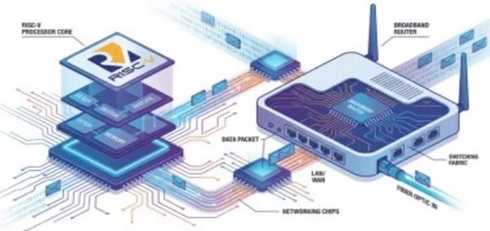
  • Chennai-based startup Ahaisa Digital Innovations has achieved 'first-pass silicon' success for the 'VIHAAN' broadband networking chip—based on the indigenous VEGA microprocessor—under India's Design Linked Incentive (DLI) scheme.
  • The chip was taped out on Republic Day and successfully tested on Independence Day.

Key Facts:

  • Chip Name: VIHAAN
  • Achievement: First 'first-pass silicon' broadband chip
  • Initiative/Campaign: India's design-led semiconductor campaign
  • Associated Ministry: Ministry of Electronics and Information Technology (MeitY)
  • Technical Significance: This is a fully indigenous, high-speed broadband processing chip that will strengthen India Semiconductor Mission (ISM).
  • Launch of India Semiconductor Mission (ISM): 2021
  • Union Minister of MeitY: Ashwini Vaishnaw
  • C-DAC (Centre for Development of Advanced Computing) Headquarters: Pune, Maharashtra
  • India's First Indigenous Microprocessor Chip: SHAKTI (developed by IIT Madras)

Sports News

E-Sports World Cup 2026

  • World No. 1 chess player Magnus Carlsen made history by winning the chess title at the E-Sports World Cup 2026 held in Paris, France.
  • The 35-year-old Norwegian Grandmaster successfully defended his title by defeating Belarusian Grandmaster Denis Lazavik 2-0 (3-1, 3-1) in the final.

Related Facts:

  • Winner: Magnus Carlsen (Norway) — representing 'Team Liquid'
  • Runner-up: Denis Lazavik (Belarus)
  • Venue: Paris, France (August 11 to 15, 2026)
  • Special Achievement: This is Magnus Carlsen's second consecutive E-Sports World Cup (EWC) title; he also won the inaugural edition held in 2025.
  • Undefeated Record: Carlsen became the champion without losing a single game throughout the tournament.
  • Third Place (Bronze Medal): US Grandmaster Hikaru Nakamura secured third place by defeating Alireza Firouzja 4-1.
  • Prize Money: Winner Carlsen received $250,000 (approximately ₹2.1 crore).
  • India's Arjun Erigaisi and Nihal Sarin succeeded in reaching the quarter-finals (top 8) of this global competition.

Chess:

  • The International Chess Federation, commonly known by its French acronym FIDE (Fédération Internationale des Échecs), is the supreme global body governing the sport of chess worldwide.
  • Establishment: Founded on July 20, 1924, in Paris, France.
  • Headquarters: Lausanne, Switzerland. Current President: Arkady Dvorkovich – Russia [2018 to present]
  • Current Deputy President: Viswanathan Anand – India
  • Official Motto: "Gens una sumus" (Latin), meaning "We are one family"
  • International Chess Day: Celebrated annually on July 20 to mark the founding of FIDE
  • All India Chess Federation (AICF): The AICF is the governing body for chess in India and is affiliated with FIDE
  • India's first Grandmaster: Viswanathan Anand (1988), who is also currently the Deputy President of FIDE


Latest Courses