


 Don't Have an Account?




SSC Foundation Ramanujam - 21 Offline Cum Online Batch Orai
02 November, 2026



Enter your Email ID and we'll send you a link to get back into your account.

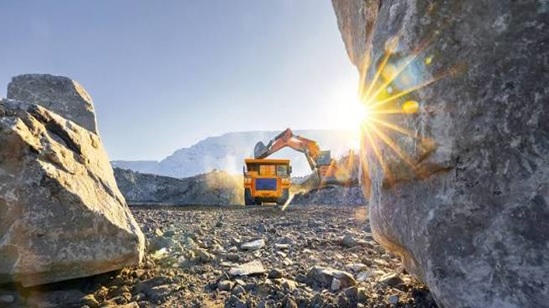

Lithium and Gallium Exploration Pact in Andhra Pradesh
Wed 12 Aug, 2026
Context
What Are Critical Minerals?
Lithium
Lithium is a lightweight metal that plays a crucial role in the modern energy economy. It is extensively used in:
The growing adoption of electric vehicles and renewable-energy storage has significantly increased the strategic importance of lithium.
Gallium
Gallium is a post-transition metal with important applications in advanced electronics and semiconductor technologies. It is used in:
Thus, the exploration of gallium is particularly important for strengthening India's domestic supply chain for high-technology industries.
Exploration in the Kadapa Basin
The geological survey will focus primarily on the Vempalle and Thummalapalle areas of the Kadapa Basin.
Preliminary studies cited in the article have indicated:
The Kadapa Basin is a sedimentary basin containing mineral-bearing geological formations. The Thummalapalle area is also known for uranium mineralisation, adding to the strategic mineral significance of the region.
The exploration exercise could therefore contribute to a better understanding of the mineral potential of Andhra Pradesh and support future resource development.
Funding and Institutional Framework
Skill Development and Mining Technology
On the same day, the Andhra Pradesh government also signed another MoU with IIT (ISM) Dhanbad–TEXMiN for technology development and skill enhancement in the mining sector.
A Centre of Excellence for Mining is proposed to be established in Andhra Pradesh under this partnership.
This creates a broader framework combining:
Mineral exploration → Scientific assessment → Technology development → Skilled manpower → Resource utilisation
Such an integrated approach can strengthen the state's mining ecosystem and improve the adoption of modern exploration and mining technologies.
Strategic Significance for India
Domestic exploration can therefore contribute to:
Challenges
Discovery of mineral occurrences does not automatically translate into economically viable mining. Further exploration is required to determine the size, grade, continuity and economic feasibility of deposits.
The government must also balance mineral extraction with:
Therefore, exploration should be followed by scientifically sound resource assessment and environmentally responsible development.
Way Forward
Major Minerals/Critical Minerals and Important Sites in India
| Mineral | Major Uses / Strategic Importance | Important Indian Sites/Regions | State/UT |
| Lithium | EV batteries, rechargeable batteries, energy storage | Reasi | Jammu & Kashmir |
| Lithium | Batteries and energy storage | Vempalle & Thummalapalle, Kadapa Basin | Andhra Pradesh |
| Lithium | Critical-mineral exploration | Mandya | Karnataka |
| Gallium | Semiconductors, LEDs, integrated circuits, solar technologies | Kadapa Basin – Vempalle & Thummalapalle | Andhra Pradesh |
| Gallium | Semiconductor-related applications | Occurs mainly as a by-product associated with bauxite/zinc ores; exploration is ongoing | Multiple regions |
| Rare Earth Elements (REEs) | Electronics, magnets, defence, renewable energy | Monazite-bearing coastal sands | Kerala, Tamil Nadu, Odisha, Andhra Pradesh |
| Rare Earth Elements | Strategic and high-technology applications | IREL mineral-sand areas | Kerala, Odisha, Tamil Nadu |
| Cobalt | Lithium-ion batteries, superalloys | Nickel-cobalt-bearing areas | Jharkhand, Odisha and other explored regions |
| Nickel | Stainless steel, batteries, superalloys | Sukinda Valley | Odisha |
| Graphite | Batteries, lubricants, refractories | Arunachal Pradesh, Tamil Nadu, Odisha, Jharkhand | Multiple states |
| Copper | Electrical equipment, electronics, renewable energy | Khetri | Rajasthan |
| Copper | Electrical and industrial applications | Singhbhum Copper Belt | Jharkhand |
| Bauxite | Aluminium production | Koraput & Kalahandi | Odisha |
| Bauxite | Aluminium and aerospace industries | Katni region and other deposits | Madhya Pradesh |
| Uranium | Nuclear energy | Jaduguda | Jharkhand |
| Uranium | Nuclear fuel | Thummalapalle | Andhra Pradesh |
| Titanium | Aerospace, pigments, advanced materials | Coastal beach-sand deposits | Kerala, Tamil Nadu, Odisha, Andhra Pradesh |
| Zirconium | Nuclear reactors, ceramics, advanced materials | Coastal mineral sands | Kerala, Tamil Nadu, Odisha, Andhra Pradesh |
| Chromium | Stainless steel, alloys, refractory materials | Sukinda Valley | Odisha |
| Manganese | Steel production, batteries | Balaghat | Madhya Pradesh |
| Manganese | Steel and alloy production | Nagpur–Bhandara belt | Maharashtra |
| Zinc | Galvanisation, alloys, batteries | Rampura Agucha | Rajasthan |
| Lead | Batteries, radiation shielding, alloys | Zawar | Rajasthan |
| Tin | Electronics, solder, alloys | Bastar region | Chhattisgarh |
| Tungsten | Defence, cutting tools, high-temperature applications | Degana | Rajasthan |
| Vanadium | Steel alloys, energy-storage technologies | Vanadium-bearing deposits/occurrences | Multiple regions |
| Potash | Fertilisers and agriculture | Nagaur–Ganganagar region | Rajasthan |
| Phosphorite | Phosphate fertilisers | Jhamarkotra | Rajasthan |
02 November, 2026
10 September, 2026
24 August, 2026
06 August, 2026
28 July, 2026
27 July, 2026
22 July, 2026
20 July, 2026
26 May, 2026
08 May, 2026
